Free Local White-Glove Setup & Haul-Away on Orders Over $499Announcement 1 of 2
Explore Payment Options — View Financing DetailsAnnouncement 2 of 2
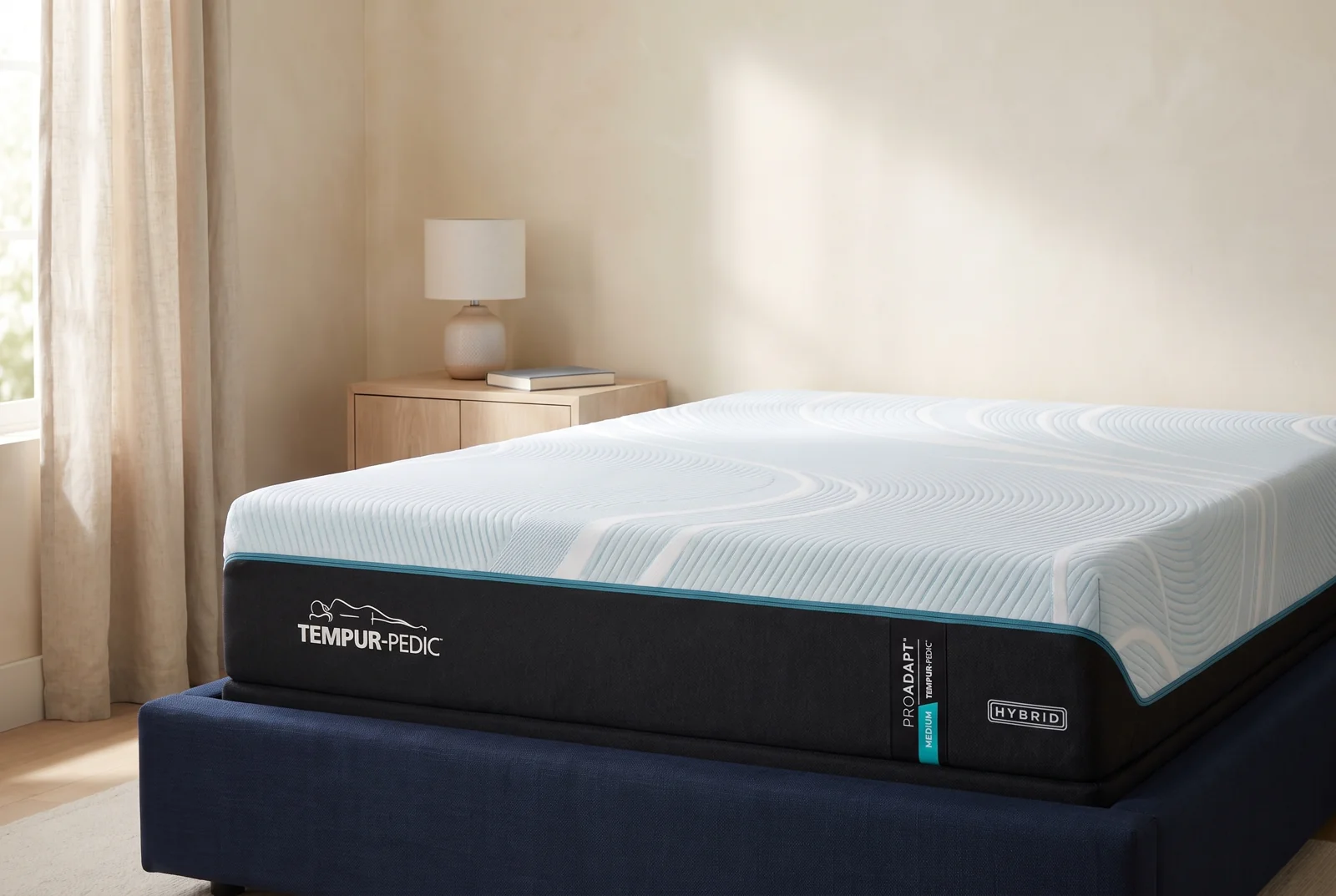
Tempur-Pedic TEMPUR-ProAdapt Medium HybridStyled product scene
Lower back pain is one of the most common reasons people replace their mattress, and for good reason. The wrong mattress can cause or worsen lumbar pain. The right one can relieve pressure, support your spine, and make a meaningful difference in how you feel when you wake up.
This guide explains what actually matters when choosing a mattress for back pain, which mattress types work best, and our top picks across different budgets and sleep styles.
The lumbar region, the lower five vertebrae of your spine, bears the most load during the day. When you lie down, a mattress that doesn't support this area properly forces those muscles to stay engaged overnight rather than relaxing and recovering.
Common causes of lumbar pain include:
Whatever the underlying cause, sleep plays a big role in the pain cycle. Poor sleep worsens pain perception; pain disrupts sleep. A supportive mattress breaks that cycle by letting your spine decompress properly overnight.
This is the most important factor. A good mattress keeps your spine in a neutral position, meaning the natural curves of your lumbar and cervical regions are supported, not forced flat and not allowed to sag.
Research and clinical experience generally point to medium-firm as the sweet spot for lower back pain, but there's important nuance:
Even back pain sufferers need pressure relief, at the hips and shoulders especially. A mattress that's supportive without any give can create pressure points that cause you to shift positions constantly, waking you up.
A mattress that was once supportive but has developed body impressions or sagging will actively contribute to back pain. Look for high-density foam, quality coil construction, and brand reputation for longevity.
Memory foam excels at contouring to the body's shape, which reduces pressure points and helps maintain spinal alignment. It absorbs movement well, making it a solid choice for couples. The main considerations: it can sleep warm (gel-infused versions help), and it has a slower response when you shift positions.
Best for: Side sleepers with back pain, people who share a bed
Natural latex provides similar contouring to memory foam but with a more responsive, buoyant feel. It doesn't trap heat the way foam can, making it better for warm sleepers. Natural latex mattresses are also exceptionally durable. For back pain sufferers who sleep hot or dislike the "stuck" feeling of memory foam, latex is often the better choice.
Best for: Hot sleepers with back pain, people who move around during the night
Hybrids combine individually wrapped coils with foam or latex comfort layers. The coil system provides a firmer base and better edge support, while the comfort layers add pressure relief. This combination is versatile. It works well across sleep positions and body types.
Best for: Back and combination sleepers, heavier body types, couples with different preferences
Traditional innerspring mattresses can provide good back support, but coil-only construction offers less pressure relief than foam or latex. Modern innerspring mattresses with quality cushioned top layers perform much better. If you prefer a firmer, cooler sleep surface, a quality innerspring with a euro top can work well.
Best for: Those who want a cooler, firmer sleep surface
The ProAdapt uses Tempur-Pedic's proprietary TEMPUR material, which is among the most pressure-relieving foam available. The soft version is best suited to side sleepers with lower back pain who need hip cushioning alongside lumbar support. The SmartClimate® zip-off cover is washable and cool to the touch.
| Pros | Cons |
|---|---|
| Exceptional pressure relief | Premium price point |
| Outstanding motion isolation | May be too soft for back/stomach sleepers |
| Cooling cover for sleep comfort | |
| Durable, long-lasting TEMPUR material |
A balanced plush hybrid built on individually wrapped coils with a natural latex comfort layer. The latex responds quickly to position changes and provides excellent lumbar support without feeling rigid. Good for side and back sleepers who want pressure relief alongside solid support.
| Pros | Cons |
|---|---|
| Responsive latex + supportive coils combination | Plush feel may not suit those needing firm support |
| Organic cotton cover, eco-friendly construction | Higher price |
| Good motion isolation for couples | |
| CertiPUR-US certified foams |
For back and stomach sleepers who need a firmer surface to prevent lumbar sag, the Diamond Polina delivers. Gel-infused memory foam keeps it from sleeping hot, and the tight top design means consistent support across the whole surface.
| Pros | Cons |
|---|---|
| Firm support for spinal alignment | Too firm for most side sleepers |
| Cooling gel infusion | |
| Durable tight top construction | |
| Accessible price point |
A traditional innerspring mattress with a plush euro top that adds comfort without sacrificing the firm support base. Good for sleepers who want the feel of a firmer mattress with enough surface cushioning to reduce pressure. Strong edge support makes it easy to sit on the side of the bed without rolling off.
| Pros | Cons |
|---|---|
| Balanced support and cushioning | More motion transfer than foam options |
| Strong edge support | Less pressure relief than foam/latex |
| Durable innerspring system | |
| Accessible price point |
The cashmere comfort top adds a touch of luxury to a firm, gel-infused latex base that provides excellent cooling. A strong choice for back sleepers who sleep hot and need firm lumbar support without the heat retention of pure memory foam.
| Pros | Cons |
|---|---|
| Excellent cooling and firm support combination | Premium price |
| Responsive gel latex feel | May be too firm for side sleepers |
| Luxurious cashmere cover | |
| CertiPUR-US certified |
Your mattress choice should factor in how you sleep, because the same back condition feels different in different positions.
Adjustable bases can also help, elevating the head and foot slightly takes pressure off the lumbar region. We carry a range of adjustable bases that pair well with most of our mattresses.
Medium-firm is the most commonly recommended level, backed by research and clinical guidance. But your sleep position matters: side sleepers with back pain often do better on a medium or medium-soft to avoid hip pressure, while stomach sleepers generally need a firm surface.
Yes. A mattress that's too soft lets the spine sag into misalignment overnight. A mattress that's too firm creates pressure points that cause constant position-shifting. Both can result in or worsen lower back pain.
Most people notice improvement within 2–4 weeks as their body adjusts to proper spinal support. If back pain worsens after 4–6 weeks on a new mattress, the firmness or type may not be right for your needs.
Both work well, and the choice depends on your secondary preferences. Memory foam provides more motion isolation and a closer contour. Latex is more responsive, sleeps cooler, and lasts longer. For most back pain sufferers, the firmness level matters more than the material type.
A quality mattress topper can help if your mattress is fundamentally sound but slightly too firm. It won't fix a mattress that's sagging or worn out, in that case, replacement is the right move.
Yes, and we strongly recommend it for anyone with back pain. At our LA showrooms, you can lie on any mattress in your actual sleep position and speak with a knowledgeable sleep advisor. We also offer a 120-night comfort guarantee so you can be confident in your decision.
Back pain is serious, and the right mattress genuinely helps. Visit a showroom and let us help you find a mattress that supports your back and your sleep. Our team works with back pain sufferers every day.
Explore how a firmness label may feel, then find mattresses to try.
Use the firmness finderArrange a bed and furniture using your own room measurements.
Open the room plannerSee firmness, motion and comfort details for two mattresses together.
Compare by feelStart with a mattress type that suits how you sleep, then compare the feel in person.
Prices for Queen · Choose options for other sizes


Est. $124.84/month for 6 months
Item-price payoff target · excludes taxes and fees.
Synchrony · No interest if paid in full within 6 months. Subject to credit approval.
Interest is charged from the purchase date if not paid in full in time. Minimum monthly payments are required and may not repay the balance in time.
This item price meets the 6-month deferred-interest threshold. We use the longest confirmed period available at this price. Avoiding interest requires paying the promotional balance in full before the deadline. Lender fees can affect total cost; this selection does not establish the lowest total borrowing cost.
This illustration divides the displayed price of $749.00 for one selected item by 6 months, rounding up to the next cent. It is not the lender’s required payment or billing schedule. Check the promotional deadline on your statement and pay the full promotional balance before it ends.
Taxes, delivery, recycling charges and any lender promotional fees are excluded. Fees may add to the total borrowing cost. Additional discounts can change plan eligibility and the amount financed. Confirm the final purchase amount and applicable terms with the store before arranging financing.
Credit approval, applicable account terms and purchase eligibility apply.
How Synchrony deferred interest works
Est. $158.17/month for 6 months
Item-price payoff target · excludes taxes and fees.
Synchrony · No interest if paid in full within 6 months. Subject to credit approval.
Interest is charged from the purchase date if not paid in full in time. Minimum monthly payments are required and may not repay the balance in time.
This item price meets the 6-month deferred-interest threshold. We use the longest confirmed period available at this price. Avoiding interest requires paying the promotional balance in full before the deadline. Lender fees can affect total cost; this selection does not establish the lowest total borrowing cost.
This illustration divides the displayed price of $949.00 for one selected item by 6 months, rounding up to the next cent. It is not the lender’s required payment or billing schedule. Check the promotional deadline on your statement and pay the full promotional balance before it ends.
Taxes, delivery, recycling charges and any lender promotional fees are excluded. Fees may add to the total borrowing cost. Additional discounts can change plan eligibility and the amount financed. Confirm the final purchase amount and applicable terms with the store before arranging financing.
Credit approval, applicable account terms and purchase eligibility apply.
How Synchrony deferred interest works
Est. $146.50/month for 6 months
Item-price payoff target · excludes taxes and fees.
Synchrony · No interest if paid in full within 6 months. Subject to credit approval.
Interest is charged from the purchase date if not paid in full in time. Minimum monthly payments are required and may not repay the balance in time.
This item price meets the 6-month deferred-interest threshold. We use the longest confirmed period available at this price. Avoiding interest requires paying the promotional balance in full before the deadline. Lender fees can affect total cost; this selection does not establish the lowest total borrowing cost.
This illustration divides the displayed price of $879.00 for one selected item by 6 months, rounding up to the next cent. It is not the lender’s required payment or billing schedule. Check the promotional deadline on your statement and pay the full promotional balance before it ends.
Taxes, delivery, recycling charges and any lender promotional fees are excluded. Fees may add to the total borrowing cost. Additional discounts can change plan eligibility and the amount financed. Confirm the final purchase amount and applicable terms with the store before arranging financing.
Credit approval, applicable account terms and purchase eligibility apply.
How Synchrony deferred interest works
Est. $91.63/month for 24 months
Item-price payoff target · excludes taxes and fees.
Synchrony · No interest if paid in full within 24 months. Subject to credit approval.
Interest is charged from the purchase date if not paid in full in time. Minimum monthly payments are required and may not repay the balance in time.
This item price meets the 24-month deferred-interest threshold. We use the longest confirmed period available at this price. Avoiding interest requires paying the promotional balance in full before the deadline. Lender fees can affect total cost; this selection does not establish the lowest total borrowing cost.
This illustration divides the displayed price of $2,199.00 for one selected item by 24 months, rounding up to the next cent. It is not the lender’s required payment or billing schedule. Check the promotional deadline on your statement and pay the full promotional balance before it ends.
Taxes, delivery, recycling charges and any lender promotional fees are excluded. Fees may add to the total borrowing cost. Additional discounts can change plan eligibility and the amount financed. Confirm the final purchase amount and applicable terms with the store before arranging financing.
Credit approval, applicable account terms and purchase eligibility apply.
How Synchrony deferred interest works
Est. $92.42/month for 12 months
Item-price payoff target · excludes taxes and fees.
Synchrony · No interest if paid in full within 12 months. Subject to credit approval.
Interest is charged from the purchase date if not paid in full in time. Minimum monthly payments are required and may not repay the balance in time.
This item price meets the 12-month deferred-interest threshold. We use the longest confirmed period available at this price. Avoiding interest requires paying the promotional balance in full before the deadline. Lender fees can affect total cost; this selection does not establish the lowest total borrowing cost.
This illustration divides the displayed price of $1,109.00 for one selected item by 12 months, rounding up to the next cent. It is not the lender’s required payment or billing schedule. Check the promotional deadline on your statement and pay the full promotional balance before it ends.
Taxes, delivery, recycling charges and any lender promotional fees are excluded. Fees may add to the total borrowing cost. Additional discounts can change plan eligibility and the amount financed. Confirm the final purchase amount and applicable terms with the store before arranging financing.
Credit approval, applicable account terms and purchase eligibility apply.
How Synchrony deferred interest worksBuying guides and sleep advice, no email signup required.