Free Local White-Glove Setup & Haul-Away on Orders Over $499Announcement 1 of 2
Explore Payment Options — View Financing DetailsAnnouncement 2 of 2
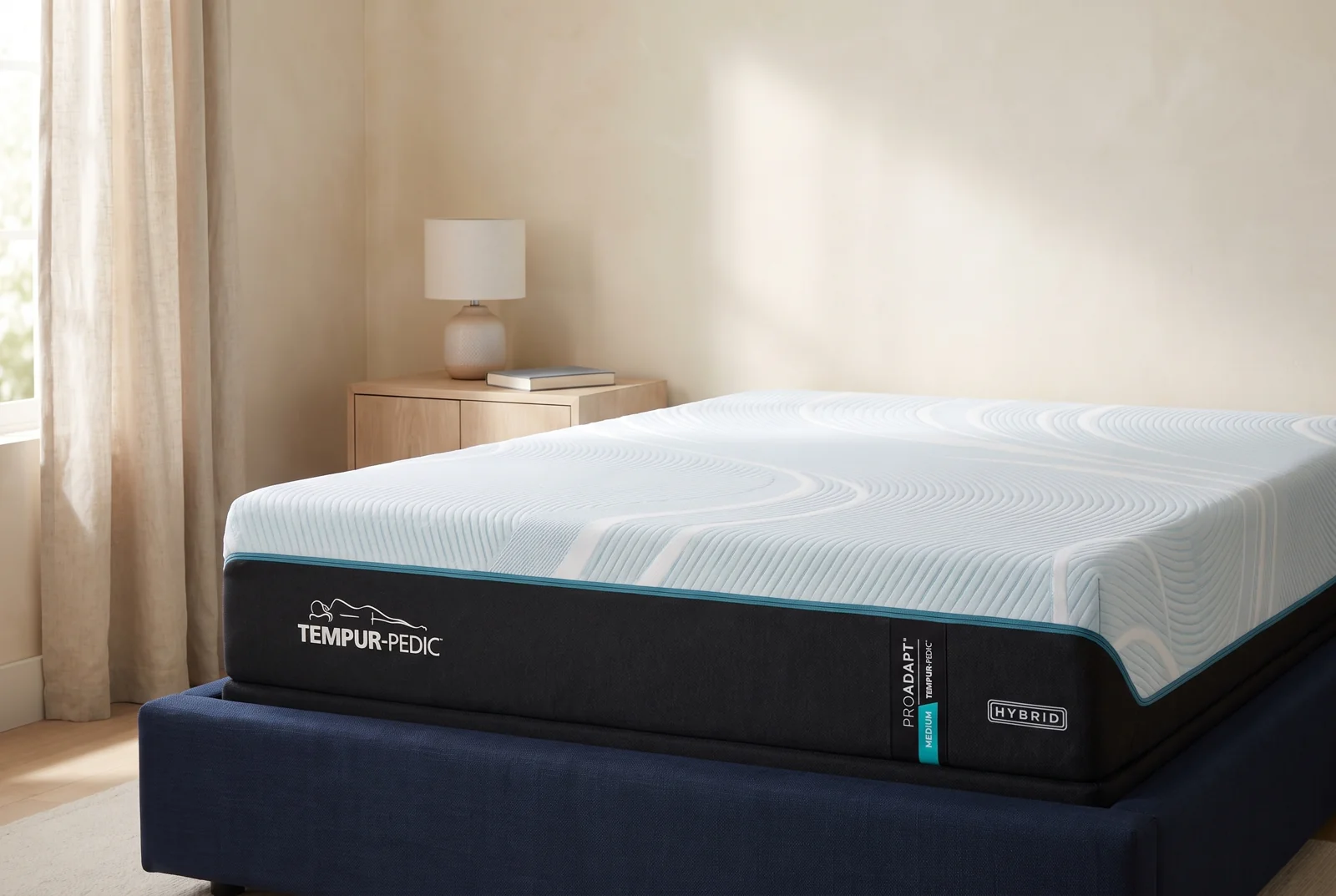
Tempur-Pedic TEMPUR-ProAdapt Medium HybridStyled product scene
Waking up with hip pain is one of the most common complaints we hear from customers. It's also one of the most solvable. In most cases, the right mattress, matched to your body type and sleep position, can make a significant difference in how your hips feel when you get up each morning.
This guide explains why hips hurt during sleep, what mattress features actually help, and which types of mattresses are worth considering.
For most people with hip pain, a medium-firm mattress with good pressure relief, typically memory foam, latex, or a hybrid, works best. Side sleepers generally need more cushioning at the hip; back sleepers need more support. The wrong firmness in either direction makes things worse.
The hips carry a significant amount of your body's weight, especially when you're lying down. If your mattress doesn't distribute that weight properly, pressure builds up at the hip joint and surrounding tissue, leading to pain that ranges from mild stiffness to sharp, lingering discomfort.
Common causes of sleep-related hip pain include:
This is the most critical factor. You want a mattress that allows the hip to sink in just enough to relieve joint pressure without bottoming out. Memory foam and latex both excel here, as they conform to body contours and distribute weight evenly.
Pressure relief without support causes its own problems. A good mattress for hip pain provides both, enough give at the hip to relieve pressure, and enough firmness underneath to keep the spine aligned. This is the core of what makes medium-firm work so well.
If you toss and turn at night, responsiveness matters. A mattress that springs back quickly when you shift positions makes it easier to move without effort. This is especially important for side sleepers who switch sides during the night to manage hip pressure.
Some mattresses offer zoned construction, softer foam zones under the hips and shoulders, firmer zones under the lumbar and legs. This design specifically addresses hip pain by providing targeted pressure relief where you need it most.
For the majority of people with hip pain, a medium (5/10) to medium-firm (6/10) feel works best. Here's a quick breakdown:
| Firmness | Best For | Hip Pain Impact |
|---|---|---|
| Soft (1–4) | Lighter side sleepers | Can cause sinkage and misalignment for most |
| Medium (5) | Side sleepers, lighter body types | Good pressure relief for hips |
| Medium-Firm (6) | Side/back combo sleepers, average body weight | Best overall balance of relief and support |
| Firm (7–8) | Back sleepers, heavier individuals | May increase pressure for side sleepers |
| Extra Firm (9–10) | Very heavy individuals, specific medical needs | Often too hard for hip pain sufferers |
Memory foam is one of the best materials for hip pain because it conforms closely to the body, relieving pressure at the hip joint. Gel-infused versions help with temperature regulation, which is a common complaint with traditional memory foam.
Best for: Side sleepers, those who want deep contouring pressure relief
Watch out for: Some people feel "stuck" in memory foam; it can sleep hot if not gel-infused or ventilated
Natural latex offers excellent pressure relief with more responsiveness than memory foam. It contours to the body but springs back quickly, making it easier to move and change positions. It also tends to sleep cooler and last longer.
Best for: Those who want pressure relief without the "sinking" sensation, hot sleepers, allergy-sensitive sleepers
Watch out for: Higher upfront cost; natural latex has a distinct feel that some people need to try before buying
Hybrid mattresses combine a coil support system with foam or latex comfort layers on top. The coils provide strong base support and airflow; the foam or latex handles pressure relief. This combination is often the best overall solution for hip pain, especially for back/side combo sleepers and heavier individuals.
Best for: Most sleep styles and body types, those who want bounce plus cushioning
Watch out for: Quality varies significantly, lower-cost hybrids sometimes use thinner comfort layers that don't provide meaningful pressure relief
Traditional innerspring mattresses generally don't provide enough pressure relief for hip pain. They can feel supportive but transfer pressure directly to the hip joint without adequate cushioning. If you prefer an innerspring feel, look for one with a substantial pillow top or Euro top layer.
Side sleeping puts the most concentrated pressure on the hip. You need a mattress that allows the hip to sink in far enough to relieve pressure while keeping the spine straight.
Back sleepers generally experience less hip pressure than side sleepers, but can still develop hip pain if the mattress is too soft (hips sink out of alignment) or too firm (pressure builds at the hip and lower back).
If you switch positions during the night, a responsive medium-firm hybrid gives you the most flexibility. It accommodates both side and back positions without significant tradeoffs.
If you're shopping for a mattress to address hip pain, the best way to find the right fit is to try it in person. At LA Mattress, our team can help you identify mattresses that match your sleep position, firmness preference, and budget. Visit one of our 5 Los Angeles showrooms and take your time. We encourage spending at least 10–15 minutes on any mattress you're seriously considering.
We also offer a 120-Night Comfort Guarantee, so you can be confident you're making the right choice.
Memory foam, latex, and hybrid mattresses with medium to medium-firm firmness are generally best for hip pain. They provide the right combination of pressure relief and spinal support.
Neither extreme works well. A mattress that's too firm creates pressure on the hip joint; too soft causes misalignment. Medium-firm is the ideal starting point for most people.
Yes, a memory foam or latex topper can add pressure relief to an overly firm mattress. It's a cost-effective solution if your current mattress is structurally sound but too hard.
Side sleepers experience more direct hip pressure and need better pressure relief. Back sleepers need stronger support to prevent the hips from sinking out of alignment.
Zoned mattresses have different firmness levels in different areas of the bed, typically softer under the shoulders and hips, firmer under the waist and lower back. They're particularly useful for people with hip or shoulder pain.
Most people need 2–4 weeks to fully adjust to a new sleep surface. That's one reason we offer a 120-night comfort guarantee. It gives you enough time to know for certain if the mattress is right for you.
Yes. A mattress that's too old, too soft, or too firm can create or worsen hip pain over time by allowing pressure buildup or spinal misalignment during sleep.
Browse our full mattress collection or speak with one of our sleep experts to find the right fit for your hips.
Explore how a firmness label may feel, then find mattresses to try.
Use the firmness finderArrange a bed and furniture using your own room measurements.
Open the room plannerSee firmness, motion and comfort details for two mattresses together.
Compare by feelStart with a mattress type that suits how you sleep, then compare the feel in person.
Prices for Queen · Choose options for other sizes


Est. $124.84/month for 6 months
Item-price payoff target · excludes taxes and fees.
Synchrony · No interest if paid in full within 6 months. Subject to credit approval.
Interest is charged from the purchase date if not paid in full in time. Minimum monthly payments are required and may not repay the balance in time.
This item price meets the 6-month deferred-interest threshold. We use the longest confirmed period available at this price. Avoiding interest requires paying the promotional balance in full before the deadline. Lender fees can affect total cost; this selection does not establish the lowest total borrowing cost.
This illustration divides the displayed price of $749.00 for one selected item by 6 months, rounding up to the next cent. It is not the lender’s required payment or billing schedule. Check the promotional deadline on your statement and pay the full promotional balance before it ends.
Taxes, delivery, recycling charges and any lender promotional fees are excluded. Fees may add to the total borrowing cost. Additional discounts can change plan eligibility and the amount financed. Confirm the final purchase amount and applicable terms with the store before arranging financing.
Credit approval, applicable account terms and purchase eligibility apply.
How Synchrony deferred interest works
Est. $158.17/month for 6 months
Item-price payoff target · excludes taxes and fees.
Synchrony · No interest if paid in full within 6 months. Subject to credit approval.
Interest is charged from the purchase date if not paid in full in time. Minimum monthly payments are required and may not repay the balance in time.
This item price meets the 6-month deferred-interest threshold. We use the longest confirmed period available at this price. Avoiding interest requires paying the promotional balance in full before the deadline. Lender fees can affect total cost; this selection does not establish the lowest total borrowing cost.
This illustration divides the displayed price of $949.00 for one selected item by 6 months, rounding up to the next cent. It is not the lender’s required payment or billing schedule. Check the promotional deadline on your statement and pay the full promotional balance before it ends.
Taxes, delivery, recycling charges and any lender promotional fees are excluded. Fees may add to the total borrowing cost. Additional discounts can change plan eligibility and the amount financed. Confirm the final purchase amount and applicable terms with the store before arranging financing.
Credit approval, applicable account terms and purchase eligibility apply.
How Synchrony deferred interest works
Est. $146.50/month for 6 months
Item-price payoff target · excludes taxes and fees.
Synchrony · No interest if paid in full within 6 months. Subject to credit approval.
Interest is charged from the purchase date if not paid in full in time. Minimum monthly payments are required and may not repay the balance in time.
This item price meets the 6-month deferred-interest threshold. We use the longest confirmed period available at this price. Avoiding interest requires paying the promotional balance in full before the deadline. Lender fees can affect total cost; this selection does not establish the lowest total borrowing cost.
This illustration divides the displayed price of $879.00 for one selected item by 6 months, rounding up to the next cent. It is not the lender’s required payment or billing schedule. Check the promotional deadline on your statement and pay the full promotional balance before it ends.
Taxes, delivery, recycling charges and any lender promotional fees are excluded. Fees may add to the total borrowing cost. Additional discounts can change plan eligibility and the amount financed. Confirm the final purchase amount and applicable terms with the store before arranging financing.
Credit approval, applicable account terms and purchase eligibility apply.
How Synchrony deferred interest works
Est. $91.63/month for 24 months
Item-price payoff target · excludes taxes and fees.
Synchrony · No interest if paid in full within 24 months. Subject to credit approval.
Interest is charged from the purchase date if not paid in full in time. Minimum monthly payments are required and may not repay the balance in time.
This item price meets the 24-month deferred-interest threshold. We use the longest confirmed period available at this price. Avoiding interest requires paying the promotional balance in full before the deadline. Lender fees can affect total cost; this selection does not establish the lowest total borrowing cost.
This illustration divides the displayed price of $2,199.00 for one selected item by 24 months, rounding up to the next cent. It is not the lender’s required payment or billing schedule. Check the promotional deadline on your statement and pay the full promotional balance before it ends.
Taxes, delivery, recycling charges and any lender promotional fees are excluded. Fees may add to the total borrowing cost. Additional discounts can change plan eligibility and the amount financed. Confirm the final purchase amount and applicable terms with the store before arranging financing.
Credit approval, applicable account terms and purchase eligibility apply.
How Synchrony deferred interest works
Est. $92.42/month for 12 months
Item-price payoff target · excludes taxes and fees.
Synchrony · No interest if paid in full within 12 months. Subject to credit approval.
Interest is charged from the purchase date if not paid in full in time. Minimum monthly payments are required and may not repay the balance in time.
This item price meets the 12-month deferred-interest threshold. We use the longest confirmed period available at this price. Avoiding interest requires paying the promotional balance in full before the deadline. Lender fees can affect total cost; this selection does not establish the lowest total borrowing cost.
This illustration divides the displayed price of $1,109.00 for one selected item by 12 months, rounding up to the next cent. It is not the lender’s required payment or billing schedule. Check the promotional deadline on your statement and pay the full promotional balance before it ends.
Taxes, delivery, recycling charges and any lender promotional fees are excluded. Fees may add to the total borrowing cost. Additional discounts can change plan eligibility and the amount financed. Confirm the final purchase amount and applicable terms with the store before arranging financing.
Credit approval, applicable account terms and purchase eligibility apply.
How Synchrony deferred interest worksBuying guides and sleep advice, no email signup required.