Free Local White-Glove Setup & Haul-Away on Orders Over $499Announcement 1 of 2
Explore Payment Options — View Financing DetailsAnnouncement 2 of 2
How to choose the best mattress for shoulder pain: ideal type, firmness, and pressure relief for side sleepers, plus an expert FAQ and local LA buying advice.
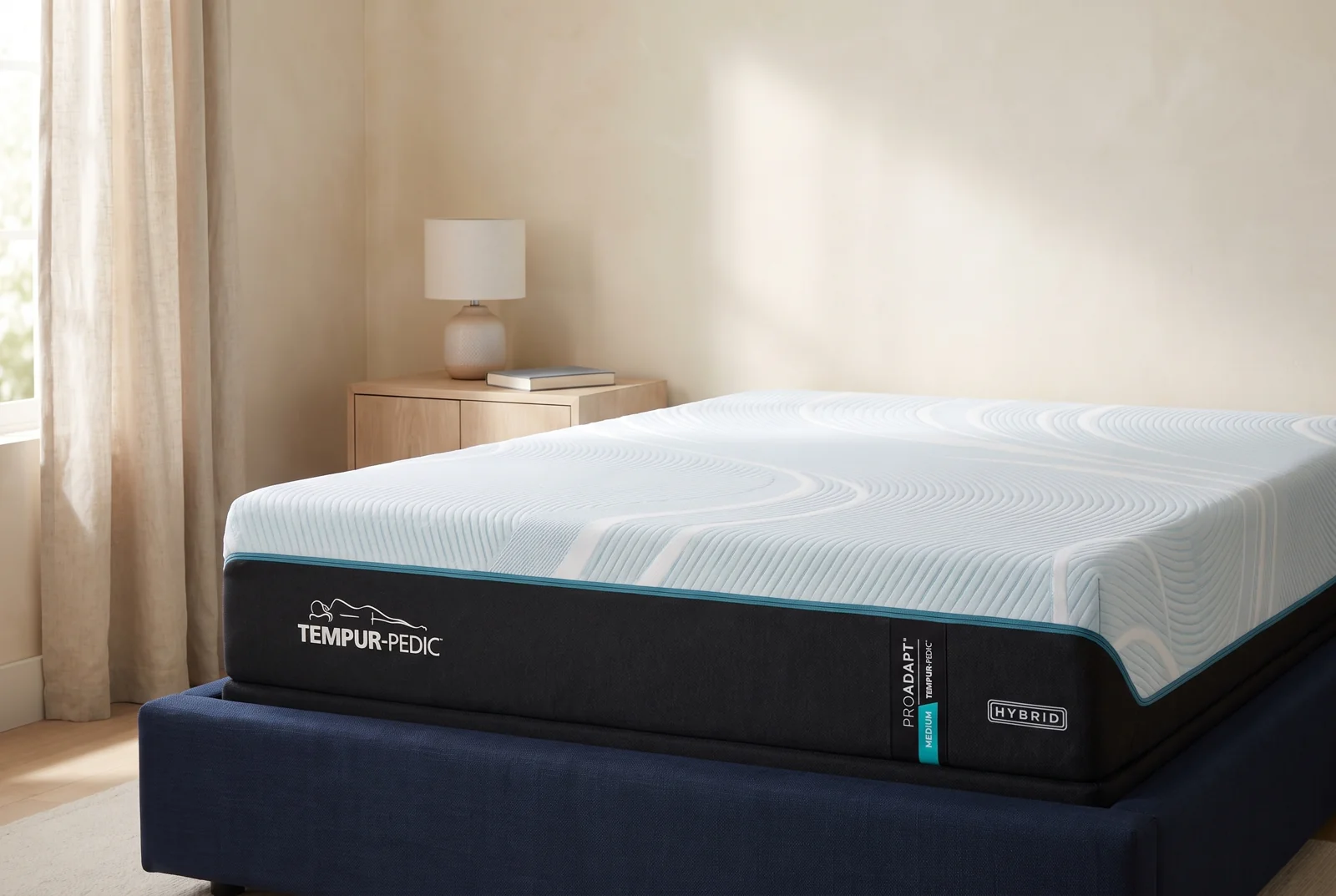
Tempur-Pedic TEMPUR-ProAdapt Medium HybridStyled product scene
If you wake up with an aching, stiff, or tingling shoulder, your mattress may be the culprit. Finding the best mattress for shoulder pain matters most for side sleepers, who put the full weight of the upper body directly onto one shoulder for hours at a time. The wrong surface concentrates pressure right at the joint; the right one cradles it. This guide explains what causes shoulder pain at night, which mattress type and firmness relieve it, and how to choose the right bed with confidence.
Whether your shoulder pain comes from side sleeping, an old sagging bed, or a nagging injury, the goal is the same: a mattress that keeps your spine aligned while letting your shoulder sink in just enough. Here is how to get there.
Side sleeping is the most common position, and it is generally healthy. The problem is pressure. When you lie on your side, your shoulder and hip carry most of your body weight against the mattress. If the surface is too firm, it pushes back hard against the shoulder joint, cutting off circulation and creating that deep, dull ache by morning.
If the mattress is too soft or worn out, the opposite happens: your shoulder and hips sink too far, your spine bows out of alignment, and the surrounding muscles strain all night to compensate. The best mattress for shoulder pain threads the needle, offering enough give to cushion the shoulder while keeping the spine level.
Pressure relief is the name of the game, so materials that contour to the body usually win.
Traditional firm innerspring mattresses tend to be the worst option for shoulder pain because the coils push directly back against the joint. If you love the bounce of springs, choose a hybrid with a thick pressure-relieving top instead. Explore our mattresses for side sleepers to see builds designed for exactly this problem.
For shoulder pain, firmness is everything. Side sleepers with shoulder pain generally do best on a soft to medium-firm mattress, around a 4 to 6 on the standard 10-point firmness scale. That range lets the shoulder sink into the comfort layer while the firmer support core keeps your spine straight.
Your body weight shifts the target. Lighter sleepers usually need a softer surface so the shoulder can sink in at all. Heavier sleepers often need a touch more support underneath to avoid bottoming out. The quick test: lie on your side in your normal position and check whether your spine runs in a straight, neutral line from neck to hips. If your shoulder feels crushed, go softer. If your hips dip, you need more support. Browse soft mattresses for pressure relief if your current bed feels too hard at the shoulder.
Beyond type and firmness, a few details make a real difference for sore shoulders:
If hip pressure bothers you too, the same pressure-relief principles apply. Our guide to the best mattress for hip pain is a useful companion read, and our overview of pressure mapping and your mattress explains how weight distribution affects every pressure point.
The single best way to judge a mattress for shoulder pain is to lie on it in your actual sleep position for several minutes. That is hard to do online, which is where shopping locally pays off. At LA Mattress Store, you can visit our Los Angeles showrooms, test soft and medium-firm models on your side, and have our team check your spinal alignment in real time.
Because Los Angeles stays warm much of the year, we often point shoulder-pain shoppers toward gel memory foam and breathable hybrids that relieve pressure without trapping heat. And when you find the one, we offer fast, often same-day delivery ($100 upgrade, order by 4pm) across the LA area, so relief arrives by bedtime rather than next week.
Memory foam and foam-topped hybrids are usually best for shoulder pain because they contour around the shoulder and spread weight evenly, eliminating sharp pressure points. Latex is a good alternative if you prefer a more buoyant feel. Firm innerspring beds tend to aggravate shoulder pain.
For combined neck and shoulder pain, choose a soft-to-medium-firm memory foam or hybrid mattress and pair it with a supportive pillow that keeps your neck aligned with your spine. The mattress relieves shoulder pressure while the right pillow prevents your neck from bending out of line.
Side sleepers with shoulder pain usually do best on a soft to medium-firm mattress, roughly a 4 to 6 out of 10. That lets the shoulder sink into the comfort layer while the support core keeps the spine neutral. Lighter sleepers lean softer; heavier sleepers need a bit more support.
Yes. A two-to-three-inch memory foam or latex topper can add pressure relief to a mattress that feels too firm at the shoulder, often as a budget-friendly first step. If your mattress is sagging or more than seven to ten years old, though, a topper is only a temporary fix and a new mattress is the better long-term solution.
Softer is generally better for side sleepers with shoulder pain, because the shoulder needs room to sink in. A too-firm mattress pushes back against the joint and worsens the ache. Aim for soft-to-medium-firm with a supportive core so your hips do not sink too far.
The best mattress for shoulder pain cushions your shoulder while keeping your spine perfectly aligned, and for side sleepers that usually means a soft-to-medium-firm memory foam or hybrid with a generous comfort layer. Match the firmness to your body weight, add a supportive pillow, and make sure your foundation is solid, and you can finally wake up without that morning ache.
Ready to sleep pain-free? Browse our mattresses for side sleepers or take our quick sleep quiz for a personalized pick, then visit an LA Mattress Store showroom in Los Angeles to test it on your side today.
Explore how a firmness label may feel, then find mattresses to try.
Use the firmness finderArrange a bed and furniture using your own room measurements.
Open the room plannerSee firmness, motion and comfort details for two mattresses together.
Compare by feelStart with a mattress type that suits how you sleep, then compare the feel in person.
Prices for Queen · Choose options for other sizes


Est. $124.84/month for 6 months
Item-price payoff target · excludes taxes and fees.
Synchrony · No interest if paid in full within 6 months. Subject to credit approval.
Interest is charged from the purchase date if not paid in full in time. Minimum monthly payments are required and may not repay the balance in time.
This item price meets the 6-month deferred-interest threshold. We use the longest confirmed period available at this price. Avoiding interest requires paying the promotional balance in full before the deadline. Lender fees can affect total cost; this selection does not establish the lowest total borrowing cost.
This illustration divides the displayed price of $749.00 for one selected item by 6 months, rounding up to the next cent. It is not the lender’s required payment or billing schedule. Check the promotional deadline on your statement and pay the full promotional balance before it ends.
Taxes, delivery, recycling charges and any lender promotional fees are excluded. Fees may add to the total borrowing cost. Additional discounts can change plan eligibility and the amount financed. Confirm the final purchase amount and applicable terms with the store before arranging financing.
Credit approval, applicable account terms and purchase eligibility apply.
How Synchrony deferred interest works
Est. $158.17/month for 6 months
Item-price payoff target · excludes taxes and fees.
Synchrony · No interest if paid in full within 6 months. Subject to credit approval.
Interest is charged from the purchase date if not paid in full in time. Minimum monthly payments are required and may not repay the balance in time.
This item price meets the 6-month deferred-interest threshold. We use the longest confirmed period available at this price. Avoiding interest requires paying the promotional balance in full before the deadline. Lender fees can affect total cost; this selection does not establish the lowest total borrowing cost.
This illustration divides the displayed price of $949.00 for one selected item by 6 months, rounding up to the next cent. It is not the lender’s required payment or billing schedule. Check the promotional deadline on your statement and pay the full promotional balance before it ends.
Taxes, delivery, recycling charges and any lender promotional fees are excluded. Fees may add to the total borrowing cost. Additional discounts can change plan eligibility and the amount financed. Confirm the final purchase amount and applicable terms with the store before arranging financing.
Credit approval, applicable account terms and purchase eligibility apply.
How Synchrony deferred interest works
Est. $146.50/month for 6 months
Item-price payoff target · excludes taxes and fees.
Synchrony · No interest if paid in full within 6 months. Subject to credit approval.
Interest is charged from the purchase date if not paid in full in time. Minimum monthly payments are required and may not repay the balance in time.
This item price meets the 6-month deferred-interest threshold. We use the longest confirmed period available at this price. Avoiding interest requires paying the promotional balance in full before the deadline. Lender fees can affect total cost; this selection does not establish the lowest total borrowing cost.
This illustration divides the displayed price of $879.00 for one selected item by 6 months, rounding up to the next cent. It is not the lender’s required payment or billing schedule. Check the promotional deadline on your statement and pay the full promotional balance before it ends.
Taxes, delivery, recycling charges and any lender promotional fees are excluded. Fees may add to the total borrowing cost. Additional discounts can change plan eligibility and the amount financed. Confirm the final purchase amount and applicable terms with the store before arranging financing.
Credit approval, applicable account terms and purchase eligibility apply.
How Synchrony deferred interest works
Est. $91.63/month for 24 months
Item-price payoff target · excludes taxes and fees.
Synchrony · No interest if paid in full within 24 months. Subject to credit approval.
Interest is charged from the purchase date if not paid in full in time. Minimum monthly payments are required and may not repay the balance in time.
This item price meets the 24-month deferred-interest threshold. We use the longest confirmed period available at this price. Avoiding interest requires paying the promotional balance in full before the deadline. Lender fees can affect total cost; this selection does not establish the lowest total borrowing cost.
This illustration divides the displayed price of $2,199.00 for one selected item by 24 months, rounding up to the next cent. It is not the lender’s required payment or billing schedule. Check the promotional deadline on your statement and pay the full promotional balance before it ends.
Taxes, delivery, recycling charges and any lender promotional fees are excluded. Fees may add to the total borrowing cost. Additional discounts can change plan eligibility and the amount financed. Confirm the final purchase amount and applicable terms with the store before arranging financing.
Credit approval, applicable account terms and purchase eligibility apply.
How Synchrony deferred interest works
Est. $92.42/month for 12 months
Item-price payoff target · excludes taxes and fees.
Synchrony · No interest if paid in full within 12 months. Subject to credit approval.
Interest is charged from the purchase date if not paid in full in time. Minimum monthly payments are required and may not repay the balance in time.
This item price meets the 12-month deferred-interest threshold. We use the longest confirmed period available at this price. Avoiding interest requires paying the promotional balance in full before the deadline. Lender fees can affect total cost; this selection does not establish the lowest total borrowing cost.
This illustration divides the displayed price of $1,109.00 for one selected item by 12 months, rounding up to the next cent. It is not the lender’s required payment or billing schedule. Check the promotional deadline on your statement and pay the full promotional balance before it ends.
Taxes, delivery, recycling charges and any lender promotional fees are excluded. Fees may add to the total borrowing cost. Additional discounts can change plan eligibility and the amount financed. Confirm the final purchase amount and applicable terms with the store before arranging financing.
Credit approval, applicable account terms and purchase eligibility apply.
How Synchrony deferred interest worksBuying guides and sleep advice, no email signup required.