Free Local White-Glove Setup & Haul-Away on Orders Over $499Announcement 1 of 2
Explore Payment Options — View Financing DetailsAnnouncement 2 of 2
A mattress topper can ease back pain by adjusting support and pressure relief without buying a whole new bed. Here's which type, thickness, and firmness actually helps.
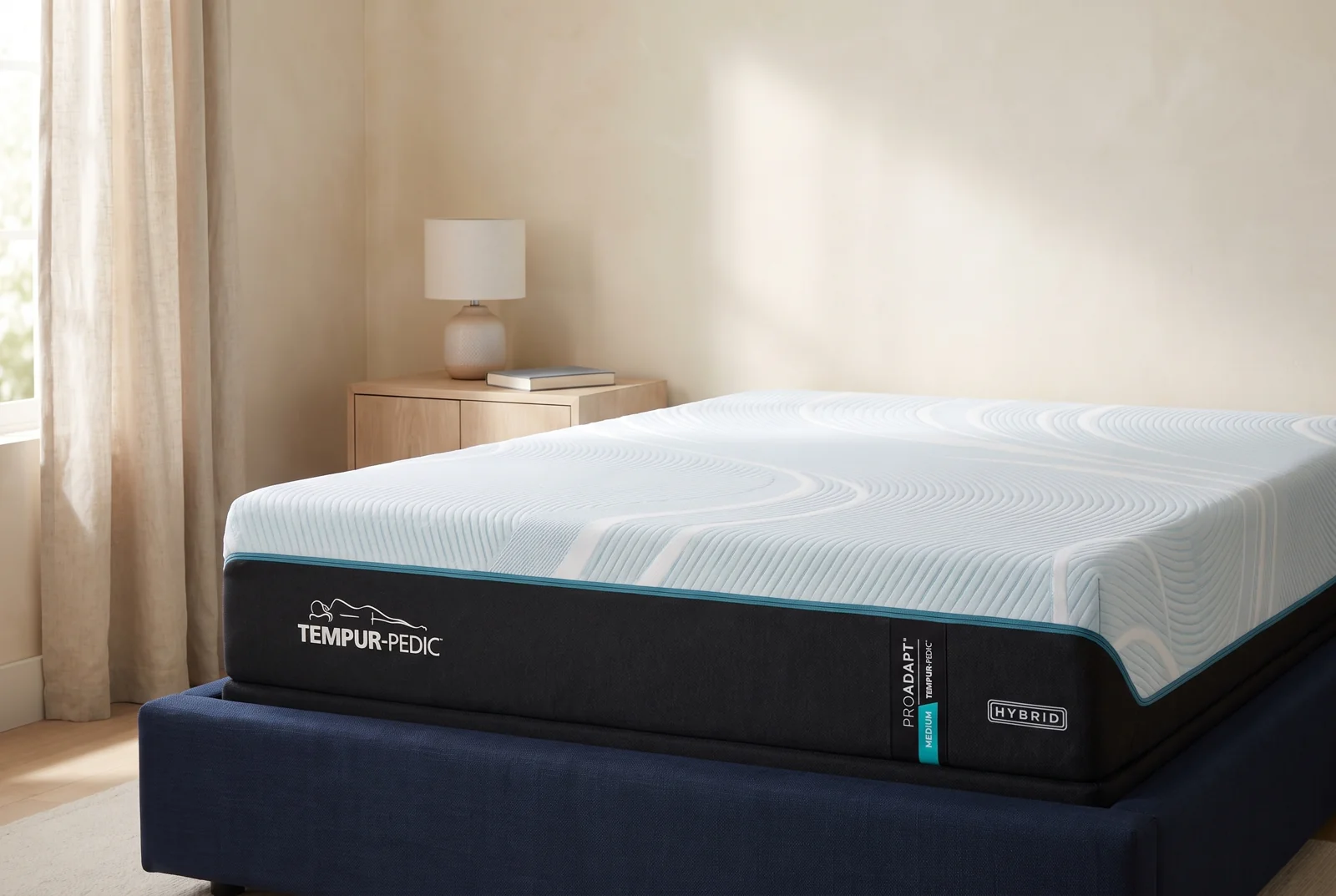
Tempur-Pedic TEMPUR-ProAdapt Medium HybridStyled product scene
If you wake up with a stiff or aching back, the problem often isn't your whole mattress. It's the top comfort layer. A good mattress topper can change how your bed supports your spine and relieves pressure, often for a fraction of the cost of a new mattress. But not every topper helps a sore back, and the wrong one can make things worse. Here's how to choose a topper that actually eases back pain, based on how your body loads the mattress while you sleep.
Back pain at night usually comes from one of two things: too much pressure building up under your hips and shoulders, or your spine sagging out of its neutral alignment. A quality topper addresses both. A soft-but-supportive topper cushions pressure points so your muscles can relax, while a firmer topper adds support to a bed that has gone too soft and lets your midsection sink.
The key thing to know: a topper improves the surface of your bed, not its core. If your mattress has a deep body impression, a broken coil, or a sagging center, a topper is a short-term patch at best. In that case it's worth looking at a proper replacement from our mattresses for back pain collection. But if your mattress is structurally sound and simply too firm or too soft on top, the right topper can genuinely transform your sleep.
Memory foam is the most popular choice for back pain, and for good reason. It contours to your spine and redistributes weight away from your hips and shoulders, which is especially helpful for side sleepers whose hips would otherwise dig in. Look for higher-density foam (around 4 lb or more), which holds its support longer than cheap low-density foam that bottoms out. If you like the feel, our memory foam mattresses use the same pressure-relieving technology in full mattress form.
Latex gives you contouring pressure relief with more bounce and a firmer, more supportive push-back than memory foam. It's a strong pick if you feel "stuck" in memory foam or if you're a back or stomach sleeper who needs your hips lifted rather than cradled. Latex also sleeps cooler, a real advantage during a warm Los Angeles summer.
If your mattress has gone soft in the middle and your lower back dips at night, a firm high-density foam topper can restore support and bring your spine back toward neutral. This is often the fix for people whose back pain started after their mattress aged.
For most people with back pain, a medium-firm feel hits the sweet spot, supportive enough to keep the spine aligned, soft enough to relieve pressure. Side sleepers generally do better with a slightly softer, thicker topper that lets the shoulder and hip settle in; back and stomach sleepers usually want a firmer, thinner topper that prevents the hips from sinking.
On thickness, 2 to 3 inches is the practical range for pain relief. Two inches adds noticeable cushioning while keeping the mattress's support close to the surface. Three inches gives deeper contouring for heavier sleepers or those who need more pressure relief. Going much thicker rarely helps back pain and can leave you feeling unstable. Browse the full range in our mattress toppers collection to compare thicknesses side by side.
Your sleep position drives the decision more than any spec sheet. Side sleepers need enough give to cushion the shoulder and hip while keeping the waist supported, a 2-to-3-inch medium memory foam or soft latex topper usually works. Back sleepers want firm, even support that fills the lumbar gap without letting the hips drop. Stomach sleepers, who are the most prone to lower-back strain, should stick with a firm, thin topper that keeps the hips from sagging. For a deeper look at pressure mapping, see our guide to the best mattress toppers for pressure points.
Firmness is subjective, and the only way to really know if a topper helps your back is to feel it. At our five Los Angeles showrooms you can lie down in your normal sleep position and compare foam, latex, and firm toppers back to back. If you find the right fit, same-day delivery ($100 upgrade, order by 4pm) across LA means you could be sleeping on it tonight, and every purchase is backed by our free 120-night comfort guarantee, so you have time to feel the difference at home.
A firm topper helps if your back pain comes from a mattress that has gone too soft and lets your hips sink below your spine. By adding support at the surface, it brings your spine closer to neutral alignment. But if your mattress is already firm and you're getting pressure-point pain in your hips or shoulders, a firm topper can make it worse, a medium or medium-firm feel is usually the safer choice.
Two to three inches is ideal for back pain. Two inches adds cushioning while keeping you close to the mattress's support core, and three inches gives deeper contouring for heavier sleepers or those needing more pressure relief. Thicker toppers rarely improve back pain and can feel unstable.
Yes, memory foam is one of the best materials for back pain because it contours to your spine and pulls pressure off your hips and shoulders. Choose a higher-density foam (around 4 lb or more) so it keeps its support over time rather than bottoming out.
It depends on your sleep position and what's wrong with your current bed. Memory foam suits side sleepers and pressure-point pain, latex suits back and stomach sleepers who want supportive push-back, and firm foam suits anyone whose mattress has softened in the middle. Matching the topper to your body and your mattress matters more than the brand.
Only temporarily. A firm topper can mask mild softening and buy you some time, but it can't repair a broken coil, deep body impression, or structural sag. If the core is failing, a new mattress is the real solution.
Not sure which topper, or mattress, is right for your back? Take our quick sleep quiz and we'll point you toward the support that fits how you sleep.
Start with a mattress type that suits how you sleep, then compare the feel in person.
Prices for Queen · Choose options for other sizes


Est. $124.84/month for 6 months
Item-price payoff target · excludes taxes and fees.
Synchrony · No interest if paid in full within 6 months. Subject to credit approval.
Interest is charged from the purchase date if not paid in full in time. Minimum monthly payments are required and may not repay the balance in time.
This item price meets the 6-month deferred-interest threshold. We use the longest confirmed period available at this price. Avoiding interest requires paying the promotional balance in full before the deadline. Lender fees can affect total cost; this selection does not establish the lowest total borrowing cost.
This illustration divides the displayed price of $749.00 for one selected item by 6 months, rounding up to the next cent. It is not the lender’s required payment or billing schedule. Check the promotional deadline on your statement and pay the full promotional balance before it ends.
Taxes, delivery, recycling charges and any lender promotional fees are excluded. Fees may add to the total borrowing cost. Additional discounts can change plan eligibility and the amount financed. Confirm the final purchase amount and applicable terms with the store before arranging financing.
Credit approval, applicable account terms and purchase eligibility apply.
How Synchrony deferred interest works
Est. $158.17/month for 6 months
Item-price payoff target · excludes taxes and fees.
Synchrony · No interest if paid in full within 6 months. Subject to credit approval.
Interest is charged from the purchase date if not paid in full in time. Minimum monthly payments are required and may not repay the balance in time.
This item price meets the 6-month deferred-interest threshold. We use the longest confirmed period available at this price. Avoiding interest requires paying the promotional balance in full before the deadline. Lender fees can affect total cost; this selection does not establish the lowest total borrowing cost.
This illustration divides the displayed price of $949.00 for one selected item by 6 months, rounding up to the next cent. It is not the lender’s required payment or billing schedule. Check the promotional deadline on your statement and pay the full promotional balance before it ends.
Taxes, delivery, recycling charges and any lender promotional fees are excluded. Fees may add to the total borrowing cost. Additional discounts can change plan eligibility and the amount financed. Confirm the final purchase amount and applicable terms with the store before arranging financing.
Credit approval, applicable account terms and purchase eligibility apply.
How Synchrony deferred interest works
Est. $146.50/month for 6 months
Item-price payoff target · excludes taxes and fees.
Synchrony · No interest if paid in full within 6 months. Subject to credit approval.
Interest is charged from the purchase date if not paid in full in time. Minimum monthly payments are required and may not repay the balance in time.
This item price meets the 6-month deferred-interest threshold. We use the longest confirmed period available at this price. Avoiding interest requires paying the promotional balance in full before the deadline. Lender fees can affect total cost; this selection does not establish the lowest total borrowing cost.
This illustration divides the displayed price of $879.00 for one selected item by 6 months, rounding up to the next cent. It is not the lender’s required payment or billing schedule. Check the promotional deadline on your statement and pay the full promotional balance before it ends.
Taxes, delivery, recycling charges and any lender promotional fees are excluded. Fees may add to the total borrowing cost. Additional discounts can change plan eligibility and the amount financed. Confirm the final purchase amount and applicable terms with the store before arranging financing.
Credit approval, applicable account terms and purchase eligibility apply.
How Synchrony deferred interest works
Est. $92.42/month for 12 months
Item-price payoff target · excludes taxes and fees.
Synchrony · No interest if paid in full within 12 months. Subject to credit approval.
Interest is charged from the purchase date if not paid in full in time. Minimum monthly payments are required and may not repay the balance in time.
This item price meets the 12-month deferred-interest threshold. We use the longest confirmed period available at this price. Avoiding interest requires paying the promotional balance in full before the deadline. Lender fees can affect total cost; this selection does not establish the lowest total borrowing cost.
This illustration divides the displayed price of $1,109.00 for one selected item by 12 months, rounding up to the next cent. It is not the lender’s required payment or billing schedule. Check the promotional deadline on your statement and pay the full promotional balance before it ends.
Taxes, delivery, recycling charges and any lender promotional fees are excluded. Fees may add to the total borrowing cost. Additional discounts can change plan eligibility and the amount financed. Confirm the final purchase amount and applicable terms with the store before arranging financing.
Credit approval, applicable account terms and purchase eligibility apply.
How Synchrony deferred interest works
Est. $91.63/month for 24 months
Item-price payoff target · excludes taxes and fees.
Synchrony · No interest if paid in full within 24 months. Subject to credit approval.
Interest is charged from the purchase date if not paid in full in time. Minimum monthly payments are required and may not repay the balance in time.
This item price meets the 24-month deferred-interest threshold. We use the longest confirmed period available at this price. Avoiding interest requires paying the promotional balance in full before the deadline. Lender fees can affect total cost; this selection does not establish the lowest total borrowing cost.
This illustration divides the displayed price of $2,199.00 for one selected item by 24 months, rounding up to the next cent. It is not the lender’s required payment or billing schedule. Check the promotional deadline on your statement and pay the full promotional balance before it ends.
Taxes, delivery, recycling charges and any lender promotional fees are excluded. Fees may add to the total borrowing cost. Additional discounts can change plan eligibility and the amount financed. Confirm the final purchase amount and applicable terms with the store before arranging financing.
Credit approval, applicable account terms and purchase eligibility apply.
How Synchrony deferred interest worksBuying guides and sleep advice, no email signup required.