Free Local White-Glove Setup & Haul-Away on Orders Over $499Announcement 1 of 2
Explore Payment Options — View Financing DetailsAnnouncement 2 of 2
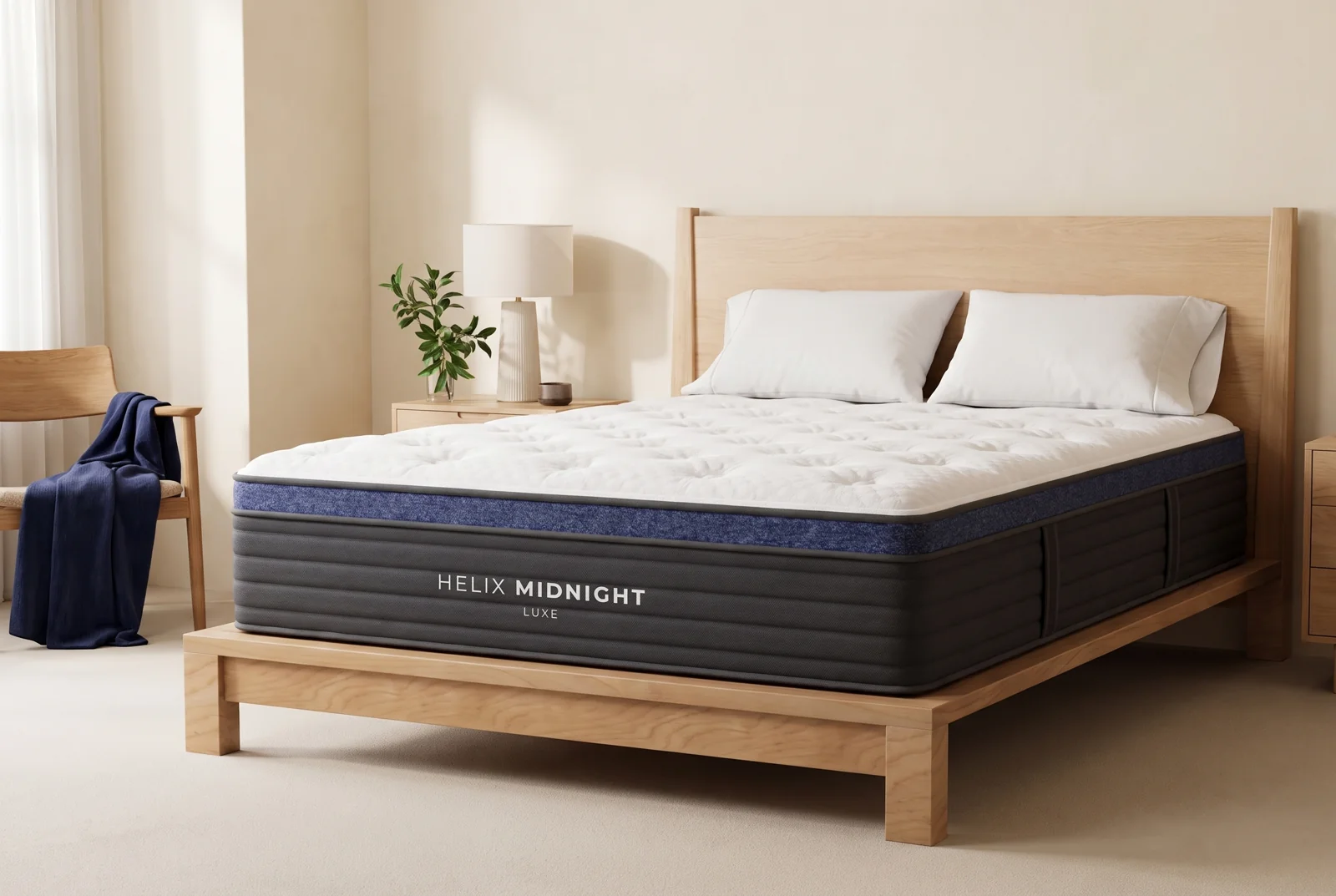
Helix Midnight LuxeStyled product scene
Hybrid mattresses have become one of the most popular mattress types in LA, and for good reason. They combine the responsive support of a coil system with the pressure relief of foam or latex, giving most sleepers the best of both worlds.
If you're in North Hollywood and shopping for a new mattress, this guide covers everything you need to know: how hybrids are built, who they're best for, how they compare to other types, and what to look for before buying.
A hybrid mattress has two core components:
The result is a mattress that feels supportive and bouncy (like a traditional innerspring) while still offering the body-contouring and pressure relief of foam. Most hybrids also sleep cooler than all-foam mattresses because the coil layer allows airflow through the mattress core.
| Mattress Type | Support | Pressure Relief | Breathability | Motion Isolation | Bounce / Responsiveness |
|---|---|---|---|---|---|
| Innerspring | Good | Low | Excellent | Low | High |
| Memory Foam | Good | Excellent | Lower | Excellent | Low |
| Latex | Excellent | Good | Good | Moderate | High |
| Hybrid | Excellent | Good–Excellent | Excellent | Good | Medium–High |
Hybrids don't excel at everything, all-foam mattresses still outperform them on motion isolation, and latex mattresses are generally more durable. But for most sleepers, hybrids offer the best overall balance.
Side sleepers usually benefit from a medium to medium-soft hybrid, softer comfort layers cushion the shoulders and hips. Back and stomach sleepers typically need firmer options with a denser coil base.
Not all coil systems are equal. Pocketed coils (also called individually wrapped coils) are the gold standard in hybrids. They respond independently, reducing motion transfer and providing more precise support. Look for a coil count appropriate for the mattress size and check coil gauge (lower numbers = thicker, more durable wire).
The top layers determine feel:
Hybrids come in soft, medium, medium-firm, and firm. If you're buying for two people with different preferences, medium-firm is typically the best compromise. You can always adjust with a mattress topper if one partner needs slightly softer feel.
Specs only tell part of the story. Visiting a showroom and spending a few minutes lying on different hybrids is still the most reliable way to choose. Our North Hollywood-area location carries a solid selection of hybrid mattresses across price points, and our team can help you narrow things down based on your sleep style.
Myth: Hybrids are just fancy innersprings.
Not quite. Traditional innersprings have thin foam padding on top. True hybrids have substantial comfort layers, often 3–4 inches of foam or latex. That meaningfully change how the mattress performs for pressure relief and motion isolation.
Myth: Hybrids are always hot.
The opposite is usually true. Because hybrids have an open coil core beneath the comfort layers, they allow more airflow than all-foam mattresses. Hot sleepers often specifically seek out hybrids.
Myth: You have to spend a lot to get a decent hybrid.
There are well-built hybrids at every price point. The higher-cost options typically have better coil systems, thicker comfort layers, and more durable foam, but a mid-range hybrid will outperform an old innerspring for most people.
LA Mattress Store carries a wide selection of hybrid mattresses from brands like Tempur-Pedic, Stearns & Foster, Spring Air, and others, with options across firmness levels and price points.
We offer free delivery, white-glove setup, and a 120-night comfort guarantee. If the mattress doesn't work out, we make it right. Financing is also available for qualified customers.
A hybrid mattress combines a coil support system (usually pocketed coils) with one or more layers of foam or latex comfort material. Both components need to be substantial, a basic innerspring with a thin foam layer doesn't qualify as a true hybrid.
They can be, especially for back and stomach sleepers who need strong lumbar support. The coil base provides foundational support, while the foam layers cushion pressure points. Medium-firm hybrids are often recommended for back pain sufferers, but the right firmness depends on your specific sleep position and body type.
Most high-quality hybrid mattresses last 8–10 years. The foam comfort layers tend to degrade before the coil system. Rotating the mattress every 3–6 months helps extend its life.
Generally yes. The coil core allows airflow through the mattress that all-foam beds can't match. Many hybrids also feature gel-infused foam or breathable covers for additional cooling.
Yes. Our showrooms carry multiple hybrid models across firmness levels. Spending even 10 minutes lying on a mattress in your usual sleep position is far more useful than reading specs alone.
Hybrids range from roughly $600 to $3,000+ depending on brand, materials, and construction quality. Mid-range hybrids ($900–$1,500) offer excellent performance for most sleepers. We also offer flexible financing options.
Yes, with the right firmness. Side sleepers need adequate cushioning at the shoulders and hips to maintain spinal alignment. A medium or medium-soft hybrid with a plush foam comfort layer typically works well for side sleeping.
Start with a mattress type that suits how you sleep, then compare the feel in person.
Prices for Queen · Choose options for other sizes


Est. $124.84/month for 6 months
Item-price payoff target · excludes taxes and fees.
Synchrony · No interest if paid in full within 6 months. Subject to credit approval.
Interest is charged from the purchase date if not paid in full in time. Minimum monthly payments are required and may not repay the balance in time.
This item price meets the 6-month deferred-interest threshold. We use the longest confirmed period available at this price. Avoiding interest requires paying the promotional balance in full before the deadline. Lender fees can affect total cost; this selection does not establish the lowest total borrowing cost.
This illustration divides the displayed price of $749.00 for one selected item by 6 months, rounding up to the next cent. It is not the lender’s required payment or billing schedule. Check the promotional deadline on your statement and pay the full promotional balance before it ends.
Taxes, delivery, recycling charges and any lender promotional fees are excluded. Fees may add to the total borrowing cost. Additional discounts can change plan eligibility and the amount financed. Confirm the final purchase amount and applicable terms with the store before arranging financing.
Credit approval, applicable account terms and purchase eligibility apply.
How Synchrony deferred interest works
Est. $158.17/month for 6 months
Item-price payoff target · excludes taxes and fees.
Synchrony · No interest if paid in full within 6 months. Subject to credit approval.
Interest is charged from the purchase date if not paid in full in time. Minimum monthly payments are required and may not repay the balance in time.
This item price meets the 6-month deferred-interest threshold. We use the longest confirmed period available at this price. Avoiding interest requires paying the promotional balance in full before the deadline. Lender fees can affect total cost; this selection does not establish the lowest total borrowing cost.
This illustration divides the displayed price of $949.00 for one selected item by 6 months, rounding up to the next cent. It is not the lender’s required payment or billing schedule. Check the promotional deadline on your statement and pay the full promotional balance before it ends.
Taxes, delivery, recycling charges and any lender promotional fees are excluded. Fees may add to the total borrowing cost. Additional discounts can change plan eligibility and the amount financed. Confirm the final purchase amount and applicable terms with the store before arranging financing.
Credit approval, applicable account terms and purchase eligibility apply.
How Synchrony deferred interest works
Est. $146.50/month for 6 months
Item-price payoff target · excludes taxes and fees.
Synchrony · No interest if paid in full within 6 months. Subject to credit approval.
Interest is charged from the purchase date if not paid in full in time. Minimum monthly payments are required and may not repay the balance in time.
This item price meets the 6-month deferred-interest threshold. We use the longest confirmed period available at this price. Avoiding interest requires paying the promotional balance in full before the deadline. Lender fees can affect total cost; this selection does not establish the lowest total borrowing cost.
This illustration divides the displayed price of $879.00 for one selected item by 6 months, rounding up to the next cent. It is not the lender’s required payment or billing schedule. Check the promotional deadline on your statement and pay the full promotional balance before it ends.
Taxes, delivery, recycling charges and any lender promotional fees are excluded. Fees may add to the total borrowing cost. Additional discounts can change plan eligibility and the amount financed. Confirm the final purchase amount and applicable terms with the store before arranging financing.
Credit approval, applicable account terms and purchase eligibility apply.
How Synchrony deferred interest works
Est. $91.63/month for 24 months
Item-price payoff target · excludes taxes and fees.
Synchrony · No interest if paid in full within 24 months. Subject to credit approval.
Interest is charged from the purchase date if not paid in full in time. Minimum monthly payments are required and may not repay the balance in time.
This item price meets the 24-month deferred-interest threshold. We use the longest confirmed period available at this price. Avoiding interest requires paying the promotional balance in full before the deadline. Lender fees can affect total cost; this selection does not establish the lowest total borrowing cost.
This illustration divides the displayed price of $2,199.00 for one selected item by 24 months, rounding up to the next cent. It is not the lender’s required payment or billing schedule. Check the promotional deadline on your statement and pay the full promotional balance before it ends.
Taxes, delivery, recycling charges and any lender promotional fees are excluded. Fees may add to the total borrowing cost. Additional discounts can change plan eligibility and the amount financed. Confirm the final purchase amount and applicable terms with the store before arranging financing.
Credit approval, applicable account terms and purchase eligibility apply.
How Synchrony deferred interest works
Est. $92.42/month for 12 months
Item-price payoff target · excludes taxes and fees.
Synchrony · No interest if paid in full within 12 months. Subject to credit approval.
Interest is charged from the purchase date if not paid in full in time. Minimum monthly payments are required and may not repay the balance in time.
This item price meets the 12-month deferred-interest threshold. We use the longest confirmed period available at this price. Avoiding interest requires paying the promotional balance in full before the deadline. Lender fees can affect total cost; this selection does not establish the lowest total borrowing cost.
This illustration divides the displayed price of $1,109.00 for one selected item by 12 months, rounding up to the next cent. It is not the lender’s required payment or billing schedule. Check the promotional deadline on your statement and pay the full promotional balance before it ends.
Taxes, delivery, recycling charges and any lender promotional fees are excluded. Fees may add to the total borrowing cost. Additional discounts can change plan eligibility and the amount financed. Confirm the final purchase amount and applicable terms with the store before arranging financing.
Credit approval, applicable account terms and purchase eligibility apply.
How Synchrony deferred interest worksBuying guides and sleep advice, no email signup required.