Free Local White-Glove Setup & Haul-Away on Orders Over $499Announcement 1 of 2
Explore Payment Options — View Financing DetailsAnnouncement 2 of 2
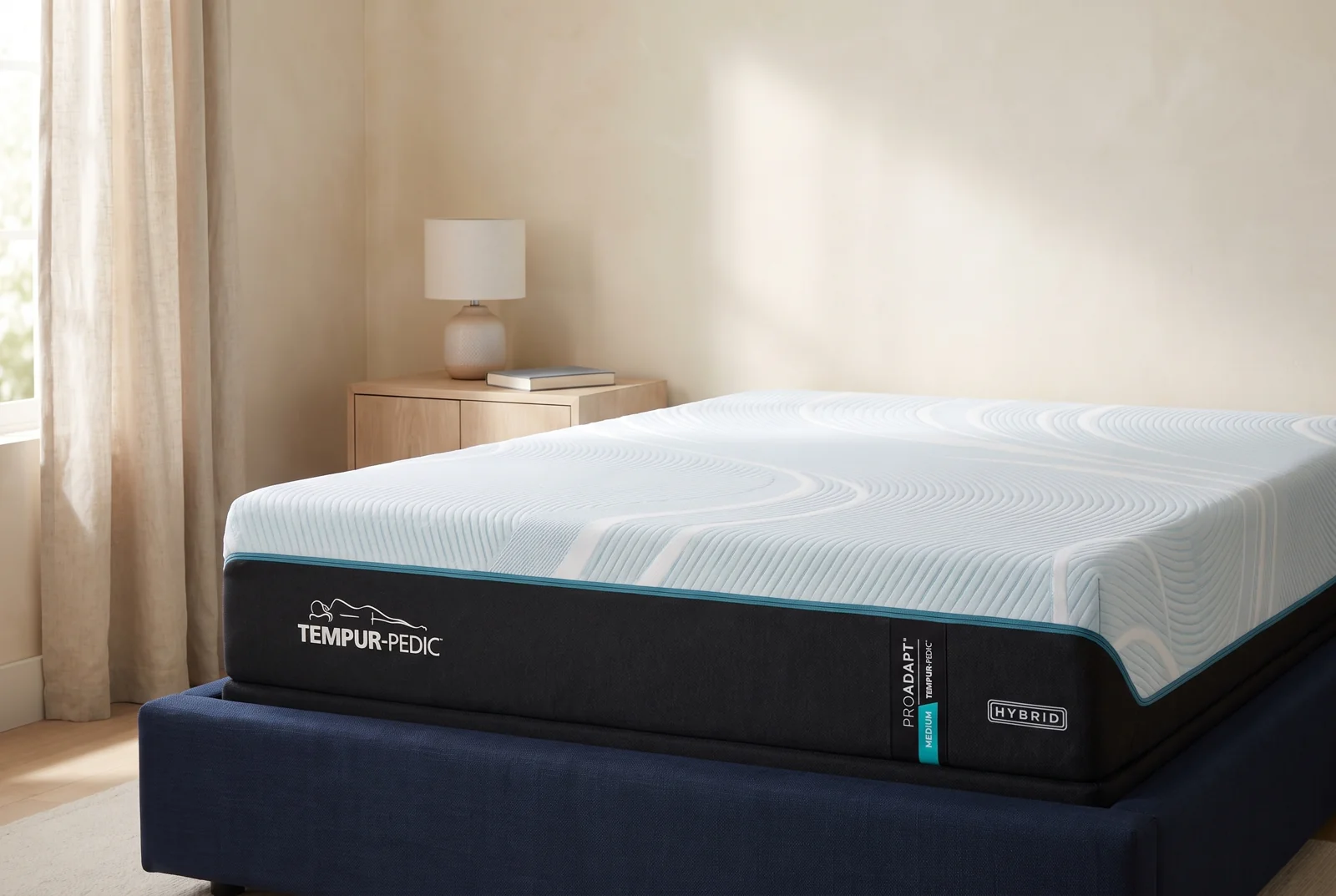
Tempur-Pedic TEMPUR-ProAdapt Medium HybridStyled product scene
Mid-Wilshire is one of the most active neighborhoods in Los Angeles, long commutes, late nights, and the constant hum of the city. Getting real rest here isn't automatic. And more residents are figuring out that the mattress matters more than they thought.
Memory foam has become the most popular mattress choice in the area, and it's not hard to see why. It relieves pressure, absorbs movement, and contours to your body in a way that innerspring mattresses simply don't.
This guide covers everything you need to know: how memory foam works, who it's best for, how it compares to other types, and how to find the right one.
Memory foam, technically called viscoelastic foam, was originally developed by NASA in the 1960s for aircraft cushioning. It became a consumer product in the 1990s and has steadily improved since.
What makes it different: memory foam responds to your body heat and weight, softening and contouring around your shape. When you shift positions, it slowly returns to its original form. This is what creates the characteristic "cradling" feel.
Modern memory foam comes in several variations:
Memory foam distributes your body weight across the surface instead of pushing back at pressure points. Side sleepers especially notice the difference, hips and shoulders sink in just enough to stay aligned without digging in.
If you share a bed, this matters. Memory foam absorbs movement rather than transferring it across the mattress. A partner getting up at 2am is far less disruptive on foam than on a spring mattress.
A well-designed memory foam mattress keeps your spine in a neutral position regardless of sleep position. This helps reduce morning stiffness and back pain over time.
The dense structure of memory foam is inhospitable to dust mites and other allergens. If you have allergies or asthma, this can make a noticeable difference in sleep quality.
Quality memory foam holds up well, typically 8 to 10 years before noticeable softening occurs. That's comparable to, or better than, most innerspring options in the same price range.
Good fit if you:
May not be the best fit if you:
| Feature | Memory Foam | Innerspring | Hybrid | Latex |
|---|---|---|---|---|
| Pressure Relief | Excellent | Fair | Good | Very Good |
| Motion Isolation | Excellent | Poor | Good | Good |
| Cooling | Fair–Good* | Good | Very Good | Good |
| Bounce / Responsiveness | Low | High | Medium | High |
| Durability | 8–10 years | 6–8 years | 8–10 years | 10–15 years |
| Best For | Side sleepers, couples | Budget, bounce preference | Most sleepers | Eco-conscious, hot sleepers |
*Varies by model, gel-infused and open-cell foam sleep cooler than traditional memory foam.
Older memory foam had a real heat retention problem. The dense structure trapped warmth, which was uncomfortable for many sleepers.
Modern memory foam has largely addressed this:
If you're a particularly hot sleeper, look for models that specifically address cooling, or consider a hybrid mattress, which combines foam comfort layers with an innerspring core that allows more airflow. Our team in-store can help you test options in person across our LA showrooms.
Higher-density foam (4–5+ lbs per cubic foot) is more durable and provides firmer support. Lower-density foam is softer and less expensive but may break down faster. For the support layer, density matters most.
This means the foam was made without ozone depleters, mercury, lead, and other heavy metals, and has low VOC emissions. It's a reliable baseline for safety and quality.
You can't really tell how a mattress will feel from a product page. Our Mid-Wilshire area showroom lets you test different firmness levels and foam types in person. Bring your partner if you share a bed.
We offer a 120-night comfort guarantee. If your mattress isn't working for you, you can exchange it, no pressure to make the perfect decision in one visit.
We carry a curated selection of memory foam mattresses across a range of budgets and comfort profiles, from accessible everyday options to premium Tempur-Pedic models with their proprietary TEMPUR material. In-store, our sleep specialists can walk you through the differences and help you narrow it down quickly.
We also carry hybrids and latex mattresses if you want to compare before deciding. Financing options are available if you'd like to spread out the cost.
Most quality memory foam mattresses last 8 to 10 years. Signs it's time to replace yours: visible sagging, persistent body impressions, or waking up with new aches.
Traditional memory foam can retain heat. Modern versions with gel infusions, open-cell construction, or phase-change covers sleep noticeably cooler. When shopping, ask specifically about cooling features.
Many people with back pain do well on medium-to-firm memory foam because it provides pressure relief without allowing the spine to fall out of alignment. That said, the "right" mattress for back pain varies by person, in-store testing is the best way to find out.
Yes, as long as the frame provides solid, even support across the surface. Slats no more than 3 inches apart work well. A box spring isn't necessary, a platform frame or foundation works fine.
New foam can off-gas a faint smell when first unpacked. This typically dissipates within 24 to 72 hours. Unboxing in a well-ventilated room speeds up the process.
Most are designed for single-sided use and shouldn't be flipped. Rotating 180 degrees head-to-foot every 3 to 6 months helps even out wear.
A hybrid combines a foam comfort layer with an innerspring support core. Hybrids tend to sleep cooler and feel bouncier. Memory foam-only mattresses usually provide better motion isolation. See our hybrid mattress collection to compare.
Start with a mattress type that suits how you sleep, then compare the feel in person.
Prices for Queen · Choose options for other sizes


Est. $124.84/month for 6 months
Item-price payoff target · excludes taxes and fees.
Synchrony · No interest if paid in full within 6 months. Subject to credit approval.
Interest is charged from the purchase date if not paid in full in time. Minimum monthly payments are required and may not repay the balance in time.
This item price meets the 6-month deferred-interest threshold. We use the longest confirmed period available at this price. Avoiding interest requires paying the promotional balance in full before the deadline. Lender fees can affect total cost; this selection does not establish the lowest total borrowing cost.
This illustration divides the displayed price of $749.00 for one selected item by 6 months, rounding up to the next cent. It is not the lender’s required payment or billing schedule. Check the promotional deadline on your statement and pay the full promotional balance before it ends.
Taxes, delivery, recycling charges and any lender promotional fees are excluded. Fees may add to the total borrowing cost. Additional discounts can change plan eligibility and the amount financed. Confirm the final purchase amount and applicable terms with the store before arranging financing.
Credit approval, applicable account terms and purchase eligibility apply.
How Synchrony deferred interest works
Est. $158.17/month for 6 months
Item-price payoff target · excludes taxes and fees.
Synchrony · No interest if paid in full within 6 months. Subject to credit approval.
Interest is charged from the purchase date if not paid in full in time. Minimum monthly payments are required and may not repay the balance in time.
This item price meets the 6-month deferred-interest threshold. We use the longest confirmed period available at this price. Avoiding interest requires paying the promotional balance in full before the deadline. Lender fees can affect total cost; this selection does not establish the lowest total borrowing cost.
This illustration divides the displayed price of $949.00 for one selected item by 6 months, rounding up to the next cent. It is not the lender’s required payment or billing schedule. Check the promotional deadline on your statement and pay the full promotional balance before it ends.
Taxes, delivery, recycling charges and any lender promotional fees are excluded. Fees may add to the total borrowing cost. Additional discounts can change plan eligibility and the amount financed. Confirm the final purchase amount and applicable terms with the store before arranging financing.
Credit approval, applicable account terms and purchase eligibility apply.
How Synchrony deferred interest works
Est. $146.50/month for 6 months
Item-price payoff target · excludes taxes and fees.
Synchrony · No interest if paid in full within 6 months. Subject to credit approval.
Interest is charged from the purchase date if not paid in full in time. Minimum monthly payments are required and may not repay the balance in time.
This item price meets the 6-month deferred-interest threshold. We use the longest confirmed period available at this price. Avoiding interest requires paying the promotional balance in full before the deadline. Lender fees can affect total cost; this selection does not establish the lowest total borrowing cost.
This illustration divides the displayed price of $879.00 for one selected item by 6 months, rounding up to the next cent. It is not the lender’s required payment or billing schedule. Check the promotional deadline on your statement and pay the full promotional balance before it ends.
Taxes, delivery, recycling charges and any lender promotional fees are excluded. Fees may add to the total borrowing cost. Additional discounts can change plan eligibility and the amount financed. Confirm the final purchase amount and applicable terms with the store before arranging financing.
Credit approval, applicable account terms and purchase eligibility apply.
How Synchrony deferred interest works
Est. $91.63/month for 24 months
Item-price payoff target · excludes taxes and fees.
Synchrony · No interest if paid in full within 24 months. Subject to credit approval.
Interest is charged from the purchase date if not paid in full in time. Minimum monthly payments are required and may not repay the balance in time.
This item price meets the 24-month deferred-interest threshold. We use the longest confirmed period available at this price. Avoiding interest requires paying the promotional balance in full before the deadline. Lender fees can affect total cost; this selection does not establish the lowest total borrowing cost.
This illustration divides the displayed price of $2,199.00 for one selected item by 24 months, rounding up to the next cent. It is not the lender’s required payment or billing schedule. Check the promotional deadline on your statement and pay the full promotional balance before it ends.
Taxes, delivery, recycling charges and any lender promotional fees are excluded. Fees may add to the total borrowing cost. Additional discounts can change plan eligibility and the amount financed. Confirm the final purchase amount and applicable terms with the store before arranging financing.
Credit approval, applicable account terms and purchase eligibility apply.
How Synchrony deferred interest works
Est. $92.42/month for 12 months
Item-price payoff target · excludes taxes and fees.
Synchrony · No interest if paid in full within 12 months. Subject to credit approval.
Interest is charged from the purchase date if not paid in full in time. Minimum monthly payments are required and may not repay the balance in time.
This item price meets the 12-month deferred-interest threshold. We use the longest confirmed period available at this price. Avoiding interest requires paying the promotional balance in full before the deadline. Lender fees can affect total cost; this selection does not establish the lowest total borrowing cost.
This illustration divides the displayed price of $1,109.00 for one selected item by 12 months, rounding up to the next cent. It is not the lender’s required payment or billing schedule. Check the promotional deadline on your statement and pay the full promotional balance before it ends.
Taxes, delivery, recycling charges and any lender promotional fees are excluded. Fees may add to the total borrowing cost. Additional discounts can change plan eligibility and the amount financed. Confirm the final purchase amount and applicable terms with the store before arranging financing.
Credit approval, applicable account terms and purchase eligibility apply.
How Synchrony deferred interest worksBuying guides and sleep advice, no email signup required.