Free Local White-Glove Setup & Haul-Away on Orders Over $499Announcement 1 of 2
Explore Payment Options — View Financing DetailsAnnouncement 2 of 2
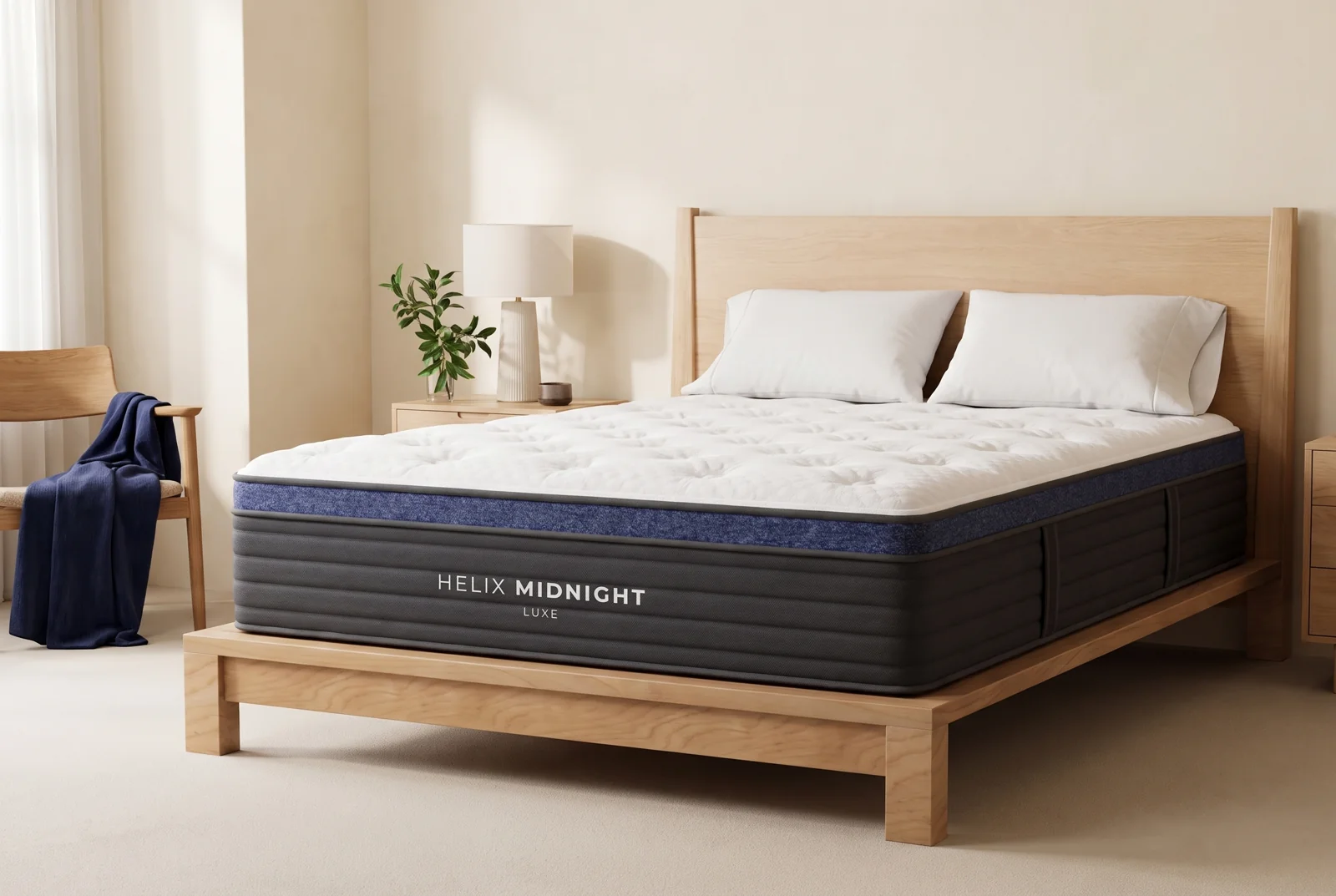
Helix Midnight LuxeStyled product scene
Side sleeping is the most common sleep position, and also the most demanding on your mattress. Your shoulders and hips take the brunt of your body weight, creating pressure that can wake you up sore if your mattress isn't right.
The good news: you don't need to spend a fortune to sleep well on your side. You just need to know what to look for.
When you sleep on your side, your spine needs to stay in a neutral line from your neck to your tailbone. Two things get in the way:
A good mattress for side sleepers threads that needle, soft enough to cushion pressure points, supportive enough to keep everything aligned.
Most side sleepers do best on a medium to medium-soft mattress, roughly a 4–6 on a 1–10 scale (where 10 is hardest).
| Body Type | Recommended Firmness | Why |
|---|---|---|
| Lightweight (<130 lbs) | Soft to Medium-Soft (3–5) | Less body weight means less natural sinkage |
| Average (130–230 lbs) | Medium to Medium-Soft (4–6) | Sweet spot for most side sleepers |
| Heavier (>230 lbs) | Medium to Medium-Firm (5–7) | More weight needs more resistance to prevent over-sinkage |
Memory foam is purpose-built for side sleeping. It contours to your body shape, distributes weight evenly, and absorbs motion. The main concern is heat, look for gel-infused or open-cell versions if you run warm.
Natural latex gives you similar contouring to memory foam but with more bounce and better breathability. It's responsive (you don't feel "stuck"), hypoallergenic, and tends to last longer. Usually a bit pricier, but worth it if budget allows.
Hybrids pair a foam comfort layer (memory foam or latex) with a pocketed coil support system. You get the pressure relief of foam plus the bounce, airflow, and edge support of springs. A solid all-around choice for side sleepers who want more support structure.
Basic innerspring mattresses without a substantial comfort layer are generally not ideal for side sleepers. They don't cushion pressure points well. Pillow-top versions are the exception, the added top layer changes the equation.
A straightforward gel memory foam mattress with a plush feel tuned for side sleepers. The gel infusion helps regulate temperature, the foam contours to shoulders and hips, and motion isolation is excellent. If you've been sleeping hot on a traditional foam mattress, this is a significant upgrade.
A hybrid mattress at a price point that doesn't feel like a compromise. Memory foam comfort layer handles pressure relief; pocketed coils underneath provide support and keep airflow going. At 11", it has enough height to give good contouring without feeling like you're sinking in.
If natural materials matter to you, the Harvest Pillow Top is worth considering. Natural latex comfort layer on top provides that springy-yet-contouring feel that latex fans love. It's breathable by nature, sleeps cooler than foam, and the pillow top adds extra cushion at the shoulder and hip.
A premium-feeling innerspring hybrid with a deep plush top. The 16" profile gives it a luxurious presence, and the reinforced edge support means you can use every inch of the sleeping surface. More investment up front, but the construction quality justifies it for serious side sleepers.
Online mattress shopping is convenient, but side sleeping pressure points are something you feel in person. If you're in LA, visit one of our 5 showrooms and spend 10–15 minutes lying on your side in your typical position. No test equals no guarantee you'll like it at home.
Your body takes 2–4 weeks to fully adjust to a new mattress. A 90–120 night trial gives you time to know for sure. LA Mattress offers a 120-night comfort guarantee, use it.
Your mattress and pillow work together. A side sleeper needs a pillow thick enough to keep their neck level with their spine. If you upgrade your mattress without rethinking your pillow, you might still wake up with a stiff neck. See our pillow selection for side-sleep-specific options.
If budget is tight and your current mattress is just slightly too firm, a memory foam or latex topper can provide the extra cushion you need at a fraction of the cost. Not a permanent fix, but a smart interim step.
This guide is for you if:
This guide is less relevant if:
Memory foam, latex, and hybrid mattresses are the top choices. All three contour to the body and relieve pressure at the shoulder and hip, the key areas for side sleepers.
Medium to medium-soft (roughly 4–6 on a 10-point scale) works for most side sleepers. Very light sleepers may prefer softer; heavier sleepers may need medium-firm to avoid sinking too deep.
Yes. A good hybrid pairs a foam or latex comfort layer (for pressure relief) with pocketed coils (for support and airflow). It's a well-rounded choice for side sleepers who want more than foam alone.
Yes. Side sleepers need a thicker pillow that keeps the head level with the spine. A flat pillow lets the neck drop; too thick pushes it up. Look for adjustable-fill pillows that let you customize the loft.
Every 7–10 years on average. Replace sooner if you notice sagging, lumps, or consistent morning pain that wasn't there before.
Yes, durability depends more on material density and construction quality than price alone. High-density foam and natural latex outlast many mid-priced options. We carry affordable options that are genuinely built to last.
Gel infusion helps memory foam dissipate heat faster. Standard memory foam can trap warmth; gel versions sleep noticeably cooler, especially in LA's warm climate.
Not necessarily. What matters more is the thickness and quality of the comfort layer. A 12" mattress with 3" of quality memory foam on top will serve a side sleeper better than a 14" mattress with 1" of foam over cheap padding.
If you're in LA, the easiest way to find your perfect mattress is to come in and try it. Our sleep experts will ask a few questions about how you sleep, your budget, and what you've found uncomfortable about past mattresses. Then point you to the right options without pressure.
Find a showroom near you or browse our full mattress collection online. Financing available, see options here.
Start with a mattress type that suits how you sleep, then compare the feel in person.
Prices for Queen · Choose options for other sizes


Est. $124.84/month for 6 months
Item-price payoff target · excludes taxes and fees.
Synchrony · No interest if paid in full within 6 months. Subject to credit approval.
Interest is charged from the purchase date if not paid in full in time. Minimum monthly payments are required and may not repay the balance in time.
This item price meets the 6-month deferred-interest threshold. We use the longest confirmed period available at this price. Avoiding interest requires paying the promotional balance in full before the deadline. Lender fees can affect total cost; this selection does not establish the lowest total borrowing cost.
This illustration divides the displayed price of $749.00 for one selected item by 6 months, rounding up to the next cent. It is not the lender’s required payment or billing schedule. Check the promotional deadline on your statement and pay the full promotional balance before it ends.
Taxes, delivery, recycling charges and any lender promotional fees are excluded. Fees may add to the total borrowing cost. Additional discounts can change plan eligibility and the amount financed. Confirm the final purchase amount and applicable terms with the store before arranging financing.
Credit approval, applicable account terms and purchase eligibility apply.
How Synchrony deferred interest works
Est. $158.17/month for 6 months
Item-price payoff target · excludes taxes and fees.
Synchrony · No interest if paid in full within 6 months. Subject to credit approval.
Interest is charged from the purchase date if not paid in full in time. Minimum monthly payments are required and may not repay the balance in time.
This item price meets the 6-month deferred-interest threshold. We use the longest confirmed period available at this price. Avoiding interest requires paying the promotional balance in full before the deadline. Lender fees can affect total cost; this selection does not establish the lowest total borrowing cost.
This illustration divides the displayed price of $949.00 for one selected item by 6 months, rounding up to the next cent. It is not the lender’s required payment or billing schedule. Check the promotional deadline on your statement and pay the full promotional balance before it ends.
Taxes, delivery, recycling charges and any lender promotional fees are excluded. Fees may add to the total borrowing cost. Additional discounts can change plan eligibility and the amount financed. Confirm the final purchase amount and applicable terms with the store before arranging financing.
Credit approval, applicable account terms and purchase eligibility apply.
How Synchrony deferred interest works
Est. $146.50/month for 6 months
Item-price payoff target · excludes taxes and fees.
Synchrony · No interest if paid in full within 6 months. Subject to credit approval.
Interest is charged from the purchase date if not paid in full in time. Minimum monthly payments are required and may not repay the balance in time.
This item price meets the 6-month deferred-interest threshold. We use the longest confirmed period available at this price. Avoiding interest requires paying the promotional balance in full before the deadline. Lender fees can affect total cost; this selection does not establish the lowest total borrowing cost.
This illustration divides the displayed price of $879.00 for one selected item by 6 months, rounding up to the next cent. It is not the lender’s required payment or billing schedule. Check the promotional deadline on your statement and pay the full promotional balance before it ends.
Taxes, delivery, recycling charges and any lender promotional fees are excluded. Fees may add to the total borrowing cost. Additional discounts can change plan eligibility and the amount financed. Confirm the final purchase amount and applicable terms with the store before arranging financing.
Credit approval, applicable account terms and purchase eligibility apply.
How Synchrony deferred interest works
Est. $91.63/month for 24 months
Item-price payoff target · excludes taxes and fees.
Synchrony · No interest if paid in full within 24 months. Subject to credit approval.
Interest is charged from the purchase date if not paid in full in time. Minimum monthly payments are required and may not repay the balance in time.
This item price meets the 24-month deferred-interest threshold. We use the longest confirmed period available at this price. Avoiding interest requires paying the promotional balance in full before the deadline. Lender fees can affect total cost; this selection does not establish the lowest total borrowing cost.
This illustration divides the displayed price of $2,199.00 for one selected item by 24 months, rounding up to the next cent. It is not the lender’s required payment or billing schedule. Check the promotional deadline on your statement and pay the full promotional balance before it ends.
Taxes, delivery, recycling charges and any lender promotional fees are excluded. Fees may add to the total borrowing cost. Additional discounts can change plan eligibility and the amount financed. Confirm the final purchase amount and applicable terms with the store before arranging financing.
Credit approval, applicable account terms and purchase eligibility apply.
How Synchrony deferred interest works
Est. $92.42/month for 12 months
Item-price payoff target · excludes taxes and fees.
Synchrony · No interest if paid in full within 12 months. Subject to credit approval.
Interest is charged from the purchase date if not paid in full in time. Minimum monthly payments are required and may not repay the balance in time.
This item price meets the 12-month deferred-interest threshold. We use the longest confirmed period available at this price. Avoiding interest requires paying the promotional balance in full before the deadline. Lender fees can affect total cost; this selection does not establish the lowest total borrowing cost.
This illustration divides the displayed price of $1,109.00 for one selected item by 12 months, rounding up to the next cent. It is not the lender’s required payment or billing schedule. Check the promotional deadline on your statement and pay the full promotional balance before it ends.
Taxes, delivery, recycling charges and any lender promotional fees are excluded. Fees may add to the total borrowing cost. Additional discounts can change plan eligibility and the amount financed. Confirm the final purchase amount and applicable terms with the store before arranging financing.
Credit approval, applicable account terms and purchase eligibility apply.
How Synchrony deferred interest worksBuying guides and sleep advice, no email signup required.