Free Local White-Glove Setup & Haul-Away on Orders Over $499Announcement 1 of 2
Explore Payment Options — View Financing DetailsAnnouncement 2 of 2
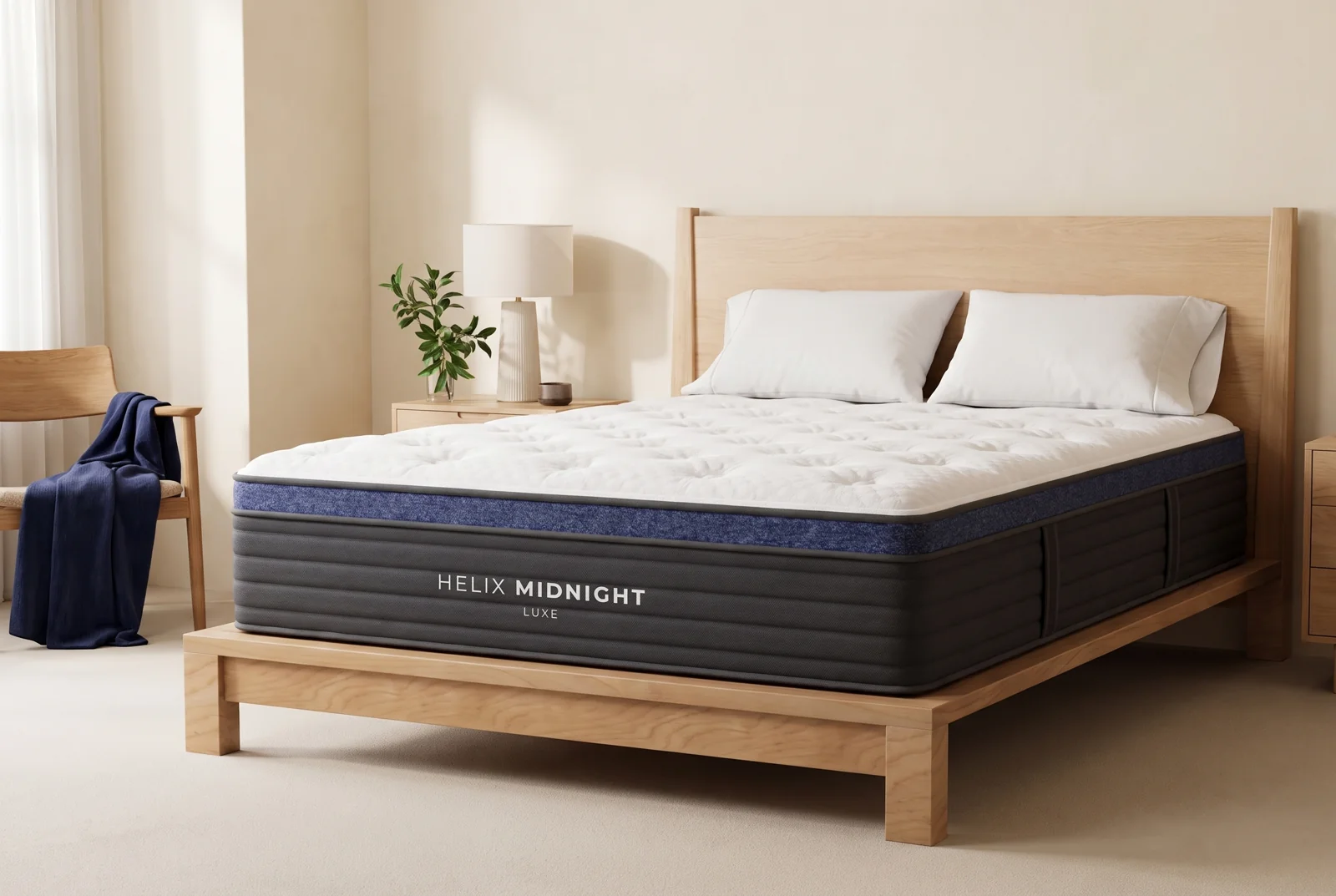
Helix Midnight LuxeStyled product scene
Sharing a bed introduces a specific set of sleep challenges that a solo sleeper never has to think about: different firmness preferences, motion transfer when your partner moves, temperature mismatches, and the shrinking feeling of a mattress that seemed big enough until someone else was in it.
Hybrid mattresses are the go-to solution for couples, and for good reason. They handle the competing demands of two sleepers better than any other mattress type. This guide covers why, and which specific options are worth considering.
A hybrid mattress combines a coil support system with foam or latex comfort layers. That combination solves several problems that affect couples specifically:
Test this in person if possible. Good pocketed coil hybrids barely transfer motion. Lower-quality coil systems can still bounce. The comfort foam layers above the coils matter too, denser, higher-quality foam absorbs more movement.
Couples with the same firmness preference have it easy. Couples with different preferences should look for brands with a wide range of firmness options, medium, medium-firm, and firm variants, so you can find a middle ground, or explore split-firmness solutions if one partner strongly prefers something very different.
If either of you sleeps warm, prioritize hybrids with gel-infused or copper-infused comfort layers and breathable covers. The coil base already helps, but the right foam layers make a real difference.
This is underrated. A hybrid with strong edge support lets you use the full width of the mattress without feeling like you'll roll off. For couples, that extra few inches on each side actually matters for space.
For two adults, a Queen is the minimum, and it can feel tight. A King gives each person the space of a Twin XL. If budget and room size allow, the size upgrade is genuinely impactful for sleep quality.
A 14-inch hybrid with copper-infused foam for temperature regulation. The Diamond Tundra is built to handle heavier weights without sagging, making it a particularly durable option for couples. Medium firmness works for most sleep positions. Reinforced edge support maximizes the usable sleep surface.
| Pros | Cons |
|---|---|
| Copper infusion for real temperature regulation | Medium firmness only, not ideal if one partner needs very firm or very soft |
| Strong edge support increases usable surface | Hybrid design may not appeal to those who prefer all-foam |
| Durable build supports heavier combined weight |
Natural latex on top of a coil support system. Latex is naturally breathable, pressure-relieving, and durable, and unlike memory foam, it responds quickly when you change positions. The natural latex makes this a good pick for couples who prioritize longevity and eco-friendly materials. The plush feel suits side sleepers especially well.
| Pros | Cons |
|---|---|
| Natural latex is responsive and breathable | Plush feel may be too soft for back/stomach sleepers |
| Eco-friendly materials; no off-gassing concerns | Natural latex adds to the price |
| Highly durable, latex holds up for years |
For couples where both partners prefer a firmer sleep surface, back sleepers, stomach sleepers, or those who just hate the sinking-in feeling, the Eclipse Ease Firm is a straightforward choice. Firm support with foam pressure relief layers and reinforced edges. Durable construction handles heavier combined weight without losing shape.
| Pros | Cons |
|---|---|
| Firm support without being uncomfortable | Too firm for side sleepers or those who prefer plush feel |
| Good for back and stomach sleepers | Hybrid design adds weight vs. all-foam |
| Reinforced edges maximize sleep surface |
The Gravity features Diamond's Cool Gel Grid technology, a gel layer with a grid-cut structure that provides both pressure relief and heat dissipation. The grid design means the gel flexes with your body while still allowing airflow. A medium-firm feel makes it versatile for couples with slightly different preferences.
| Pros | Cons |
|---|---|
| Gel grid provides cooling and pressure relief simultaneously | Medium firmness may not fully satisfy very firm or very soft preferences |
| Good balance for mixed sleep positions | |
| Reinforced edges |
This isn't a stretch: sleep deprivation consistently correlates with increased irritability, reduced patience, and lower relationship satisfaction. When both partners sleep poorly, the cumulative effect compounds quickly.
The specific ways shared sleep disruptions affect couples:
A hybrid mattress doesn't fix relationship problems. But removing preventable sleep disruptions removes a low-grade source of friction that affects how both partners show up during the day.
The coil system in a hybrid provides airflow (important for temperature regulation), edge support (more usable surface), and bounce (easier repositioning). Memory foam hybrids also provide better motion isolation than traditional innerspring options. For most couples, the combination outperforms pure foam or pure innerspring.
Individually pocketed coils compress independently rather than as a connected spring system. So when your partner moves, only the coils immediately under that area compress, not the ones under you. Memory foam or latex comfort layers above the coils absorb additional movement.
Look for medium or medium-firm options first. They're often workable for both partners. If the difference is significant, ask about split-firmness options when visiting a showroom. Our sleep experts at LA Mattress Store can help you find a practical solution based on your specific needs.
Yes. The coil layer creates continuous airflow through the mattress that foam mattresses can't replicate. Memory foam and gel foam without a coil base tend to trap heat more. If either partner runs hot, a hybrid is a clear upgrade over all-foam options.
A Queen (60" x 80") is the common choice and works for most couples. A King (76" x 80") gives each person significantly more space and is worth considering if budget and room size allow. A California King (72" x 84") is better for taller couples or narrower rooms.
More than most people expect. Strong edge support means you can sleep near the edge without feeling like you'll roll off, effectively increasing usable surface. For two adults sharing a bed, every inch matters.
A quality hybrid typically lasts 8–12 years with proper care. Rotating regularly and using a mattress protector extends lifespan. Higher-coil-count and higher-density-foam hybrids tend to hold up longer than budget versions.
Sleep deprivation reliably increases irritability and reduces emotional regulation. If you're consistently disrupting each other's sleep, the effect accumulates. Eliminating that friction source doesn't guarantee a better relationship, but it removes a preventable stressor. Most couples who upgrade a genuinely poor sleeping situation report meaningful improvement in daytime mood and patience.
Start with a mattress type that suits how you sleep, then compare the feel in person.
Prices for Queen · Choose options for other sizes


Est. $124.84/month for 6 months
Item-price payoff target · excludes taxes and fees.
Synchrony · No interest if paid in full within 6 months. Subject to credit approval.
Interest is charged from the purchase date if not paid in full in time. Minimum monthly payments are required and may not repay the balance in time.
This item price meets the 6-month deferred-interest threshold. We use the longest confirmed period available at this price. Avoiding interest requires paying the promotional balance in full before the deadline. Lender fees can affect total cost; this selection does not establish the lowest total borrowing cost.
This illustration divides the displayed price of $749.00 for one selected item by 6 months, rounding up to the next cent. It is not the lender’s required payment or billing schedule. Check the promotional deadline on your statement and pay the full promotional balance before it ends.
Taxes, delivery, recycling charges and any lender promotional fees are excluded. Fees may add to the total borrowing cost. Additional discounts can change plan eligibility and the amount financed. Confirm the final purchase amount and applicable terms with the store before arranging financing.
Credit approval, applicable account terms and purchase eligibility apply.
How Synchrony deferred interest works
Est. $158.17/month for 6 months
Item-price payoff target · excludes taxes and fees.
Synchrony · No interest if paid in full within 6 months. Subject to credit approval.
Interest is charged from the purchase date if not paid in full in time. Minimum monthly payments are required and may not repay the balance in time.
This item price meets the 6-month deferred-interest threshold. We use the longest confirmed period available at this price. Avoiding interest requires paying the promotional balance in full before the deadline. Lender fees can affect total cost; this selection does not establish the lowest total borrowing cost.
This illustration divides the displayed price of $949.00 for one selected item by 6 months, rounding up to the next cent. It is not the lender’s required payment or billing schedule. Check the promotional deadline on your statement and pay the full promotional balance before it ends.
Taxes, delivery, recycling charges and any lender promotional fees are excluded. Fees may add to the total borrowing cost. Additional discounts can change plan eligibility and the amount financed. Confirm the final purchase amount and applicable terms with the store before arranging financing.
Credit approval, applicable account terms and purchase eligibility apply.
How Synchrony deferred interest works
Est. $146.50/month for 6 months
Item-price payoff target · excludes taxes and fees.
Synchrony · No interest if paid in full within 6 months. Subject to credit approval.
Interest is charged from the purchase date if not paid in full in time. Minimum monthly payments are required and may not repay the balance in time.
This item price meets the 6-month deferred-interest threshold. We use the longest confirmed period available at this price. Avoiding interest requires paying the promotional balance in full before the deadline. Lender fees can affect total cost; this selection does not establish the lowest total borrowing cost.
This illustration divides the displayed price of $879.00 for one selected item by 6 months, rounding up to the next cent. It is not the lender’s required payment or billing schedule. Check the promotional deadline on your statement and pay the full promotional balance before it ends.
Taxes, delivery, recycling charges and any lender promotional fees are excluded. Fees may add to the total borrowing cost. Additional discounts can change plan eligibility and the amount financed. Confirm the final purchase amount and applicable terms with the store before arranging financing.
Credit approval, applicable account terms and purchase eligibility apply.
How Synchrony deferred interest works
Est. $91.63/month for 24 months
Item-price payoff target · excludes taxes and fees.
Synchrony · No interest if paid in full within 24 months. Subject to credit approval.
Interest is charged from the purchase date if not paid in full in time. Minimum monthly payments are required and may not repay the balance in time.
This item price meets the 24-month deferred-interest threshold. We use the longest confirmed period available at this price. Avoiding interest requires paying the promotional balance in full before the deadline. Lender fees can affect total cost; this selection does not establish the lowest total borrowing cost.
This illustration divides the displayed price of $2,199.00 for one selected item by 24 months, rounding up to the next cent. It is not the lender’s required payment or billing schedule. Check the promotional deadline on your statement and pay the full promotional balance before it ends.
Taxes, delivery, recycling charges and any lender promotional fees are excluded. Fees may add to the total borrowing cost. Additional discounts can change plan eligibility and the amount financed. Confirm the final purchase amount and applicable terms with the store before arranging financing.
Credit approval, applicable account terms and purchase eligibility apply.
How Synchrony deferred interest works
Est. $92.42/month for 12 months
Item-price payoff target · excludes taxes and fees.
Synchrony · No interest if paid in full within 12 months. Subject to credit approval.
Interest is charged from the purchase date if not paid in full in time. Minimum monthly payments are required and may not repay the balance in time.
This item price meets the 12-month deferred-interest threshold. We use the longest confirmed period available at this price. Avoiding interest requires paying the promotional balance in full before the deadline. Lender fees can affect total cost; this selection does not establish the lowest total borrowing cost.
This illustration divides the displayed price of $1,109.00 for one selected item by 12 months, rounding up to the next cent. It is not the lender’s required payment or billing schedule. Check the promotional deadline on your statement and pay the full promotional balance before it ends.
Taxes, delivery, recycling charges and any lender promotional fees are excluded. Fees may add to the total borrowing cost. Additional discounts can change plan eligibility and the amount financed. Confirm the final purchase amount and applicable terms with the store before arranging financing.
Credit approval, applicable account terms and purchase eligibility apply.
How Synchrony deferred interest worksBuying guides and sleep advice, no email signup required.