Free Local White-Glove Setup & Haul-Away on Orders Over $499Announcement 1 of 2
Explore Payment Options — View Financing DetailsAnnouncement 2 of 2
A clear, head-to-head comparison of innerspring and memory foam mattresses — support, cooling, motion isolation, durability, and price — so you can pick the right feel for how you actually sleep.
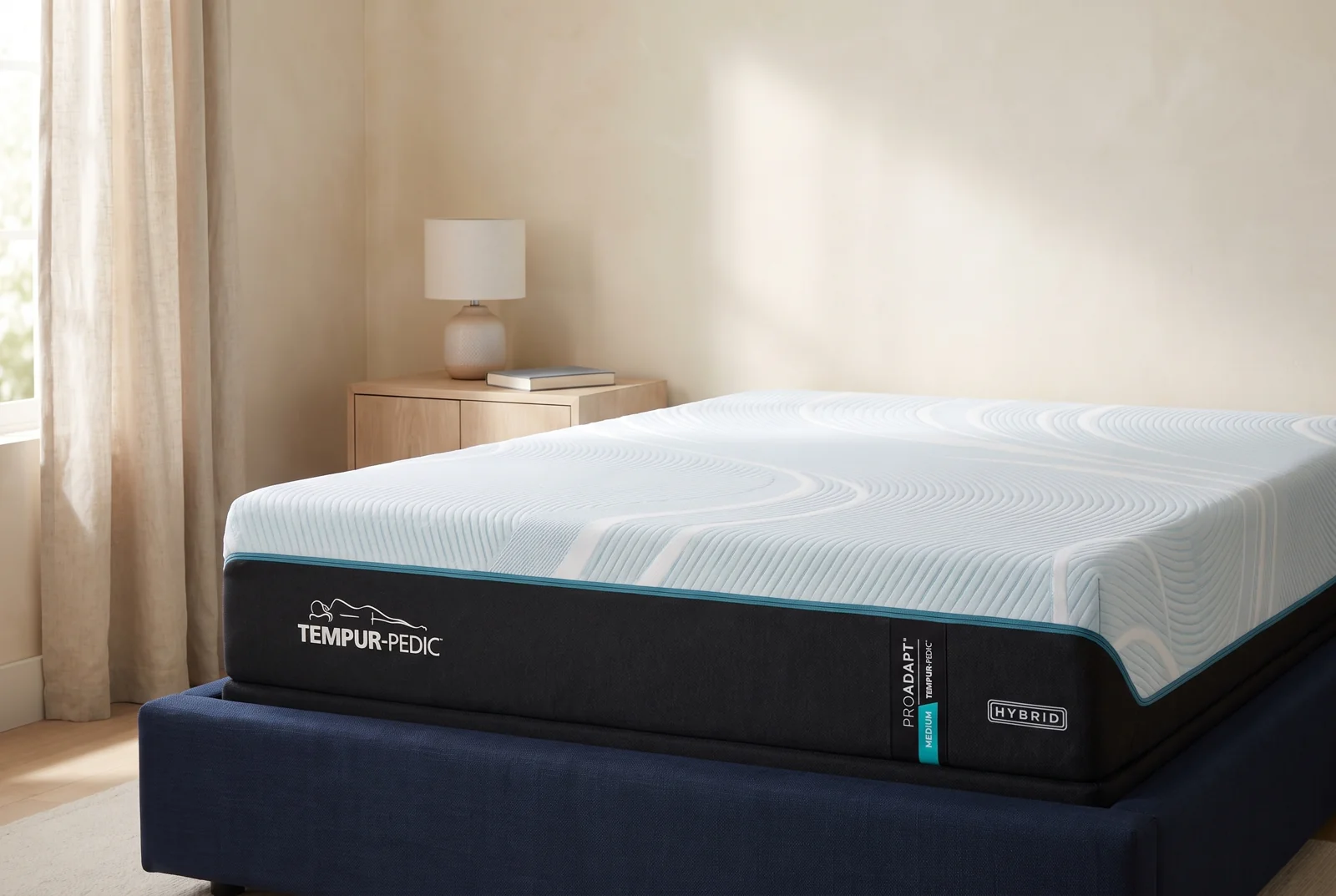
Tempur-Pedic TEMPUR-ProAdapt Medium HybridStyled product scene
Innerspring and memory foam are the two most familiar mattress feels, and they sit at opposite ends of the comfort spectrum. One bounces back and sleeps airy; the other hugs your body and quiets movement. Neither is universally “better”, the right pick depends on how you sleep, what you weigh, whether you run hot, and who you share the bed with. Here is an honest, side-by-side look to help you decide.
Choose innerspring if you want a responsive, cooler-sleeping bed with a traditional “on top of the mattress” feel and strong edge support. Choose memory foam if you want deep pressure relief, a body-contouring hug, and near-silent motion isolation for sharing a bed. If you can’t decide, a hybrid blends both, more on that below.
An innerspring mattress is built around a steel coil support core topped with thinner comfort layers. The coils create airflow and a lively, springy response. Modern versions often use individually wrapped (pocketed) coils that move independently for better contouring than the old connected-coil designs.
A memory foam mattress uses layers of viscoelastic foam over a denser polyfoam base. The foam softens with your body heat and weight, then slowly returns to shape. That is what creates the signature “melting in” feel and the way the surface cradles hips and shoulders.
Both can keep your spine neutral. They just get there differently. Innerspring pushes back against your body, which back and stomach sleepers often prefer because it keeps the hips lifted. Memory foam supports by conforming, filling the gaps at the lower back and letting the shoulder and hip sink in, which side sleepers tend to love. Heavier sleepers usually get more reliable long-term support from a coil core or a hybrid, since all-foam beds can feel like they bottom out over time.
This is memory foam’s home turf. By spreading your weight across the surface, it eases pressure at the shoulders, hips, and joints, a real advantage if you wake up with numb arms or achy pressure points. Innerspring relieves pressure through its comfort layers rather than deep contouring, so plush-top or pillow-top spring models close the gap but rarely match foam’s cushioning.
Los Angeles nights can stay warm well into fall, and that matters here. Innerspring beds breathe, air moves through the coil layer, so they sleep cooler by default. Traditional memory foam traps more heat because it wraps around you. The good news: most memory foam sold today is gel-infused or open-cell to fight heat buildup. If you’re a hot sleeper set on foam, prioritize those cooling versions, or lean toward a spring or hybrid.
If a restless partner (or a dog that claims the foot of the bed) wakes you up, memory foam wins clearly. It absorbs movement so you barely feel someone shift or get up. Connected-coil innersprings transfer the most motion; pocketed-coil models are much better but still can’t fully match foam’s stillness.
A quality mattress of either type can last 7–10 years. Innersprings can develop coil sag or a loosened comfort layer; foam can soften into body impressions if the density is low. In general, entry-level innersprings are the most budget-friendly beds you can buy, while quality memory foam sits a step up. That said, prices overlap heavily once you compare good coil beds to good foam beds, material quality matters more than category.
Side sleepers: memory foam or a plush hybrid, for shoulder and hip relief.
Back and stomach sleepers: innerspring or a firmer hybrid, to keep hips from sinking.
Hot sleepers: innerspring, or gel memory foam if you love the hug.
Couples: memory foam for motion isolation, or a pocketed-coil hybrid as a compromise.
Heavier sleepers: a coil core or hybrid for lasting support.
A hybrid mattress puts memory foam (or latex) comfort layers over a pocketed-coil core, so you get foam’s pressure relief with the airflow, bounce, and edge support of springs. For a lot of shoppers it’s the best of both worlds. If you’re weighing that route, our guides on memory foam vs hybrid and hybrid vs innerspring break down the tradeoffs.
Specs only tell you so much, feel is personal. The fastest way to know is to lie down on both for a few minutes each in your usual sleep position. You can test innerspring, memory foam, and hybrid models side by side at any of our five LA showrooms, and if you find your match, same-day delivery ($100 upgrade, order by 4pm) across Los Angeles means you can sleep on it tonight.
Often, yes, basic innerspring beds are usually the most affordable option on the floor. But the ranges overlap: a high-end pocketed-coil bed can cost more than a mid-range foam mattress. Compare within the same quality tier rather than assuming one category is always cheaper.
It depends on your sleep position and where you feel the pain. Memory foam eases pressure-point pain at the hips and shoulders and suits side sleepers, while a supportive innerspring or firmer hybrid keeps back and stomach sleepers’ hips lifted. The best mattress for back pain is the one that keeps your spine neutral. Many people land on a medium-firm hybrid.
Dense memory foam leaves less open space for dust mites to settle, which some allergy sufferers prefer, and a solid foam or foam-topped surface is easy to keep covered with a washable, zippered protector. Innersprings breathe more but have more internal air space. Either way, a good mattress protector and regular washing of bedding matter more than the mattress type itself.
Both typically last about 7 to 10 years with proper support and care. Higher-density foam and higher-quality coils last longer. Rotating the mattress and using a sturdy foundation help either type hold up.
Not necessarily, what they need is firm, even support. Memory foam performs best on a solid platform, closely spaced slats, or an adjustable base, and can sag on a traditional bouncy box spring. Innersprings pair well with a matching foundation or platform. Always check the maker’s support requirements to keep your warranty valid.
Still torn between the hug of foam and the bounce of coils? Take our sleep quiz for a personalized recommendation based on your position, body type, and temperature preferences, or come feel the difference in person at an LA Mattress Store showroom.
Start with a mattress type that suits how you sleep, then compare the feel in person.
Prices for Queen · Choose options for other sizes


Est. $124.84/month for 6 months
Item-price payoff target · excludes taxes and fees.
Synchrony · No interest if paid in full within 6 months. Subject to credit approval.
Interest is charged from the purchase date if not paid in full in time. Minimum monthly payments are required and may not repay the balance in time.
This item price meets the 6-month deferred-interest threshold. We use the longest confirmed period available at this price. Avoiding interest requires paying the promotional balance in full before the deadline. Lender fees can affect total cost; this selection does not establish the lowest total borrowing cost.
This illustration divides the displayed price of $749.00 for one selected item by 6 months, rounding up to the next cent. It is not the lender’s required payment or billing schedule. Check the promotional deadline on your statement and pay the full promotional balance before it ends.
Taxes, delivery, recycling charges and any lender promotional fees are excluded. Fees may add to the total borrowing cost. Additional discounts can change plan eligibility and the amount financed. Confirm the final purchase amount and applicable terms with the store before arranging financing.
Credit approval, applicable account terms and purchase eligibility apply.
How Synchrony deferred interest works
Est. $158.17/month for 6 months
Item-price payoff target · excludes taxes and fees.
Synchrony · No interest if paid in full within 6 months. Subject to credit approval.
Interest is charged from the purchase date if not paid in full in time. Minimum monthly payments are required and may not repay the balance in time.
This item price meets the 6-month deferred-interest threshold. We use the longest confirmed period available at this price. Avoiding interest requires paying the promotional balance in full before the deadline. Lender fees can affect total cost; this selection does not establish the lowest total borrowing cost.
This illustration divides the displayed price of $949.00 for one selected item by 6 months, rounding up to the next cent. It is not the lender’s required payment or billing schedule. Check the promotional deadline on your statement and pay the full promotional balance before it ends.
Taxes, delivery, recycling charges and any lender promotional fees are excluded. Fees may add to the total borrowing cost. Additional discounts can change plan eligibility and the amount financed. Confirm the final purchase amount and applicable terms with the store before arranging financing.
Credit approval, applicable account terms and purchase eligibility apply.
How Synchrony deferred interest works
Est. $146.50/month for 6 months
Item-price payoff target · excludes taxes and fees.
Synchrony · No interest if paid in full within 6 months. Subject to credit approval.
Interest is charged from the purchase date if not paid in full in time. Minimum monthly payments are required and may not repay the balance in time.
This item price meets the 6-month deferred-interest threshold. We use the longest confirmed period available at this price. Avoiding interest requires paying the promotional balance in full before the deadline. Lender fees can affect total cost; this selection does not establish the lowest total borrowing cost.
This illustration divides the displayed price of $879.00 for one selected item by 6 months, rounding up to the next cent. It is not the lender’s required payment or billing schedule. Check the promotional deadline on your statement and pay the full promotional balance before it ends.
Taxes, delivery, recycling charges and any lender promotional fees are excluded. Fees may add to the total borrowing cost. Additional discounts can change plan eligibility and the amount financed. Confirm the final purchase amount and applicable terms with the store before arranging financing.
Credit approval, applicable account terms and purchase eligibility apply.
How Synchrony deferred interest works
Est. $92.42/month for 12 months
Item-price payoff target · excludes taxes and fees.
Synchrony · No interest if paid in full within 12 months. Subject to credit approval.
Interest is charged from the purchase date if not paid in full in time. Minimum monthly payments are required and may not repay the balance in time.
This item price meets the 12-month deferred-interest threshold. We use the longest confirmed period available at this price. Avoiding interest requires paying the promotional balance in full before the deadline. Lender fees can affect total cost; this selection does not establish the lowest total borrowing cost.
This illustration divides the displayed price of $1,109.00 for one selected item by 12 months, rounding up to the next cent. It is not the lender’s required payment or billing schedule. Check the promotional deadline on your statement and pay the full promotional balance before it ends.
Taxes, delivery, recycling charges and any lender promotional fees are excluded. Fees may add to the total borrowing cost. Additional discounts can change plan eligibility and the amount financed. Confirm the final purchase amount and applicable terms with the store before arranging financing.
Credit approval, applicable account terms and purchase eligibility apply.
How Synchrony deferred interest works
Est. $91.63/month for 24 months
Item-price payoff target · excludes taxes and fees.
Synchrony · No interest if paid in full within 24 months. Subject to credit approval.
Interest is charged from the purchase date if not paid in full in time. Minimum monthly payments are required and may not repay the balance in time.
This item price meets the 24-month deferred-interest threshold. We use the longest confirmed period available at this price. Avoiding interest requires paying the promotional balance in full before the deadline. Lender fees can affect total cost; this selection does not establish the lowest total borrowing cost.
This illustration divides the displayed price of $2,199.00 for one selected item by 24 months, rounding up to the next cent. It is not the lender’s required payment or billing schedule. Check the promotional deadline on your statement and pay the full promotional balance before it ends.
Taxes, delivery, recycling charges and any lender promotional fees are excluded. Fees may add to the total borrowing cost. Additional discounts can change plan eligibility and the amount financed. Confirm the final purchase amount and applicable terms with the store before arranging financing.
Credit approval, applicable account terms and purchase eligibility apply.
How Synchrony deferred interest worksBuying guides and sleep advice, no email signup required.