Free Local White-Glove Setup & Haul-Away on Orders Over $499Announcement 1 of 2
Explore Payment Options — View Financing DetailsAnnouncement 2 of 2
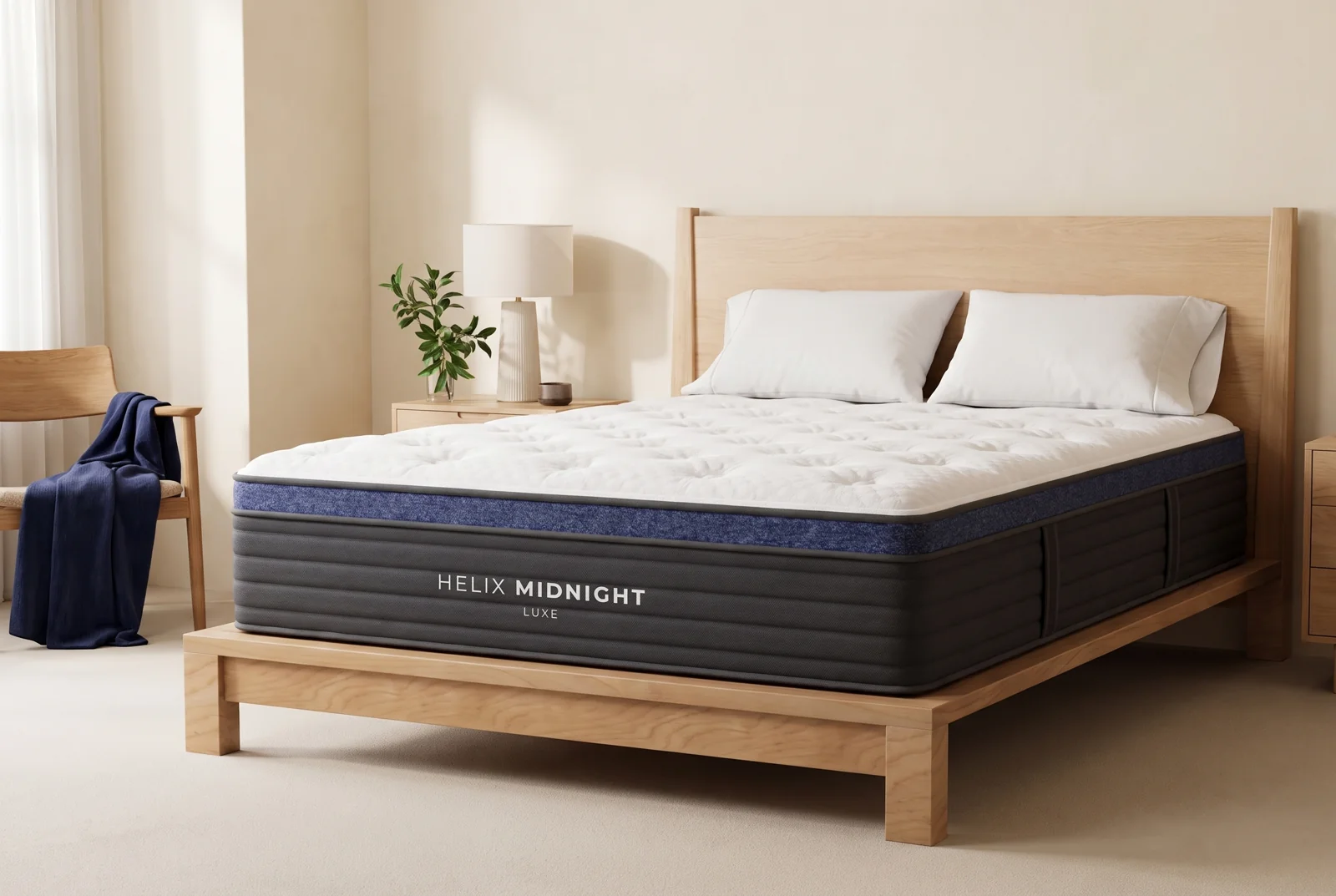
Helix Midnight LuxeStyled product scene
Side sleeping is the most common position, and the one most likely to cause pain if your mattress is wrong. When you sleep on your side, your shoulders and hips take the brunt of your body weight. A mattress that's too firm digs into those pressure points. One that's too soft lets your spine sag out of alignment.
The right mattress for a side sleeper needs to do two things well: cushion the pressure points and keep your spine straight. That balance is harder to find than most people expect.
Most side sleepers do best in the medium-soft to medium range. Soft enough to let your shoulder and hip sink in slightly, firm enough to prevent the spine from curving. Heavier sleepers (200+ lbs) often need slightly firmer to avoid excessive sinkage.
This is non-negotiable. Look for materials that contour closely, memory foam, latex, or a soft hybrid comfort layer. If you wake up with shoulder or hip pain, your current mattress likely isn't relieving pressure effectively.
A good side-sleeper mattress keeps your spine in a neutral position from neck to tailbone. You can test this by lying in your usual position: your hips and shoulders should sink in slightly, but your waist shouldn't gap or sag. If you feel your lower back bowing down, the mattress is too soft.
Memory foam and pocketed coil hybrids both handle motion isolation well. If your partner's movement wakes you up, this matters more than most specs on paper.
The ProAdapt Soft is one of the most effective mattresses available for side sleepers who struggle with shoulder and hip pressure. The TEMPUR material contours deeply and holds its shape over time, providing consistent relief night after night. The SmartClimate dual cover is removable and washable, and ventilated foam layers help with airflow, though like most memory foam, it retains some heat.
View the Tempur-Pedic ProAdapt Soft →
The Micah Plush combines gel memory foam with individually wrapped coils in a medium-plush euro-top profile. The coil layer adds responsiveness and airflow that pure foam can't match, while the gel foam comfort layers cushion pressure points effectively. LIFE EDGE foam encasing along the perimeter improves edge support, useful if you tend to sleep close to the edge or sit on the side of the bed.
View the Eastman House Micah Plush →
| Feature | Tempur-Pedic ProAdapt Soft | Eastman House Micah Plush |
|---|---|---|
| Construction | All memory foam | Hybrid (foam + pocketed coils) |
| Firmness | Medium-soft (~5.5/10) | Medium-plush (~5/10) |
| Pressure Relief | Excellent | Very Good |
| Motion Isolation | Excellent | Very Good |
| Cooling | Good (ventilated foam) | Better (coil airflow) |
| Edge Support | Weak | Good |
| Response / Bounce | Slow | Moderate |
| Adjustable Base Compatible | Yes | Yes |
| Warranty | 10 years | 15 years |
Expert tip: If possible, test any mattress in your actual side-sleeping position for at least 10 minutes before deciding. Your shoulder and hip should sink in slightly, but your waist shouldn't feel like it's hanging. Our team at any of our five LA showrooms will let you take your time.
Shopping for a mattress online is convenient, but side sleepers especially benefit from lying on a mattress before buying. Pressure relief and contouring feel completely different in person than they read on a spec sheet. If you're in the Los Angeles area, visit one of our five showrooms. We carry the full range and our staff can walk you through which constructions work best for your sleeping position, body type, and budget.
Every mattress we sell comes with a 120-night comfort guarantee. If it's not working for you after you've slept on it for a few weeks, we'll work with you on a solution.
Medium-soft to medium (4–6 on a 10-point scale) works for most side sleepers. Heavier sleepers typically need to go slightly firmer to maintain spinal alignment without excessive sinkage.
Both can work well. Memory foam excels at pressure relief and motion isolation. Hybrids add airflow, bounce, and better edge support. If you sleep hot or shift positions frequently, a hybrid is usually the better choice.
Not necessarily. A pillow-top adds a soft surface layer that can help with shoulder and hip comfort, but memory foam or latex comfort layers achieve similar results with more durability. Some pillow-tops compress over time.
Every 7–10 years for most quality mattresses. Side sleepers put concentrated pressure on specific areas (shoulders, hips), so watch for sagging or body impressions forming in those spots sooner than that.
Yes, both memory foam and hybrid mattresses work well with adjustable bases. Elevating your head slightly can reduce acid reflux and snoring, which some side sleepers also deal with.
Often, yes. If your current mattress is too firm (creating pressure points) or too worn down to support your spine properly, a new mattress can make a noticeable difference. Many customers report improvement within a week or two of switching.
Expect to spend $800–$1,500 for a reliable queen mattress with good pressure relief. Premium brands like Tempur-Pedic run higher. We also carry options at various price points. Our staff can help you find the right balance of quality and value.
Browse our full queen mattress collection or explore options by type: memory foam | hybrid | latex
Start with a mattress type that suits how you sleep, then compare the feel in person.
Prices for Queen · Choose options for other sizes


Est. $124.84/month for 6 months
Item-price payoff target · excludes taxes and fees.
Synchrony · No interest if paid in full within 6 months. Subject to credit approval.
Interest is charged from the purchase date if not paid in full in time. Minimum monthly payments are required and may not repay the balance in time.
This item price meets the 6-month deferred-interest threshold. We use the longest confirmed period available at this price. Avoiding interest requires paying the promotional balance in full before the deadline. Lender fees can affect total cost; this selection does not establish the lowest total borrowing cost.
This illustration divides the displayed price of $749.00 for one selected item by 6 months, rounding up to the next cent. It is not the lender’s required payment or billing schedule. Check the promotional deadline on your statement and pay the full promotional balance before it ends.
Taxes, delivery, recycling charges and any lender promotional fees are excluded. Fees may add to the total borrowing cost. Additional discounts can change plan eligibility and the amount financed. Confirm the final purchase amount and applicable terms with the store before arranging financing.
Credit approval, applicable account terms and purchase eligibility apply.
How Synchrony deferred interest works
Est. $158.17/month for 6 months
Item-price payoff target · excludes taxes and fees.
Synchrony · No interest if paid in full within 6 months. Subject to credit approval.
Interest is charged from the purchase date if not paid in full in time. Minimum monthly payments are required and may not repay the balance in time.
This item price meets the 6-month deferred-interest threshold. We use the longest confirmed period available at this price. Avoiding interest requires paying the promotional balance in full before the deadline. Lender fees can affect total cost; this selection does not establish the lowest total borrowing cost.
This illustration divides the displayed price of $949.00 for one selected item by 6 months, rounding up to the next cent. It is not the lender’s required payment or billing schedule. Check the promotional deadline on your statement and pay the full promotional balance before it ends.
Taxes, delivery, recycling charges and any lender promotional fees are excluded. Fees may add to the total borrowing cost. Additional discounts can change plan eligibility and the amount financed. Confirm the final purchase amount and applicable terms with the store before arranging financing.
Credit approval, applicable account terms and purchase eligibility apply.
How Synchrony deferred interest works
Est. $146.50/month for 6 months
Item-price payoff target · excludes taxes and fees.
Synchrony · No interest if paid in full within 6 months. Subject to credit approval.
Interest is charged from the purchase date if not paid in full in time. Minimum monthly payments are required and may not repay the balance in time.
This item price meets the 6-month deferred-interest threshold. We use the longest confirmed period available at this price. Avoiding interest requires paying the promotional balance in full before the deadline. Lender fees can affect total cost; this selection does not establish the lowest total borrowing cost.
This illustration divides the displayed price of $879.00 for one selected item by 6 months, rounding up to the next cent. It is not the lender’s required payment or billing schedule. Check the promotional deadline on your statement and pay the full promotional balance before it ends.
Taxes, delivery, recycling charges and any lender promotional fees are excluded. Fees may add to the total borrowing cost. Additional discounts can change plan eligibility and the amount financed. Confirm the final purchase amount and applicable terms with the store before arranging financing.
Credit approval, applicable account terms and purchase eligibility apply.
How Synchrony deferred interest works
Est. $91.63/month for 24 months
Item-price payoff target · excludes taxes and fees.
Synchrony · No interest if paid in full within 24 months. Subject to credit approval.
Interest is charged from the purchase date if not paid in full in time. Minimum monthly payments are required and may not repay the balance in time.
This item price meets the 24-month deferred-interest threshold. We use the longest confirmed period available at this price. Avoiding interest requires paying the promotional balance in full before the deadline. Lender fees can affect total cost; this selection does not establish the lowest total borrowing cost.
This illustration divides the displayed price of $2,199.00 for one selected item by 24 months, rounding up to the next cent. It is not the lender’s required payment or billing schedule. Check the promotional deadline on your statement and pay the full promotional balance before it ends.
Taxes, delivery, recycling charges and any lender promotional fees are excluded. Fees may add to the total borrowing cost. Additional discounts can change plan eligibility and the amount financed. Confirm the final purchase amount and applicable terms with the store before arranging financing.
Credit approval, applicable account terms and purchase eligibility apply.
How Synchrony deferred interest works
Est. $92.42/month for 12 months
Item-price payoff target · excludes taxes and fees.
Synchrony · No interest if paid in full within 12 months. Subject to credit approval.
Interest is charged from the purchase date if not paid in full in time. Minimum monthly payments are required and may not repay the balance in time.
This item price meets the 12-month deferred-interest threshold. We use the longest confirmed period available at this price. Avoiding interest requires paying the promotional balance in full before the deadline. Lender fees can affect total cost; this selection does not establish the lowest total borrowing cost.
This illustration divides the displayed price of $1,109.00 for one selected item by 12 months, rounding up to the next cent. It is not the lender’s required payment or billing schedule. Check the promotional deadline on your statement and pay the full promotional balance before it ends.
Taxes, delivery, recycling charges and any lender promotional fees are excluded. Fees may add to the total borrowing cost. Additional discounts can change plan eligibility and the amount financed. Confirm the final purchase amount and applicable terms with the store before arranging financing.
Credit approval, applicable account terms and purchase eligibility apply.
How Synchrony deferred interest worksBuying guides and sleep advice, no email signup required.