Side sleepers need a soft-to-medium mattress (4-6/10) with strong shoulder and hip pressure relief. Here is how to pick the right one.

If you sleep on your side, you need a softer-to-medium mattress, roughly a 4 to 6 out of 10 on the firmness scale, with strong pressure relief at the shoulders and hips. In the side position your body weight lands on two narrow contact points, so the surface has to let your shoulder and hip sink in while still keeping your spine straight. For most side sleepers that means memory foam or a foam-topped hybrid. Firm mattresses are usually the wrong choice for side sleepers because they push back against the shoulder and hip, creating pressure, numbness, and the morning aches a lot of people blame on their pillow. The rest of this guide explains how to dial in firmness for your body, which mattress types work best, and how to test a bed before you buy.
At LA Mattress Store, we have been a family-owned shop here in Los Angeles since 2012, and side sleepers are by far the most common customer we help. We do not run a commission-only sales floor, so the advice below is the same thing we would tell you in person at any of our five showrooms. If you would rather skip ahead, our sleep quiz matches you to a shortlist in a couple of minutes.
Sleeping position is the single biggest factor in choosing a mattress, and side sleeping is the most demanding of the three. When you lie on your back, your weight is spread across a long, fairly flat area. When you lie on your side, that same body weight concentrates onto two pressure points: the shoulder and the hip. Those are also the two widest parts of most bodies, which means they need to sink the most to keep everything in line.
The goal is neutral spinal alignment in the lateral position. Picture your spine as a straight, level line from the base of your skull to your tailbone while you are on your side. For that line to stay straight, the mattress has to let the shoulder and hip drop into the surface while gently supporting the smaller of your back, your waist, and your lumbar curve. A bed that is too firm holds the shoulder and hip up, pushing your spine into a slight upward bow and concentrating pressure where the bone is closest to the skin. A bed that is far too soft lets your hips sag below your shoulders, bowing the spine the other way. Side sleepers live in the middle of that range, which is why firmness matters so much more for you than it does for a back sleeper. If you want a primer on the categories, our overview of mattress types is a good starting point, and our guide on how to choose a mattress walks through the full decision.
Most side sleepers are comfortable somewhere between a 4 and a 6 out of 10, where 10 is the firmest. That is the range where there is enough give for the shoulder and hip to settle in, but enough underlying support that you do not sink into a hammock. If you have ever wondered what the best firmness for side sleepers actually is, that band is the honest answer for the large majority of people.
Body weight shifts where you should land inside that range:
These are guidelines, not rules. Two people of the same weight can prefer feels a category apart, which is exactly why lying down on a bed before you commit matters more than any number on a label.
Not every construction is well suited to side sleeping. Here is how the main categories stack up, best to worst, for the average side sleeper.
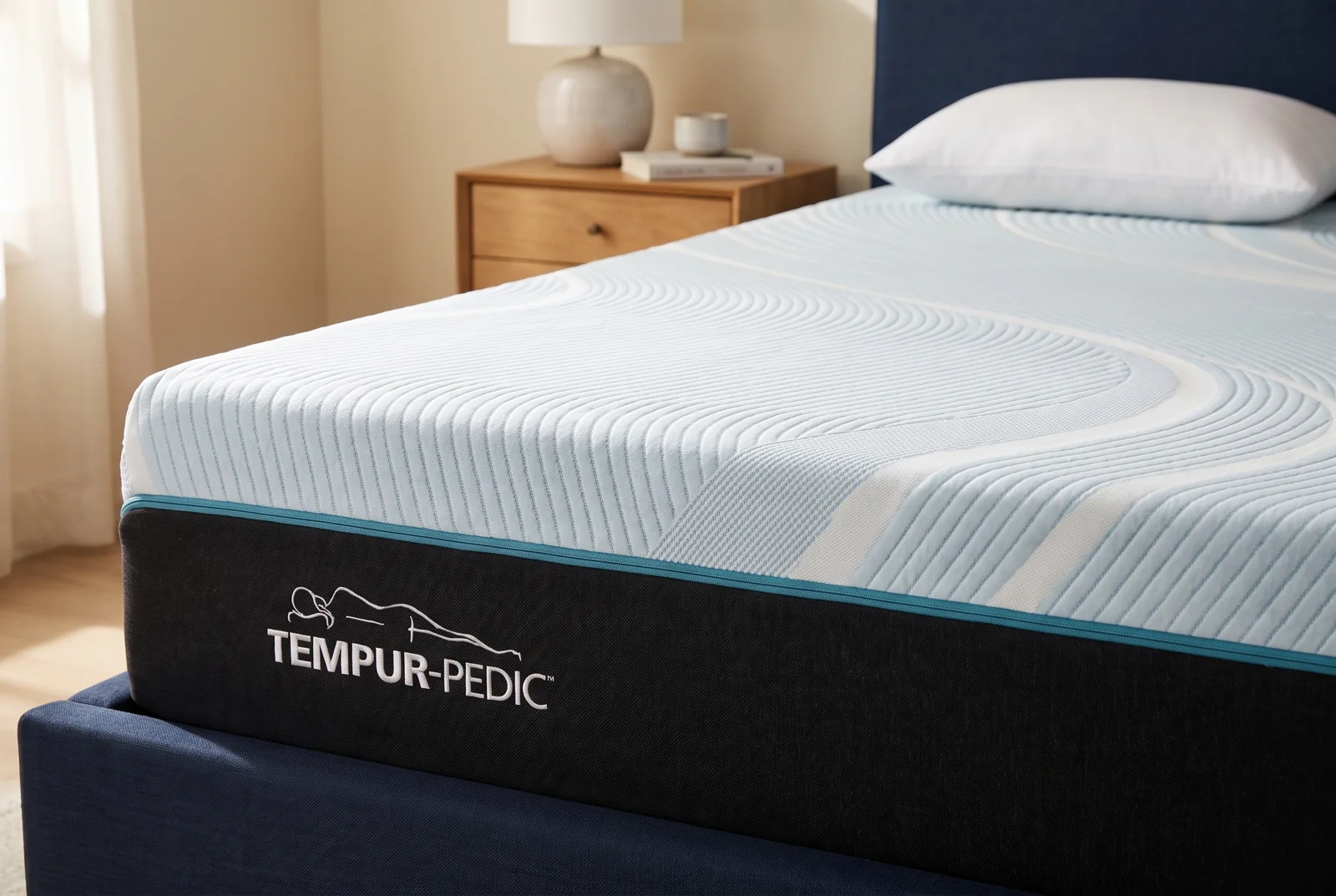
People ask us all the time, is memory foam good for side sleepers, and the short answer is yes, it is often the best single option. Memory foam contours closely to the body, so it cradles the shoulder and hip and spreads your weight over a larger area instead of letting it pile onto two points. That is exactly the behavior a side sleeper wants. Modern foams also breathe far better than the dense, hot foams of a decade ago. If you run warm, look for gel-infused or open-cell layers. Browse our memory foam mattresses to see the range, and our premium Tempur-Pedic collection is the benchmark for deep, slow contouring.
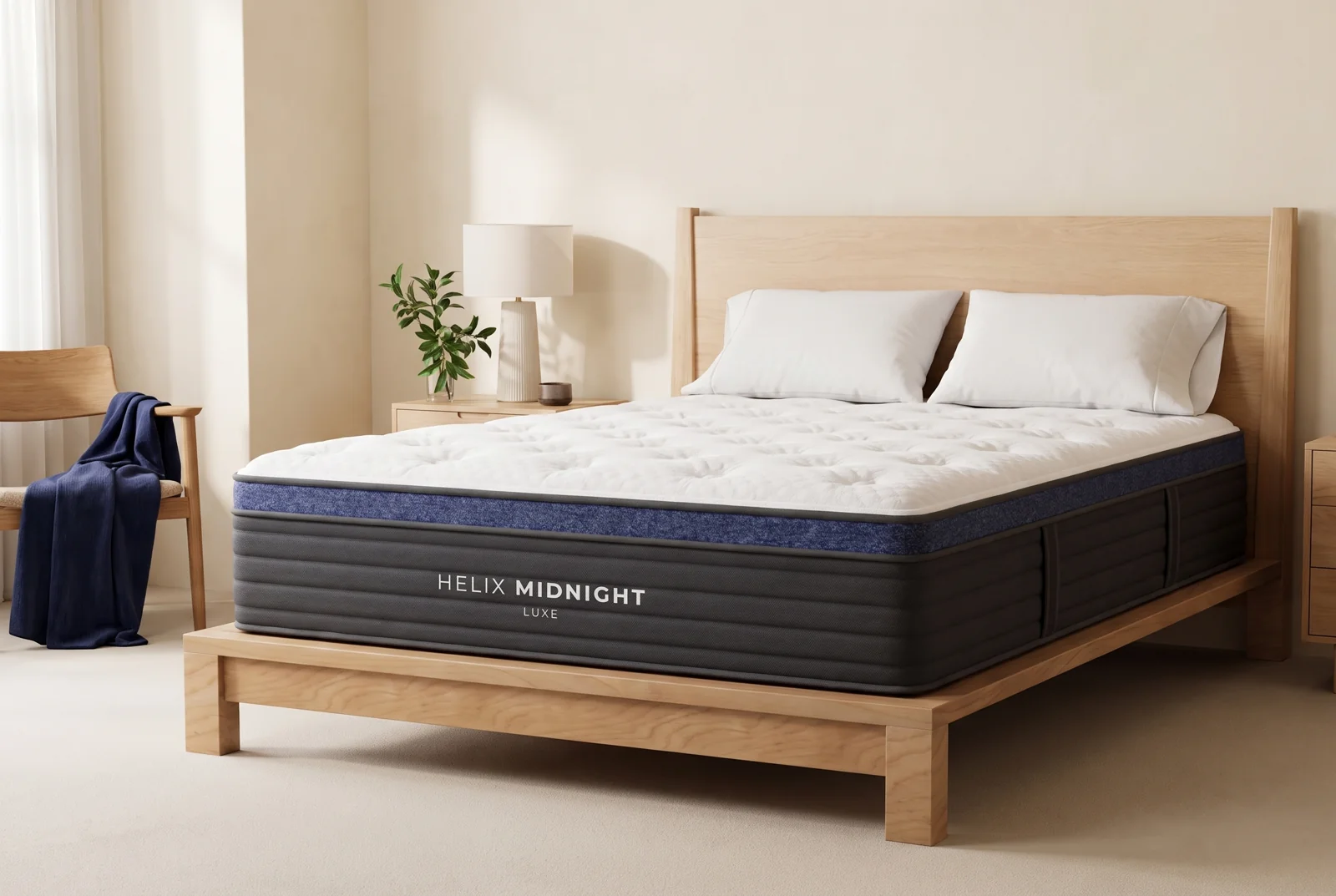
A hybrid pairs a coil support core with a generous foam comfort layer on top. For side sleepers this is the sweet spot for most bodies: the foam delivers the shoulder and hip pressure relief, while the coils add support, edge strength, and airflow. Heavier side sleepers in particular tend to do best on a hybrid because the coil core resists the bottoming-out that pure foam can allow. Our Helix collection is built around this idea, with models tuned specifically for side sleeping.
Latex is more responsive and buoyant than memory foam. It still relieves pressure well, just with a livelier, more on-top-of-the-bed feel rather than a deep hug. It also sleeps cool and is very durable. Side sleepers who like the idea of foam but dislike the sinking sensation of memory foam often land here. Softer latex builds work better for side sleeping than firm ones.
A traditional innerspring with a thin pad on top is generally the weakest choice for a side sleeper. With little comfort material between you and the coils, the shoulder and hip hit a firm, pushing-back surface, which is the exact recipe for pressure pain. There are exceptions with thicker pillow tops, but if you are a dedicated side sleeper, start your search in foam and hybrid rather than basic innerspring. You can compare all constructions in our full mattress collection.
Shoulder pain is the number one complaint we hear from side sleepers, and the mattress is usually the cause. When the surface is too firm, your shoulder cannot sink in, so your body weight presses the joint and the soft tissue around it against an unyielding surface all night. You wake up with a sore, stiff, sometimes tingling shoulder and assume you slept on it wrong. More often the bed simply did not let it move.
The fix is a softer comfort layer with enough depth that the shoulder can actually drop into the mattress while the rest of your body stays supported. Memory foam and plush hybrids handle this best. If you are dealing with this specific problem, our companion article on the best mattress for back pain covers the broader pressure-relief picture as well. A quick note: this is general buying guidance, not medical advice. If you have chronic or sharp shoulder pain, please see a doctor, because the right bed helps but it cannot diagnose or treat a joint problem.
The hip is the other major pressure point, and it behaves a lot like the shoulder. A surface that is too firm digs into the hip joint; a surface that is far too soft lets the hip sink so far that the pelvis rotates and the lower back twists. The target, again, is a comfort layer that lets the hip settle in without dropping below the line of the spine. Many people with hip discomfort find that a medium-soft foam or foam-topped hybrid in the 4 to 5 range, paired with an adjustable base set with a slight knee lift, takes meaningful load off the joint.
This is where it gets nuanced. Side sleepers generally want softer, but back pain often pushes people toward firmer for support, and those two instincts seem to conflict. The answer is not a uniformly firm bed. It is zoned support: a mattress that is plush enough at the shoulders and hips to relieve pressure while staying supportive through the lumbar zone so the spine does not sag. Many modern foam and hybrid beds are engineered with exactly these zones. The practical takeaway is to look for targeted support rather than overall firmness, and to test specifically for the gap at your lower back (more on that below). Our Diamond collection includes several zoned models worth a look.
The most overlooked part of side-sleeping comfort is that the mattress and pillow have to be matched. On your side, the gap between your head and the mattress is wide, the full width of your shoulder, so a side sleeper generally needs a higher-loft, firmer pillow than a back or stomach sleeper to keep the head and neck level with the spine. Here is the catch: the right pillow loft depends on how far your shoulder sinks into the mattress. A plush bed that swallows your shoulder needs a lower pillow; a firmer bed needs a taller one. If you change the mattress and keep the same pillow, your neck angle changes too. Plan to reassess the pillow whenever you replace the bed, and bring your pillow to the showroom when you test.
Mixed couples are extremely common, for example a side-sleeping partner and a back-sleeping partner, and they introduce two requirements. First, motion isolation: side sleepers tend to be lighter and pressure-sensitive, so they feel a partner moving more. Memory foam and foam-topped hybrids absorb movement far better than basic innerspring, which keeps one person's tossing from waking the other. Second, dual firmness: some lines, including certain Helix models, let each side of the bed be built to a different firmness, so the side sleeper gets soft and the back sleeper gets medium-firm on the same mattress. If your needs are far apart, ask us about split or dual-firmness options. While you are sorting feel, our mattress size guide helps make sure the bed is wide enough that you each get your own space, which on its own reduces felt motion.
Side sleepers benefit from an adjustable base less obviously than back sleepers do, but it still helps. A slight head and knee elevation can take pressure off the lower back and hips and is especially useful if you read or watch TV in bed before rolling onto your side to sleep. For couples, an adjustable base with independently moving sides means the side sleeper can lie flat while the other partner elevates, with no compromise. It also pairs well with the zoned-support beds mentioned earlier for anyone juggling side sleeping and back pain.
A mattress label cannot tell you whether a bed fits your body. Testing can. When you visit, here is exactly what to do, and it is the same routine our team will walk you through in person:
You can do all of this at any of our five Los Angeles showrooms, in Koreatown, West LA, Hancock Park near La Brea, Studio City, and Glendale, or call us at (800) 218-3578 and we will talk you through it.
We carry Tempur-Pedic, Stearns & Foster, Helix, Diamond, Spring Air, Eastman House, Englander, Chattam & Wells, and Harvest Green, and here is roughly how we steer side sleepers across budgets:
Whatever tier you choose, every qualifying mattress is backed by our 120-night Love Your Bed Guarantee, so you can sleep on it for months and exchange it if your body disagrees with our showroom advice. Worried about budget? Our breakdown of how much you should spend on a mattress sets realistic expectations, and we offer financing through Synchrony at 0% APR plus Acima.
Most side sleepers do best between a 4 and a 6 out of 10, where 10 is firmest. Lighter sleepers should aim softer, around a 3 to 5, and heavier sleepers a little firmer, around a 5 to 7, so they get pressure relief at the shoulder and hip without sinking too far.
Both work well. Memory foam gives the deepest pressure relief and the closest hug, which many side sleepers love. A foam-topped hybrid adds coil support, edge strength, and airflow, and is usually the better pick for heavier sleepers, couples, and anyone who sleeps hot or wants a more supportive feel under the comfort layer.
Almost always because the mattress is too firm. If the surface will not let your shoulder sink in, your body weight presses the joint against an unyielding surface all night, causing soreness and sometimes numbness. A softer, deeper comfort layer usually resolves it. If pain is chronic or severe, see a doctor, as this is general guidance and not medical advice.
For most side sleepers, yes. A firm bed holds the shoulder and hip up instead of letting them settle, which bows the spine out of alignment and concentrates pressure on the widest parts of the body. Side sleepers should generally avoid firm beds unless they are quite heavy and need the extra support, in which case a medium-firm with a thick comfort layer is the move.
A medium-soft foam or foam-topped hybrid in roughly the 4 to 5 range that lets the hip settle in without dropping below the spine. Pairing it with an adjustable base set with a slight knee lift can take additional load off the hip. Test by checking that your pelvis stays level and does not rotate when you lie on your side.
Yes. On your side there is a wide gap between your head and the mattress, so you generally need a higher-loft, firmer pillow than a back or stomach sleeper to keep your neck level with your spine. The exact loft depends on how far your shoulder sinks into the mattress, so reassess your pillow whenever you change beds.
Side sleeping rewards a thoughtful choice and punishes a guess, so do not buy on a label number alone. Start with our sleep quiz for a personalized shortlist, then come visit a showroom and actually lie on your side for ten to fifteen minutes on the beds you are considering. Bring your pillow, bring your partner, and take your time. And because we back every qualifying mattress with a 120-night Love Your Bed Guarantee plus free white-glove delivery on orders over $499, you have months to be sure it is right. Questions? Call our family-owned team at (800) 218-3578, no commission-only pressure, just honest help finding the bed your shoulders and hips will thank you for.
Buying guides and sleep advice — no email signup required.