
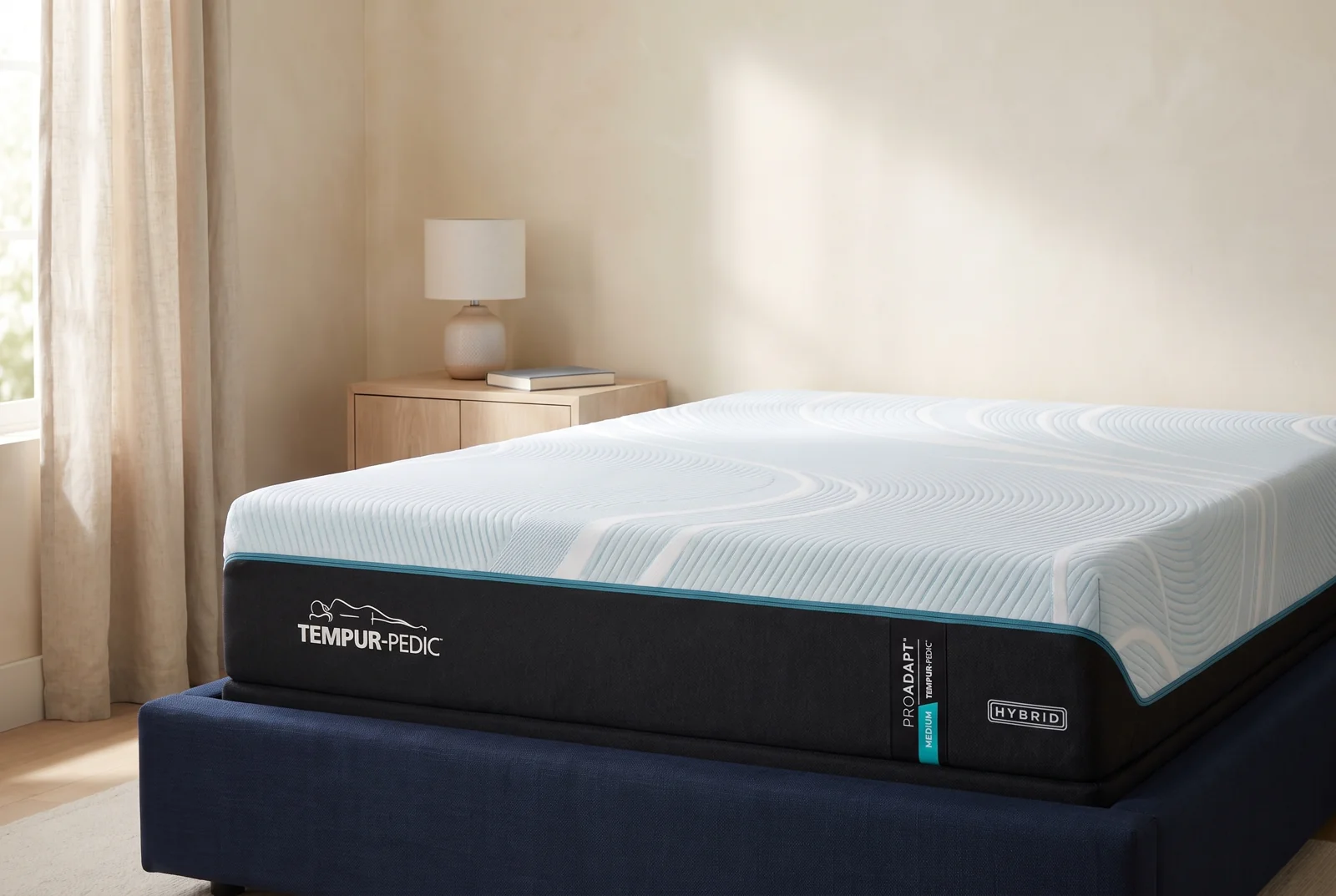
The useful starting point
You do not have to choose the hardest mattress. Compare a medium-firm feel with a softer or firmer alternative, then test how each feels in your usual sleep position. A mattress may affect comfort, but it cannot diagnose or treat the cause of your back pain.
Use the showroom checklistIs your mattress part of the problem?
Start with observations rather than a diagnosis. Has the surface developed a dip? Do you feel pressure at your shoulder or hip? Is it difficult to turn over? Does your pillow push your head into an uncomfortable position? Write down what happens, where you notice it and whether a different bed feels better.
Check the bed frame and foundation too. Loose supports or an unsuitable base can affect how the mattress feels. Follow the mattress manufacturer's support requirements before deciding that the mattress itself needs replacing.
Speak with a clinician if pain persists, worsens or disrupts daily activities. Seek emergency care for back pain with new bladder or bowel problems, numbness around the groin, weakness or numbness in both legs, or after a serious accident. Do not wait for a new mattress to address these symptoms. Read the NHS back-pain guidance.
What matters more than a firmness label
Comfort at contact points
Notice your shoulders, hips and lower back. You should be able to settle without wanting to move away from a pressure point.
Support as you move
Turn over, sit at the edge and get in and out. Compare the effort and stability, including the height of the complete bed.
A pillow that works with the bed
Bring your usual pillow or try a comparable height. Changing the mattress changes how far your shoulder settles and how the pillow feels.
A firmness number is a brand's description, not a universal measurement. Two mattresses labeled medium-firm may feel quite different. The firmness finder can help you choose a starting point to try.
What does the mattress research actually say?
A 2003 randomized trial followed 313 adults with chronic, non-specific low-back pain for 90 days. The medium-firm group had better outcomes on several measures than the firm group. It studied a particular population and particular mattresses; it does not establish one ideal mattress for every diagnosis, body or sleeping position.
Read the original trial in The Lancet. Use the finding as a reason to compare comfort rather than assume harder is better.
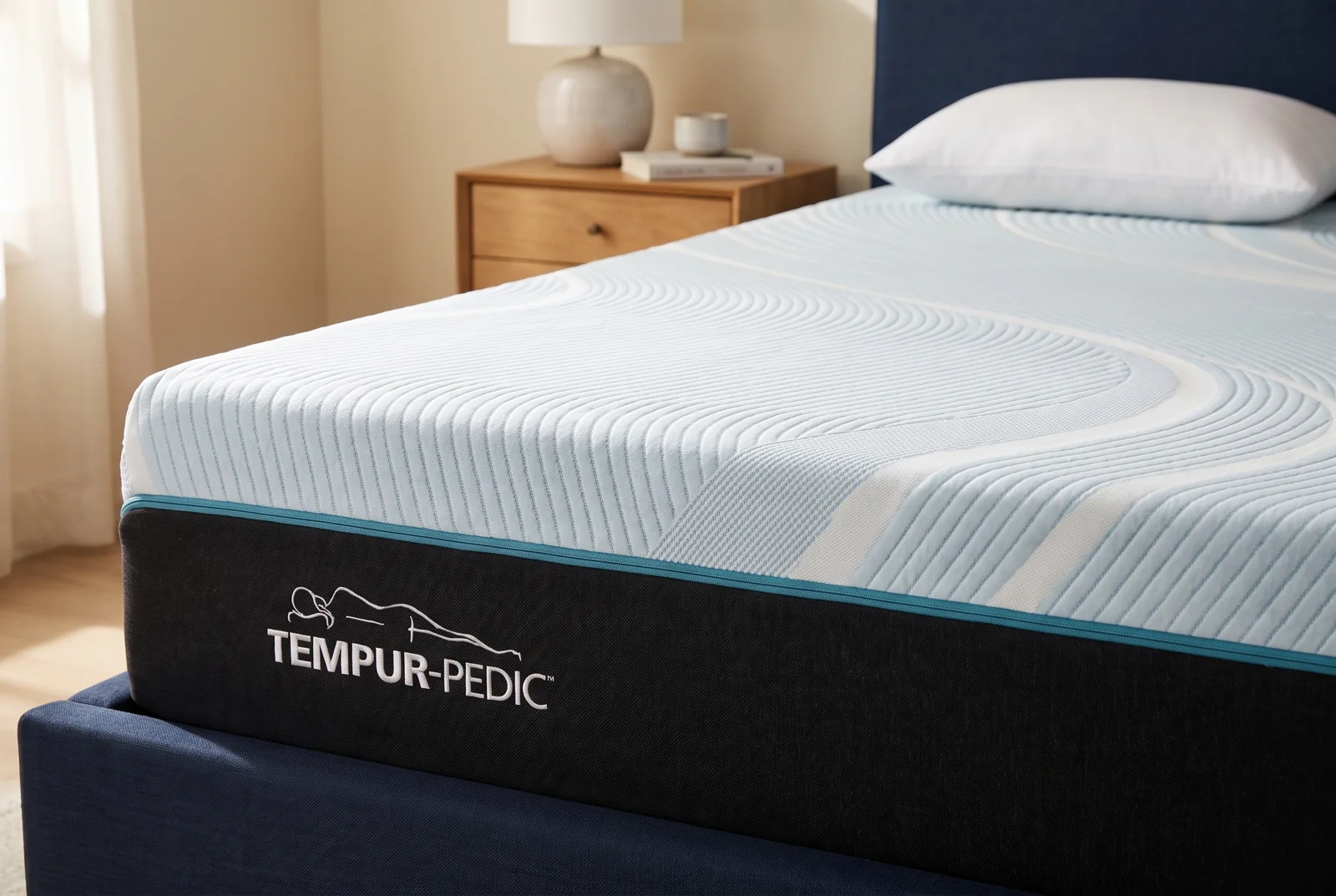
Compare the feel of each construction
| Construction | What you may notice | What to check |
|---|---|---|
| Memory foam | A close, contouring feel with a slower response. | Can you turn comfortably, and do you like how deeply you settle? |
| Hybrid | A combination of cushioning layers and a coil support system. | Compare the actual model's bounce, cushioning and edge feel. |
| Latex | A more responsive surface in many designs. | Is the pushback comfortable at your shoulders and hips? |
| Innerspring | A buoyant feel that varies with the comfort layers. | Is there enough cushioning for the position you use most? |
Construction alone does not tell you whether a mattress will suit your back. Use our mattress types guide to compare materials, then test individual models.
Build a small shortlist to try
Choose two or three contrasting feels rather than five mattresses that sound alike. There is no medically proven ranking of the brands in our showroom.
- A familiar starting feel: browse medium-firm mattresses and choose a model to compare.
- A different response: compare a memory foam mattress with a hybrid.
- Your practical fit: check the exact size, complete bed height, support requirements and price before you narrow the list.
Use Compare by feel to organize the differences. Call your chosen showroom to confirm the models and firmnesses available to try.
Test in the position you actually use
Side sleeping
Notice shoulder and hip pressure, then check how your pillow feels. Do not choose a softer label without testing whether you feel comfortably supported.
Read the side-sleeper guideBack sleeping
Notice whether your lower back feels comfortable and whether your hips settle farther than you like. Compare one adjacent firmness.
Find a starting firmness to compareStomach or mixed sleeping
Check for uncomfortable sinking at your midsection. If you change positions, compare how easily you can turn on each surface.
Read the stomach-sleeper guideWould an adjustable base be useful?
An adjustable base changes the bed's position. Some people enjoy an elevated position for resting or reading, but a preset called zero gravity is not a medical treatment or a guarantee of pain relief.
Try the mattress flat and elevated, check that the mattress is approved for the base, and practice getting in and out. If you have a medical condition or movement restriction, ask your clinician about suitable positions. Review our adjustable beds guide and confirm compatibility for the specific model.

A better showroom test
Take your time and repeat the same checks on each finalist. You can use this checklist during your visit.
Find showroom locations and hours. Bring a short description of what you want to improve; the team can help compare products, while diagnosis and treatment belong with your healthcare professional.
Replace the mattress, change the setup, or investigate further?
Age alone is not a diagnosis. Check visible wear, changes in comfort, the base and the care instructions. A topper can change surface cushioning, but it will not repair a failed support system. A warranty concern and a comfort preference are different questions.
Try the mattress checkup to organize what you have noticed, and read the warranty guide if you suspect a defect. Continuing or worsening pain should be discussed with a clinician even if you are also shopping for a bed.
Common questions about mattresses and back pain
Is a firm mattress always better for back pain?
No. The hardest surface is not automatically the most comfortable or suitable. Compare a medium-firm starting point with neighboring feels and notice pressure and movement. Use the firmness finder to plan what to try.
Can a mattress cure sciatica or a slipped disc?
No mattress should be presented as a cure. A comfortable sleep setup may help you rest, but seek medical guidance for your condition. Our materials guide explains product differences without assigning a treatment to a mattress type.
How soon should a new mattress feel better?
There is no guaranteed timetable for pain improvement. Track comfort and talk with a clinician about persistent or worsening symptoms. For a comfort mismatch, check the eligibility, timing and fees in the Love Your Bed Guarantee.
Should I replace my pillow too?
Try your current pillow on the new mattress first. A different surface may change how far you settle and which pillow height feels comfortable. Compare the pillow options if you need a different feel.
Can I try the mattress before buying?
Yes. Choose one of our LA showrooms and call to confirm the exact model and firmness you want to test. Bring your questions and compare a small shortlist.
Leave with a clearer next step
Know the feel you want to compare, bring notes about your current setup, and check the practical details before ordering. Browse mattresses for back comfort, take the sleep quiz, or ask our team to help plan a visit.


