A realistic breakdown of how long memory foam mattresses last, the factors that speed up or slow down wear, and the signs it's time to replace yours.
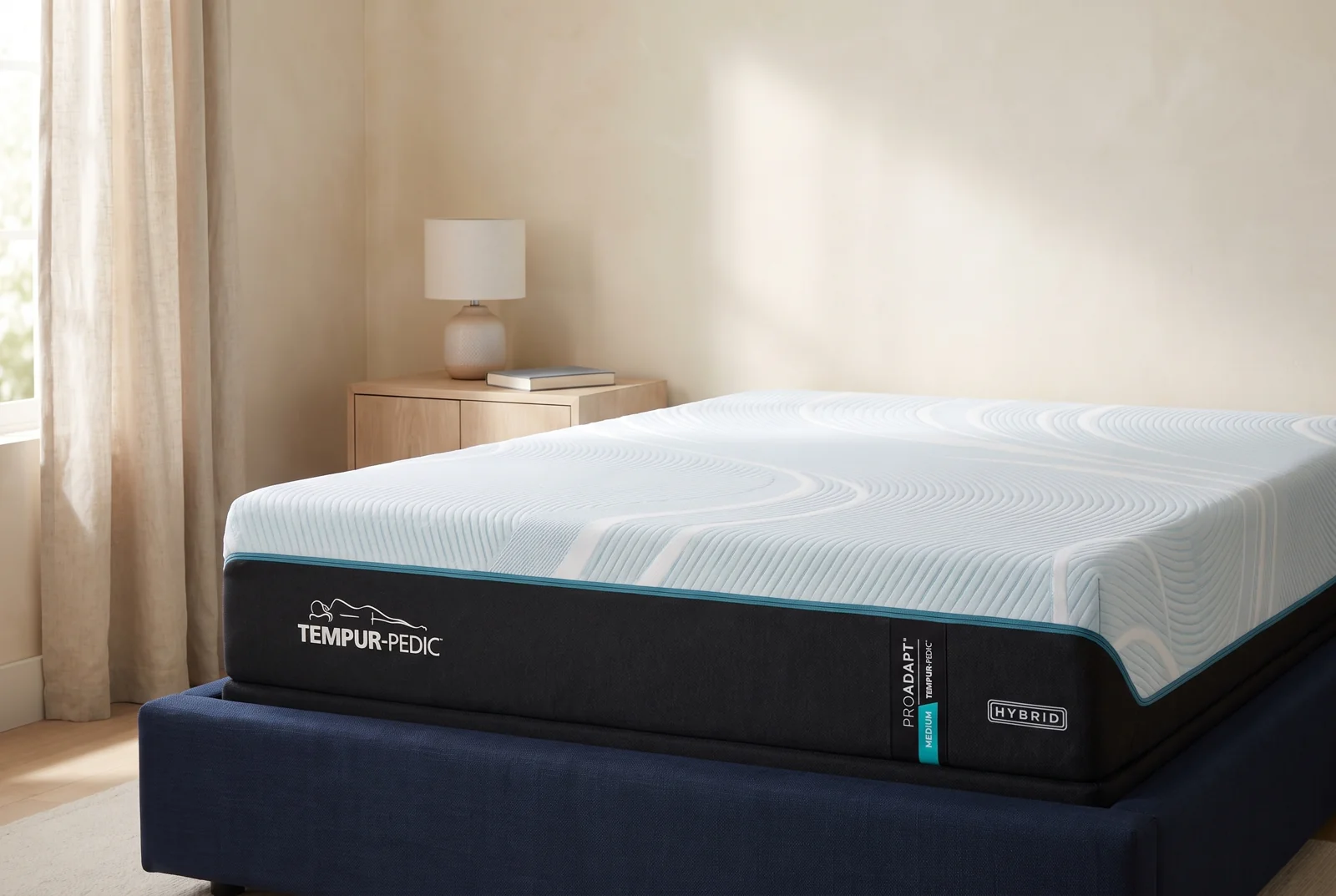
Tempur-Pedic TEMPUR-ProAdapt Medium HybridStyled product scene
If you've had your memory foam mattress for a few years and you're starting to wonder whether it's still doing its job, you're asking the right question. Memory foam doesn't fail the way an old innerspring does — there's no coil that pokes through or springs that squeak. Instead it loses its bounce-back gradually, which makes it easy to keep sleeping on a mattress that stopped supporting you a year or two ago without quite noticing. Here's what actually determines how long a memory foam mattress lasts, and how to tell where yours stands.
Most quality memory foam mattresses are built to last somewhere between 7 and 10 years of nightly use. Budget foam can start softening noticeably closer to the 5-year mark, while high-density foam in a well-built memory foam mattress can comfortably stretch past 10. That range isn't marketing fluff — it's mostly a function of foam density and how the mattress is used and supported, which is why two mattresses bought the same year can age at very different rates.
Higher-density memory foam (generally 4 lb per cubic foot and up) resists body impressions and recovers its shape better over years of use than lower-density foam. Cheaper mattresses often use lower-density foam to hit a price point, which is a big reason they soften and sag sooner even with identical care.
Foam compresses in proportion to the weight and pressure it absorbs. A mattress used nightly by two adults will generally show wear sooner than the same mattress used by one lighter sleeper, simply because it's handling more total load over the same number of nights.
Memory foam needs even, solid support underneath — a proper foundation, platform bed, or slatted base with slats spaced closely enough to prevent sagging between them. A worn-out box spring or a base with wide slat gaps can cause a mattress to develop soft spots years before it should.
Foam softens slightly with heat, which is worth keeping in mind in a warm-climate city like Los Angeles where bedrooms can run hot for months at a stretch. It's rarely enough to shorten a mattress's life on its own, but combined with a room that never cools down at night, it can accelerate softening at the margins.
Lifespan estimates are a starting point, not a verdict — the more reliable signal is how the mattress actually feels and performs now. Visible body impressions that don't spring back, new aches after switching mattresses temporarily, or noticeably less support than when it was new are the clearest indicators. We cover the full list of warning signs in Signs It's Time to Replace Your Memory Foam Mattress.
A few habits meaningfully extend how long foam holds its support:
Memory foam can't be "refluffed" or repaired the way you might patch a squeaky frame — once the cell structure has broken down, it's done. If your mattress is past the 7-year mark and you're waking up with stiffness that eases once you're up and moving, that's usually a support problem rather than something else going on. It's worth testing a few current options in person; our five Los Angeles showrooms let you feel the difference between foam densities side by side, and every mattress we sell comes with a free 120-night comfort guarantee so you're not guessing from a single showroom visit.
Most last 7 to 10 years with regular use on a proper base, though lower-density budget models often need replacing closer to 5 years, and high-density mattresses can last well beyond 10.
Look for visible body impressions that don't bounce back within a few minutes, less firmness overall than when it was new, or new morning aches that improve once you're off the mattress.
Only if it's designed to be flipped — most single-sided memory foam mattresses have a support layer on the bottom and shouldn't be flipped, but they can and should still be rotated head-to-foot periodically.
Yes. A breathable protector keeps moisture, body oils, and spills from reaching the foam, which is one of the simplest ways to slow down the breakdown that shortens a mattress's usable life.
Some softening is normal and even expected as foam breaks in during the first few weeks. Continued softening years later that leaves visible dips, though, is a sign the foam has broken down rather than simply broken in.
Not sure whether your current mattress still fits how you sleep now? Take our two-minute sleep quiz to get matched with the right support level, or stop by any of our five LA showrooms to feel the difference for yourself.
Start with a mattress type that suits how you sleep, then compare the feel in person.
Prices for Queen · Choose options for other sizes


Est. $124.84/month for 6 months
Item-price payoff target · excludes taxes and fees.
Synchrony · No interest if paid in full within 6 months. Subject to credit approval.
Interest is charged from the purchase date if not paid in full in time. Minimum monthly payments are required and may not repay the balance in time.
This item price meets the 6-month deferred-interest threshold. We use the longest confirmed period available at this price. Avoiding interest requires paying the promotional balance in full before the deadline. Lender fees can affect total cost; this selection does not establish the lowest total borrowing cost.
This illustration divides the displayed price of $749.00 for one selected item by 6 months, rounding up to the next cent. It is not the lender’s required payment or billing schedule. Check the promotional deadline on your statement and pay the full promotional balance before it ends.
Taxes, delivery, recycling charges and any lender promotional fees are excluded. Fees may add to the total borrowing cost. Additional discounts can change plan eligibility and the amount financed. Confirm the final purchase amount and applicable terms with the store before arranging financing.
Credit approval, applicable account terms and purchase eligibility apply.
How Synchrony deferred interest works
Est. $158.17/month for 6 months
Item-price payoff target · excludes taxes and fees.
Synchrony · No interest if paid in full within 6 months. Subject to credit approval.
Interest is charged from the purchase date if not paid in full in time. Minimum monthly payments are required and may not repay the balance in time.
This item price meets the 6-month deferred-interest threshold. We use the longest confirmed period available at this price. Avoiding interest requires paying the promotional balance in full before the deadline. Lender fees can affect total cost; this selection does not establish the lowest total borrowing cost.
This illustration divides the displayed price of $949.00 for one selected item by 6 months, rounding up to the next cent. It is not the lender’s required payment or billing schedule. Check the promotional deadline on your statement and pay the full promotional balance before it ends.
Taxes, delivery, recycling charges and any lender promotional fees are excluded. Fees may add to the total borrowing cost. Additional discounts can change plan eligibility and the amount financed. Confirm the final purchase amount and applicable terms with the store before arranging financing.
Credit approval, applicable account terms and purchase eligibility apply.
How Synchrony deferred interest works
Est. $146.50/month for 6 months
Item-price payoff target · excludes taxes and fees.
Synchrony · No interest if paid in full within 6 months. Subject to credit approval.
Interest is charged from the purchase date if not paid in full in time. Minimum monthly payments are required and may not repay the balance in time.
This item price meets the 6-month deferred-interest threshold. We use the longest confirmed period available at this price. Avoiding interest requires paying the promotional balance in full before the deadline. Lender fees can affect total cost; this selection does not establish the lowest total borrowing cost.
This illustration divides the displayed price of $879.00 for one selected item by 6 months, rounding up to the next cent. It is not the lender’s required payment or billing schedule. Check the promotional deadline on your statement and pay the full promotional balance before it ends.
Taxes, delivery, recycling charges and any lender promotional fees are excluded. Fees may add to the total borrowing cost. Additional discounts can change plan eligibility and the amount financed. Confirm the final purchase amount and applicable terms with the store before arranging financing.
Credit approval, applicable account terms and purchase eligibility apply.
How Synchrony deferred interest works
Est. $91.63/month for 24 months
Item-price payoff target · excludes taxes and fees.
Synchrony · No interest if paid in full within 24 months. Subject to credit approval.
Interest is charged from the purchase date if not paid in full in time. Minimum monthly payments are required and may not repay the balance in time.
This item price meets the 24-month deferred-interest threshold. We use the longest confirmed period available at this price. Avoiding interest requires paying the promotional balance in full before the deadline. Lender fees can affect total cost; this selection does not establish the lowest total borrowing cost.
This illustration divides the displayed price of $2,199.00 for one selected item by 24 months, rounding up to the next cent. It is not the lender’s required payment or billing schedule. Check the promotional deadline on your statement and pay the full promotional balance before it ends.
Taxes, delivery, recycling charges and any lender promotional fees are excluded. Fees may add to the total borrowing cost. Additional discounts can change plan eligibility and the amount financed. Confirm the final purchase amount and applicable terms with the store before arranging financing.
Credit approval, applicable account terms and purchase eligibility apply.
How Synchrony deferred interest works
Est. $92.42/month for 12 months
Item-price payoff target · excludes taxes and fees.
Synchrony · No interest if paid in full within 12 months. Subject to credit approval.
Interest is charged from the purchase date if not paid in full in time. Minimum monthly payments are required and may not repay the balance in time.
This item price meets the 12-month deferred-interest threshold. We use the longest confirmed period available at this price. Avoiding interest requires paying the promotional balance in full before the deadline. Lender fees can affect total cost; this selection does not establish the lowest total borrowing cost.
This illustration divides the displayed price of $1,109.00 for one selected item by 12 months, rounding up to the next cent. It is not the lender’s required payment or billing schedule. Check the promotional deadline on your statement and pay the full promotional balance before it ends.
Taxes, delivery, recycling charges and any lender promotional fees are excluded. Fees may add to the total borrowing cost. Additional discounts can change plan eligibility and the amount financed. Confirm the final purchase amount and applicable terms with the store before arranging financing.
Credit approval, applicable account terms and purchase eligibility apply.
How Synchrony deferred interest worksBuying guides and sleep advice, no email signup required.