
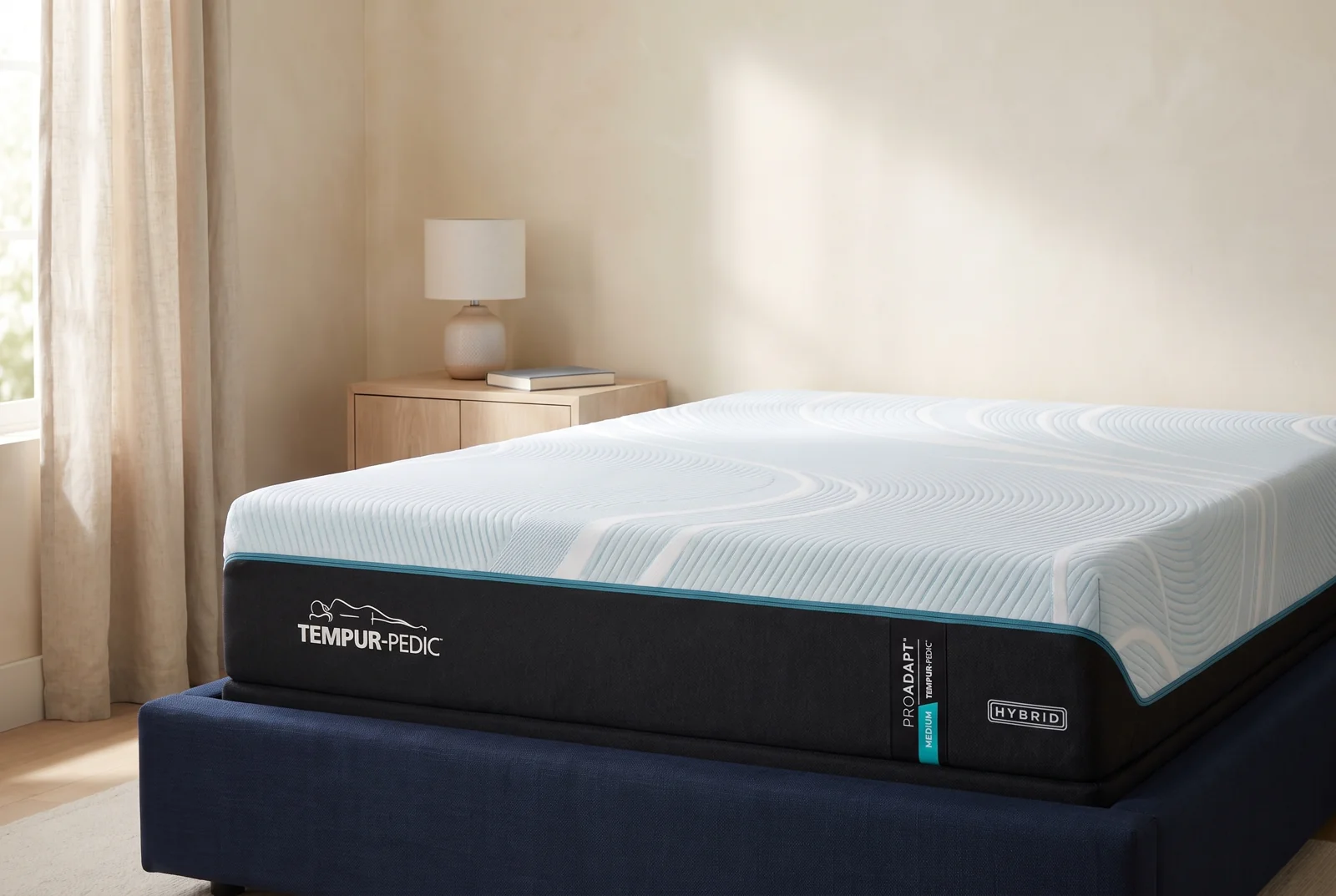
Search "is memory foam toxic" and you will find everything from reassuring manufacturer copy to blog posts implying you are poisoning yourself every night. The truth is less dramatic than either. Memory foam is a petroleum-derived polyurethane product, it does release compounds into the air when new, and the quantity and duration of that release vary enormously depending on how the foam was made and certified.
Here is what memory foam is made of, what actually comes off it, what the certifications mean, and what to do if you would rather avoid the question entirely.
What memory foam is made of
Memory foam, properly called viscoelastic polyurethane foam, starts as two liquid chemical streams: a polyol and an isocyanate. Mixed with water, catalysts and additives, they react, expand and cure into an open-cell foam. The additives give memory foam its signature slow recovery, the property where a handprint stays visible for a few seconds.
Manufacturers then blend in other things depending on the product: gel beads or phase-change material for cooling, copper or graphite for heat conduction, plant-derived polyols to replace part of the petroleum content, and a fire barrier layer to meet federal flammability standards. Our explainer on what memory foam is covers the construction side in more detail.
Once cured, the foam is a stable solid polymer. The reactive chemicals used to make it are consumed in the reaction. What is left, and what people are actually asking about, is the residue.
What actually comes off a new memory foam mattress
The smell you notice when you unbox a foam mattress is volatile organic compounds, or VOCs, releasing from the foam. This is off-gassing. It is real, it is measurable, and it is also usually short-lived.
The compounds involved are typically residual blowing agents, solvents and processing byproducts. In independent testing, emissions from certified foam mattresses are generally low and drop steeply over the first few days. Most of the odor is gone within 24 to 72 hours with a window open, and the great majority of the emission happens in the first week.
Two things push in the wrong direction. Compression is one: a bed-in-a-box mattress has been vacuum-sealed in plastic for weeks, so everything that would have dissipated in a warehouse comes out in your bedroom instead. Manufacturing standards are the other: cheap, uncertified foam made without emissions controls can smell far stronger and for far longer than a certified product. Our guide to new mattress smell and off-gassing covers how to speed the process up.
So is it toxic?
For most people, a certified memory foam mattress is not a meaningful health risk. The emissions are low, they fall off quickly, and the polymer itself is inert once cured. That is the mainstream position and the testing supports it.
The honest caveats are worth stating plainly, though.
Sensitivity varies. People with asthma, chemical sensitivities or reactive airways can genuinely react to a new foam mattress in a way most people do not. Headaches, throat irritation and nausea in the first days are commonly reported and are worth taking seriously rather than dismissing.
Certification is not optional information. An uncertified imported foam mattress with no emissions testing behind it is a different product from a CertiPUR-US certified one, even if they look identical. The gap between the best and worst foam on the market is large.
Infants are a different case. Babies sleep 14 or more hours a day with their faces close to the surface. For a crib, err heavily toward certified or natural materials. See our crib mattress buying guide.
Flame retardants are the older worry. The chemical flame retardants that generated most of the historical concern, notably PBDEs, were phased out of US mattresses years ago. Modern beds generally meet flammability standards with a physical fire barrier such as a woven sock rather than a sprayed chemical. If a mattress is very old, that is a better reason to replace it than a new one is to worry about.
What the certifications actually mean
CertiPUR-US is the one to look for on polyurethane and memory foam. It certifies that the foam is made without PBDE flame retardants, mercury, lead and other heavy metals, formaldehyde, and certain phthalates, and that it meets a low VOC emissions threshold. It applies to the foam, not the cover or the whole mattress.
OEKO-TEX Standard 100 tests textiles, so it covers the cover and fabric components rather than the foam core. GREENGUARD Gold is a stricter chemical emissions standard, originally developed for schools and healthcare settings. GOLS and GOTS apply to certified organic latex and organic textiles, and are the labels to look for on the natural materials route.
A mattress with none of these is not automatically dangerous, but you have no independent information about it. That is the real problem with uncertified foam: not proven harm, but absence of evidence.
How to reduce your exposure
- Unbox in a ventilated room and leave a window open for two or three days. Give it 48 to 72 hours before you sleep on it if you can; if not, ventilate the room while you sleep.
- Buy certified. CertiPUR-US on the foam is the baseline. Ask the retailer to show you the certification rather than take a marketing claim at face value.
- Buy in person. A mattress that has been sitting on a showroom floor has already done most of its off-gassing before it reaches your home. This is an underrated advantage of buying locally.
- Use a washable protector. It will not stop VOCs, but it keeps the surface clean and extends the life of the mattress, which matters more over the long run.
If you would rather skip foam entirely
Some people simply do not want a petroleum-based product in the bedroom, and that is a legitimate preference rather than something to be argued out of. There are good alternatives, and we stock them.
Natural latex is the closest direct substitute. Derived from rubber tree sap, it has a bouncier feel than memory foam, sleeps cooler and lasts a long time. Savvy Rest and Harvest Green build with certified organic latex, and Birch uses natural latex over wool and cotton. Our organic latex mattress guide explains Dunlop versus Talalay.
Innerspring and hybrid constructions use far less foam by volume, since most of the mattress is steel coils. A hybrid with a thin comfort layer gives you much of the pressure relief with a fraction of the foam.
Wool and cotton layers, used by Sleep & Beyond and in Savvy Rest builds, provide natural temperature regulation and act as a natural fire barrier without chemical treatment.
If you do want memory foam, buy it from a manufacturer that publishes its certifications. Tempur-Pedic is the obvious example: their proprietary foam is certified, and because their beds are sold uncompressed through showrooms rather than vacuum-packed, the off-gassing question is much smaller from the start.
Frequently asked questions
Is memory foam toxic to sleep on?
A certified memory foam mattress is not considered a meaningful health risk for most adults. Emissions are low and fall off sharply within the first week. People with asthma or chemical sensitivities may react in the first days, and uncertified foam with no emissions testing behind it is a genuinely different proposition.
Are memory foam mattresses safe?
Yes, when made to modern standards and certified. Look for CertiPUR-US on the foam and ideally GREENGUARD Gold on the finished mattress. The chemical flame retardants that drove most of the historical concern were phased out of US mattresses years ago.
What is memory foam made of?
Viscoelastic polyurethane, formed by reacting a polyol with an isocyanate in the presence of water and catalysts. Additives control the slow-recovery feel, and manufacturers often blend in gel, copper, graphite or plant-derived polyols. Once cured it is a stable solid polymer.
How long does a memory foam mattress off-gas?
The noticeable smell usually clears in 24 to 72 hours with good ventilation, and most measurable emission happens within the first week. A vacuum-compressed bed-in-a-box tends to be stronger initially than a mattress delivered uncompressed.
Does memory foam cause cancer?
There is no established link between sleeping on a certified memory foam mattress and cancer. Some compounds used in manufacturing are hazardous to factory workers at industrial concentrations, which is a workplace exposure question rather than a consumer one. If you would rather avoid the category, certified organic latex is the well-supported alternative.
Is memory foam safe for babies?
For cribs, choose a firm mattress with GREENGUARD Gold or an equivalent certification, and air it out thoroughly before use. Infants sleep far longer and closer to the surface than adults, so it is reasonable to apply a stricter standard than you would for your own bed.
Want to see the certifications yourself?
Come into any of our five Los Angeles showrooms and ask. We will show you the actual certification for any mattress on the floor, including the ones we do not think you should buy. You can also browse our memory foam mattresses and Tempur-Pedic collection, or take the sleep quiz if you want a recommendation that accounts for materials as well as feel.


