Free Local White-Glove Setup & Haul-Away on Orders Over $499Announcement 1 of 2
Explore Payment Options — View Financing DetailsAnnouncement 2 of 2
Most memory foam mattresses are built for one sleep surface only. Here's why flipping can backfire, and what to do instead when your mattress starts to sag.
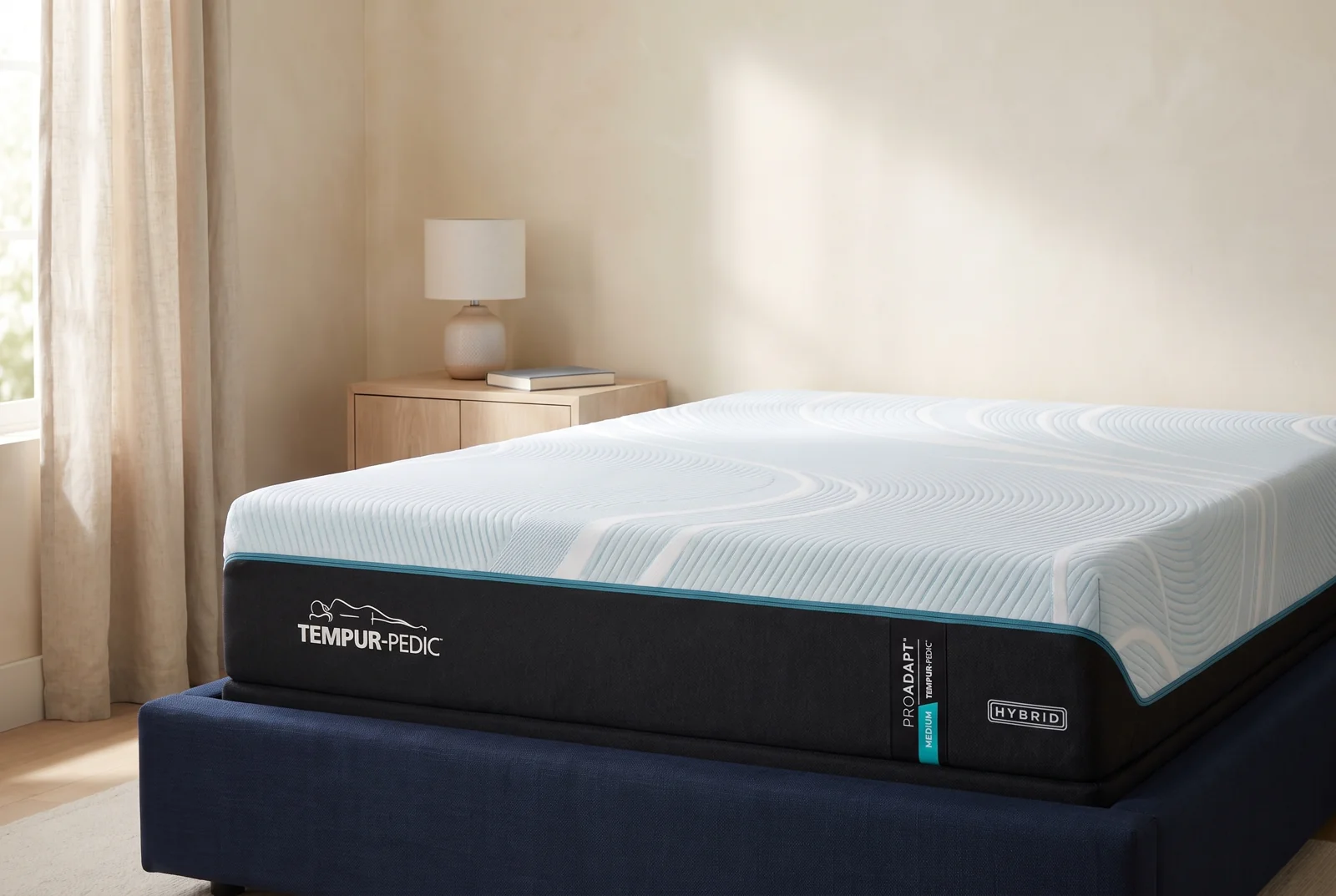
Tempur-Pedic TEMPUR-ProAdapt Medium HybridStyled product scene
If your memory foam mattress is starting to sag in the middle or feels softer than it used to, flipping it over might seem like the obvious fix. It's a habit a lot of us grew up with — Grandma flipped her innerspring mattress every season, so why not do the same with your memory foam bed? The short answer: most memory foam mattresses are built to be slept on one side only, and flipping them can do more harm than good.
A traditional memory foam mattress is built in layers, not as a single uniform slab. The top layer is usually soft memory foam or gel-infused foam designed to contour to your body and relieve pressure. Underneath that sits a transition layer, and at the base is a firm support foam that gives the mattress its structure and stability. That base layer is not designed to be a sleep surface — it's typically dense, unshaped foam that would feel rock-hard and unsupportive if you tried to sleep on it.
Because of this layered construction, flipping a single-sided memory foam mattress upside down means sleeping directly on that firm support core. You'd lose all the pressure-relieving comfort you paid for, and in many cases you could void the manufacturer's warranty, since most warranties explicitly require sleeping on the labeled top side.
Some mattresses — including certain hybrids and older innerspring designs — are genuinely double-sided, with a comfort layer built into both the top and bottom. These are sometimes called flippable mattresses, and they're a different product entirely from a standard single-sided memory foam bed. If you're not sure which type you have, check the mattress tag or the manufacturer's care instructions. If there's a "This Side Up" label, that's your answer. We cover the differences in more detail in our guide to double-sided, flippable mattresses, including who they're actually worth it for.
Even though you shouldn't flip a single-sided memory foam mattress, that doesn't mean it needs zero maintenance. Rotating it 180 degrees head-to-foot every three to six months helps even out wear, especially if you tend to sleep in the same spot every night. Rotation redistributes body impressions and can meaningfully extend the life of the mattress without disturbing the layered comfort system.
If your mattress is sagging and rotation isn't helping, that's usually a sign the foam has broken down rather than a sign you need to flip it. At that point, a mattress topper can restore some support and comfort in the short term, but a mattress with significant sagging is generally past the point where a topper alone will fix it. Our guide on how to fix a sagging mattress walks through when a topper helps and when it's genuinely time to replace the mattress.
The same rule applies to premium brands like Tempur-Pedic. Their mattresses use a proprietary layered foam construction that's engineered for one sleep surface, and the company advises against flipping for the same structural reasons. If you own a Tempur-Pedic and want the full care rundown, our article on how to care for a Tempur-Pedic mattress covers rotation schedules and what's safe to do instead of flipping.
Since flipping isn't an option for most memory foam beds, watch for these signs that rotation and toppers won't solve:
A visible body impression deeper than an inch or two that doesn't bounce back after you get up. Waking up with new aches in your back, hips, or shoulders that weren't there a year ago. Springs or firm layers you can feel through the foam. A mattress older than 7-10 years, which is the typical lifespan for most memory foam construction. If several of these apply, it's worth stopping by one of our five LA-area showrooms to test newer memory foam and hybrid models side by side — you'll feel the difference in support immediately, and with same-day delivery ($100 upgrade, order by 4pm) available across the LA warm-climate market, you won't be stuck sleeping on a bad mattress for long.
If you have a genuinely double-sided mattress, flipping it every three to six months is a reasonable schedule. If you have a standard single-sided memory foam mattress, you shouldn't flip it at all — rotate it head-to-foot on that same schedule instead.
No. Pillow top mattresses have a plush comfort layer sewn onto just one side, so the "pillow" is only on top. Flipping it would mean sleeping directly on the firm underside, which defeats the purpose of the pillow top entirely.
It depends entirely on how your mattress was built. Check the care tag or original packaging first. If it doesn't say the mattress is double-sided or flippable, assume it's single-sided and rotate instead of flip.
No, Tempur-Pedic mattresses are built with a specific layer order designed for one sleep surface. Rotating head-to-foot is the recommended maintenance instead.
For mattresses that are genuinely double-sided, get a second person to help — mattresses are heavy and awkward, and doing it alone raises the risk of injury or dropping it against a wall or bed frame. Flip it fully over (not just rotate) so the opposite comfort layer faces up.
If your current memory foam mattress is past the point of rotating and topping, take our two-minute sleep quiz to get matched with a new memory foam or hybrid mattress, or stop by an LA Mattress Store showroom to feel the difference in person. We back every mattress with a free 120-night comfort guarantee, so you can be sure it's right before you commit.
Start with a mattress type that suits how you sleep, then compare the feel in person.
Prices for Queen · Choose options for other sizes


Est. $124.84/month for 6 months
Item-price payoff target · excludes taxes and fees.
Synchrony · No interest if paid in full within 6 months. Subject to credit approval.
Interest is charged from the purchase date if not paid in full in time. Minimum monthly payments are required and may not repay the balance in time.
This item price meets the 6-month deferred-interest threshold. We use the longest confirmed period available at this price. Avoiding interest requires paying the promotional balance in full before the deadline. Lender fees can affect total cost; this selection does not establish the lowest total borrowing cost.
This illustration divides the displayed price of $749.00 for one selected item by 6 months, rounding up to the next cent. It is not the lender’s required payment or billing schedule. Check the promotional deadline on your statement and pay the full promotional balance before it ends.
Taxes, delivery, recycling charges and any lender promotional fees are excluded. Fees may add to the total borrowing cost. Additional discounts can change plan eligibility and the amount financed. Confirm the final purchase amount and applicable terms with the store before arranging financing.
Credit approval, applicable account terms and purchase eligibility apply.
How Synchrony deferred interest works
Est. $158.17/month for 6 months
Item-price payoff target · excludes taxes and fees.
Synchrony · No interest if paid in full within 6 months. Subject to credit approval.
Interest is charged from the purchase date if not paid in full in time. Minimum monthly payments are required and may not repay the balance in time.
This item price meets the 6-month deferred-interest threshold. We use the longest confirmed period available at this price. Avoiding interest requires paying the promotional balance in full before the deadline. Lender fees can affect total cost; this selection does not establish the lowest total borrowing cost.
This illustration divides the displayed price of $949.00 for one selected item by 6 months, rounding up to the next cent. It is not the lender’s required payment or billing schedule. Check the promotional deadline on your statement and pay the full promotional balance before it ends.
Taxes, delivery, recycling charges and any lender promotional fees are excluded. Fees may add to the total borrowing cost. Additional discounts can change plan eligibility and the amount financed. Confirm the final purchase amount and applicable terms with the store before arranging financing.
Credit approval, applicable account terms and purchase eligibility apply.
How Synchrony deferred interest works
Est. $146.50/month for 6 months
Item-price payoff target · excludes taxes and fees.
Synchrony · No interest if paid in full within 6 months. Subject to credit approval.
Interest is charged from the purchase date if not paid in full in time. Minimum monthly payments are required and may not repay the balance in time.
This item price meets the 6-month deferred-interest threshold. We use the longest confirmed period available at this price. Avoiding interest requires paying the promotional balance in full before the deadline. Lender fees can affect total cost; this selection does not establish the lowest total borrowing cost.
This illustration divides the displayed price of $879.00 for one selected item by 6 months, rounding up to the next cent. It is not the lender’s required payment or billing schedule. Check the promotional deadline on your statement and pay the full promotional balance before it ends.
Taxes, delivery, recycling charges and any lender promotional fees are excluded. Fees may add to the total borrowing cost. Additional discounts can change plan eligibility and the amount financed. Confirm the final purchase amount and applicable terms with the store before arranging financing.
Credit approval, applicable account terms and purchase eligibility apply.
How Synchrony deferred interest works
Est. $91.63/month for 24 months
Item-price payoff target · excludes taxes and fees.
Synchrony · No interest if paid in full within 24 months. Subject to credit approval.
Interest is charged from the purchase date if not paid in full in time. Minimum monthly payments are required and may not repay the balance in time.
This item price meets the 24-month deferred-interest threshold. We use the longest confirmed period available at this price. Avoiding interest requires paying the promotional balance in full before the deadline. Lender fees can affect total cost; this selection does not establish the lowest total borrowing cost.
This illustration divides the displayed price of $2,199.00 for one selected item by 24 months, rounding up to the next cent. It is not the lender’s required payment or billing schedule. Check the promotional deadline on your statement and pay the full promotional balance before it ends.
Taxes, delivery, recycling charges and any lender promotional fees are excluded. Fees may add to the total borrowing cost. Additional discounts can change plan eligibility and the amount financed. Confirm the final purchase amount and applicable terms with the store before arranging financing.
Credit approval, applicable account terms and purchase eligibility apply.
How Synchrony deferred interest works
Est. $92.42/month for 12 months
Item-price payoff target · excludes taxes and fees.
Synchrony · No interest if paid in full within 12 months. Subject to credit approval.
Interest is charged from the purchase date if not paid in full in time. Minimum monthly payments are required and may not repay the balance in time.
This item price meets the 12-month deferred-interest threshold. We use the longest confirmed period available at this price. Avoiding interest requires paying the promotional balance in full before the deadline. Lender fees can affect total cost; this selection does not establish the lowest total borrowing cost.
This illustration divides the displayed price of $1,109.00 for one selected item by 12 months, rounding up to the next cent. It is not the lender’s required payment or billing schedule. Check the promotional deadline on your statement and pay the full promotional balance before it ends.
Taxes, delivery, recycling charges and any lender promotional fees are excluded. Fees may add to the total borrowing cost. Additional discounts can change plan eligibility and the amount financed. Confirm the final purchase amount and applicable terms with the store before arranging financing.
Credit approval, applicable account terms and purchase eligibility apply.
How Synchrony deferred interest worksBuying guides and sleep advice, no email signup required.