
Walk a mattress showroom and you will see three surface styles over and over: some beds have a thick, puffy pad sewn onto the top, some have a squared-off cushion layer that runs flush to the edges, and some are simply flat. That last one is a tight top, and it is the plainest and often the most misunderstood of the three.
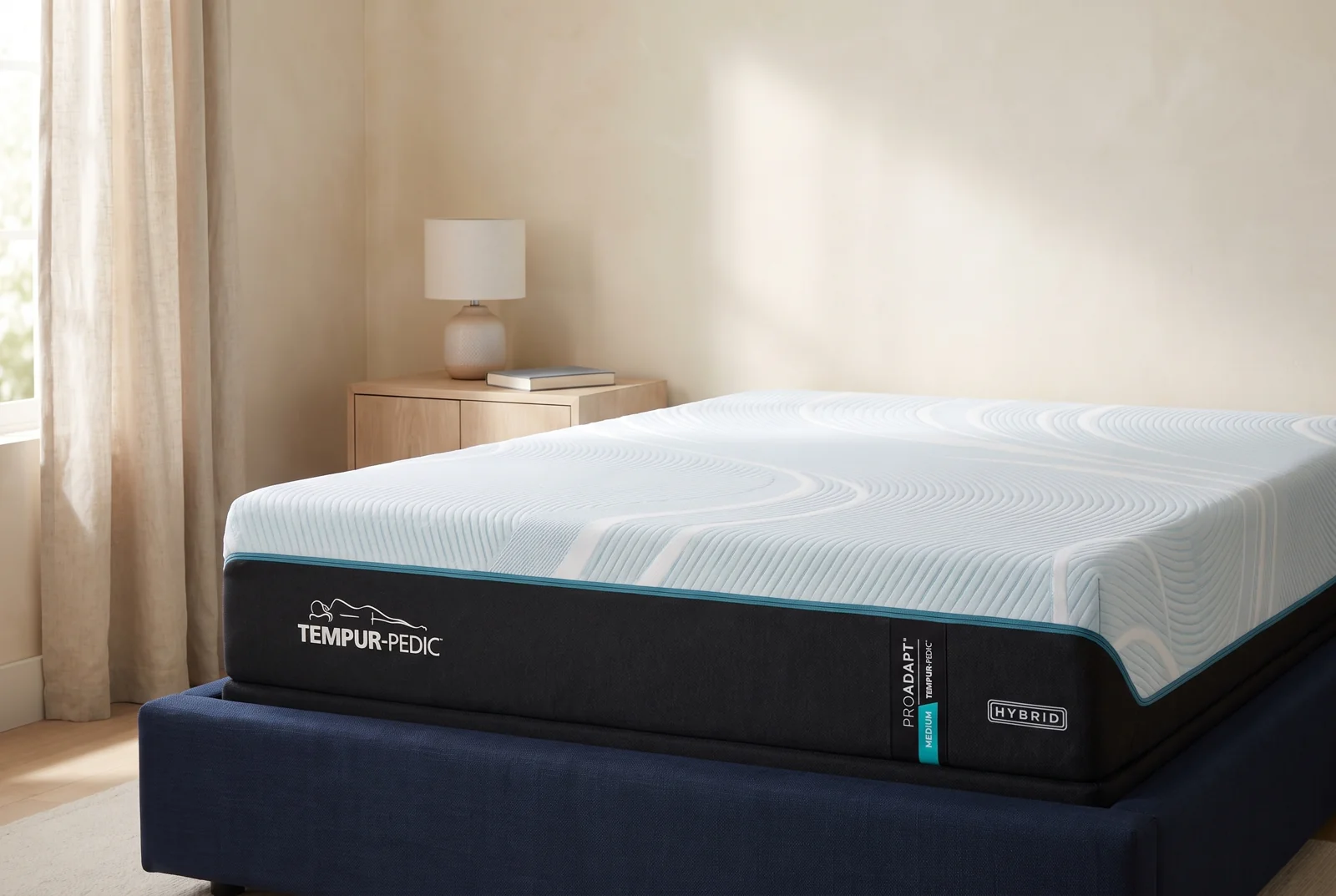
A tight top mattress is a mattress with no separate pillow layer sewn on top. The cover fabric is quilted directly to a thin layer of foam or fiber and stretched smoothly across the surface, which is where the name comes from: the top is tight, not padded and loose. Everything that determines how the bed feels lives underneath that surface, in the comfort layers and the support core.
That simplicity is a feature, not a shortfall. Here is what it changes.
What a tight top actually feels like
The short version: you feel the mattress rather than a cushion sitting on the mattress.
On a pillow top bed, the first inch or two of give comes from that sewn-on pad, and it is soft and immediate. You sink into it before you reach the real support. On a tight top, there is no intermediate layer. Your body meets the comfort foams directly, so the response is more immediate and the surface feels more solid underfoot when you sit on the edge.
This does not mean tight tops are firm. That is the single most common misunderstanding. A tight top mattress can be plush, medium or firm, because firmness is set by the foams and coils inside, not by whether there is a pad on top. There are genuinely soft tight top beds and genuinely firm pillow tops. What a tight top consistently gives you is less surface plushness and a more direct connection to the support layers, whatever their firmness.
Tight top vs pillow top vs euro top
These three terms describe the top surface only, not the mattress construction underneath. A tight top, a pillow top and a euro top can all sit on the same innerspring, hybrid or foam core.
| Surface style | Construction | Feel |
|---|---|---|
| Tight top | Cover quilted directly to the mattress, no separate layer | Flat, smooth, direct; you feel the internal comfort layers |
| Pillow top | A padded layer sewn onto the top, with a visible gap at the seam | Soft and cushioned immediately, with a distinct plush upper |
| Euro top | A padded layer sewn flush to the edges, no visible gap | Cushioned like a pillow top but more supported at the perimeter |
If you want the detail on the other two, we cover what a pillow top is and what a euro top is separately.
The durability argument
Tight tops have a reputation for outlasting pillow tops, and there is a real mechanical reason behind it, though it is often overstated.
A pillow top is a soft pad of fiber or foam sitting above the mattress with nothing compressing it from below. Body-shaped impressions form there first, because that layer is the least supported part of the bed. Once a pillow top develops a permanent dent, you cannot flip it or repair it, and the mattress beneath may still be perfectly sound.
A tight top has no such layer to collapse. The quilted surface is thin and held taut, so the wear happens where the mattress is engineered to handle it, in the comfort foams and coils. That does not make a tight top immortal, and a cheap tight top with low-density foam will soften just as fast as anything else. But given two mattresses of similar quality, the tight top usually shows less visible surface impression over time.
Rotating the mattress on the schedule the manufacturer recommends helps either style considerably. Our guide on how long mattresses last covers what actually shortens a mattress's life.
Who a tight top suits
Back and stomach sleepers
These positions want the hips held up rather than allowed to sink. A thick pillow top can let the midsection drop below the shoulders, which puts the lower back into a slight arch it holds all night. A tight top over a supportive core keeps the surface flatter and the spine more neutral. If you sleep on your stomach in particular, a tight top is usually the better starting point. See our stomach sleeper guide for the rest of the picture.
Heavier sleepers
More body weight compresses a soft top layer faster and further. Skipping that layer means more of the mattress's engineered support is doing the work, and there is less soft material to break down early.
People who sleep hot
Thick padded tops trap heat, because there is more soft material surrounding your body and less airflow near the surface. A tight top over a coil or hybrid core keeps you closer to the breathable part of the mattress. It is not the whole answer to sleeping cool, but it helps, especially through a Los Angeles summer when bedrooms stay warm past midnight.
Anyone using a mattress topper
If you already own a topper you like, or you expect to add one, a tight top is the sensible base. Layering a topper over a pillow top stacks two soft layers and usually feels vague and unsupported. A tight top gives the topper a firm, flat foundation to work against, and you can swap the topper as your preferences change. Browse our mattress toppers to see the options.
Who should probably skip it
Strict side sleepers, particularly lighter ones, often want that immediate surface cushion. Side sleeping concentrates pressure on the shoulder and hip, and a soft top layer lets those points drop in without forcing the whole comfort system to give. If you wake with a sore shoulder, a plush or pillow top surface is worth trying before you conclude that firmness is your problem.
People with pressure-point pain, arthritis or bursitis are usually in the same category. Look at softer mattresses built for pressure relief rather than defaulting to a flat surface.
Frequently asked questions
What does tight top mattress mean?
It means the mattress has no separate pillow layer sewn on top. The cover fabric is quilted directly to a thin layer of foam or fiber and pulled taut across the surface, giving a flat, smooth look. All of the cushioning comes from the comfort layers inside the mattress rather than from a pad sitting above it.
Is a tight top mattress firm?
Not necessarily. Tight top describes the surface style, not the firmness. Firmness is determined by the foams and coils inside the mattress, so tight tops are made in plush, medium and firm versions. What a tight top consistently gives you is less surface cushioning and a more direct feel of the support layers, whatever firmness level you pick.
What is the difference between a tight top and a pillow top?
A pillow top has an extra padded layer sewn onto the top surface, visible as a separate cushion with a seam and a small gap around the edge. A tight top has no such layer. Pillow tops feel softer immediately at the surface; tight tops feel flatter and more direct, and they tend to show less body impression over time because there is no unsupported soft layer to collapse.
Do tight top mattresses last longer?
Often, though not automatically. The soft pad on a pillow top is the least supported part of the bed and is usually where visible impressions form first, and that layer cannot be repaired or flipped. A tight top has no such layer, so wear happens in the foams and coils that are engineered for it. Quality of materials still matters more than surface style: a cheap tight top will soften faster than a well-built pillow top.
Is a tight top mattress good for back pain?
It can be, particularly for back and stomach sleepers, because keeping the hips from sinking below the shoulders helps hold the spine closer to neutral. But surface style is not the deciding factor. What matters most is whether the overall firmness keeps your spine in roughly the alignment it holds when you stand. Some people with back pain do better on a plush surface, so try both rather than assuming.
Can you put a mattress topper on a tight top mattress?
Yes, and it is one of the better pairings. A tight top gives a topper a firm, flat base to work against, so the topper's feel comes through clearly. Layering a topper over an already-plush pillow top tends to feel vague and unsupported, because you end up with two soft layers stacked on each other.
Feel the difference in person
Surface style is one of those things that reads as a technical detail on a spec sheet and becomes obvious the moment you lie down. Two minutes on a tight top and then a pillow top of the same firmness will tell you more than any description can.
Come compare them at any of our five Los Angeles showrooms, where we carry tight top and pillow top constructions across innerspring, hybrid and medium-firm lineups. Or start with our sleep quiz if you would rather narrow it down before you visit. Every mattress ships with our free 120-night comfort guarantee, so you have time to be sure at home.


