Free Local White-Glove Setup & Haul-Away on Orders Over $499Announcement 1 of 2
Explore Payment Options — View Financing DetailsAnnouncement 2 of 2
Choosing between a spring and foam mattress when you have back pain? We break down how each type supports your spine, who benefits from each, and which is better for your sleep position and pain type.
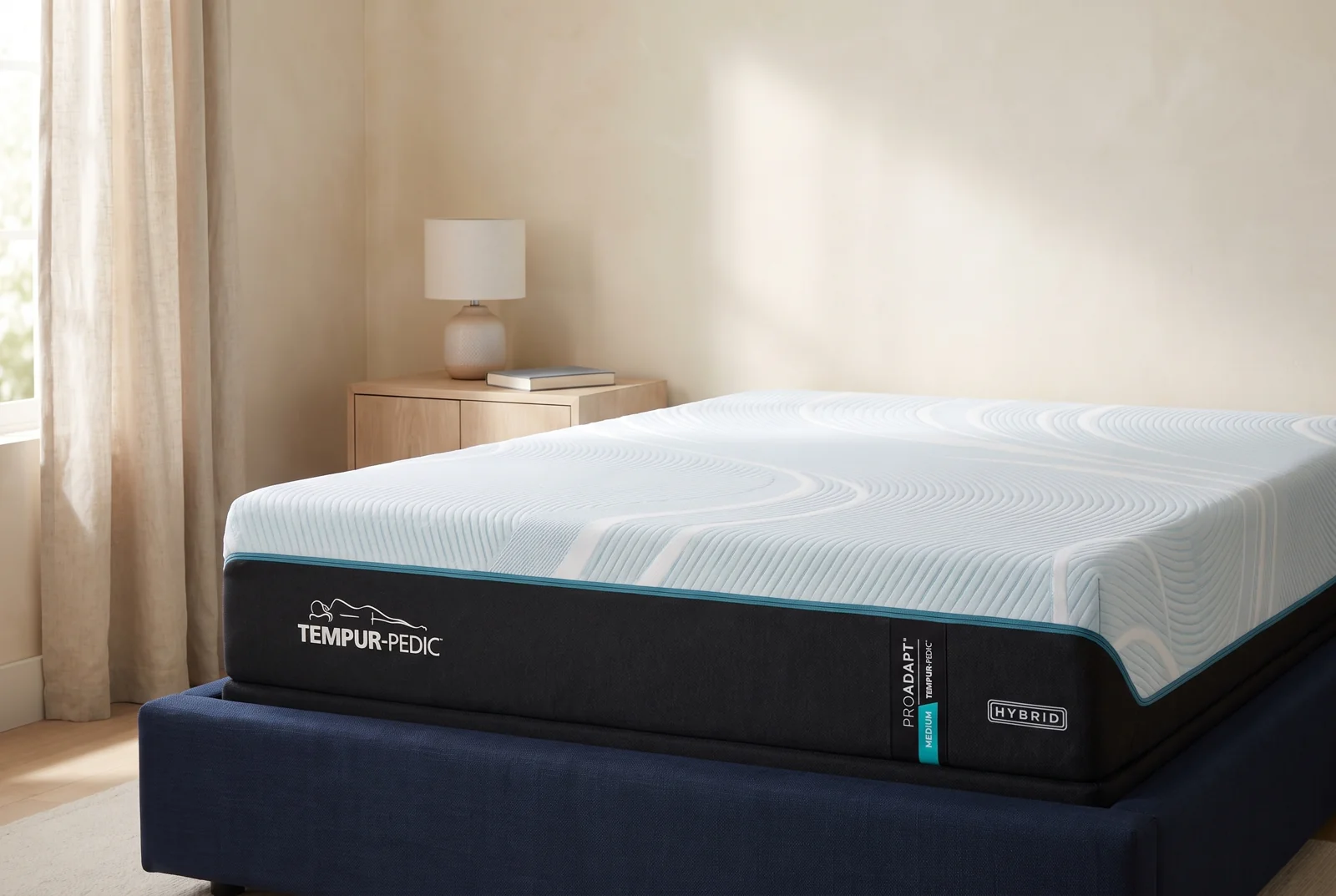
Tempur-Pedic TEMPUR-ProAdapt Medium HybridStyled product scene
Back pain is the most common reason people buy a new mattress, and the most common reason they buy the wrong one. The spring vs. foam debate has been running for decades, and the answer isn't one-size-fits-all. The best mattress for back pain depends on your sleep position, body weight, pain location, and what you actually need from your mattress.
This guide breaks down the real differences between innerspring and foam mattresses for back pain, cuts through the marketing noise, and helps you figure out which one is right for you.
Your mattress affects your back in two ways: support and pressure relief. These are different things, and most mattress marketing conflates them.
Support means keeping your spine in neutral alignment while you sleep, preventing your hips from sinking too deep (which arches the lower back) or your shoulders from staying too high (which creates lateral curvature).
Pressure relief means cushioning the contact points between your body and the sleep surface, hips, shoulders, lower back, so blood flow isn't restricted and soft tissue isn't compressed for hours at a time.
A mattress that's too firm may support the spine well but create pressure point pain at the hips and shoulders. A mattress that's too soft may relieve pressure but let the hips sink into a misaligned position. The right mattress for back pain does both, and where spring vs. foam mattresses differ is how they achieve each.
A landmark study published in The Lancet found that patients with chronic low back pain who switched to a medium-firm mattress reported significantly less pain and disability after 90 days compared to those who slept on firm mattresses. The "firmer is better" advice is largely outdated.
Innerspring mattresses use a system of metal coils as their primary support layer. The type of coil system determines how the mattress behaves:
For back pain: Innerspring mattresses are generally firm to medium-firm. The coil system provides strong pushback, good for keeping the spine aligned, especially for back and stomach sleepers. However, the surface can be unforgiving at pressure points without a substantial comfort layer on top.
Foam mattresses use layers of different foam types to balance support and pressure relief:
For back pain: Foam mattresses excel at pressure relief and contouring, which is especially beneficial for side sleepers with hip and shoulder pain. However, lower-quality all-foam mattresses can lack the firm support layer needed to keep the spine aligned, leading to a hammock effect where the hips sink too deep.
| Factor | Innerspring | Foam |
|---|---|---|
| Spinal support | Strong, firm base, good pushback | Varies, depends on foam density |
| Pressure relief | Low–moderate (depends on comfort layer) | High, especially memory foam |
| Motion isolation | Poor (Bonnell) to Good (pocketed) | Excellent |
| Sleeping hot | Cooler, airflow through coils | Warmer, especially memory foam |
| Edge support | Strong | Moderate |
| Durability | 7–10 years | 6–8 years (memory foam), 8–12 years (latex) |
| Best for | Back/stomach sleepers, heavier people | Side sleepers, couples, hot sleepers |
| Price range | $300–$3,000+ | $300–$4,000+ |
Back sleepers: Both work well. A medium-firm innerspring or a high-density foam mattress both provide the even support needed to keep the lumbar spine in neutral. If you sleep hot, lean toward innerspring. If you need more pressure relief at the lumbar, lean toward memory foam.
Side sleepers: Foam mattresses generally win here. Side sleepers need a surface that cushions the hip and shoulder while keeping the spine level. The contouring of memory foam or latex does this better than most innerspring options. A soft to medium innerspring with a thick pillow top can work, but dedicated foam mattresses tend to perform better.
Stomach sleepers: Firm innerspring is typically the better choice. Stomach sleeping requires the hips to stay elevated relative to the torso to prevent lumbar hyperextension. Memory foam lets the hips sink, exactly what you don't want. A firm innerspring keeps the hips up and spine flat.
Combination sleepers: Hybrid mattresses, which combine an innerspring coil support system with foam comfort layers, are often the best answer here. You get the support of coils and the pressure relief of foam, and the responsiveness to shift positions easily without feeling stuck.
If you're stuck between spring and foam, the answer might be neither, or rather, both. Hybrid mattresses combine a pocketed coil support system with foam or latex comfort layers, giving you the best of both worlds.
For back pain specifically, hybrids are often the top recommendation because:
Browse our hybrid mattress collection if you want the support of springs with the comfort of foam. For a deeper look at our top picks, see our best mattresses for back pain guide.
Hybrid mattresses typically use 800–1,000+ individually pocketed coils in a queen size. Each coil responds independently to your body's weight distribution, providing more targeted support than traditional interconnected coil systems.
One of the most persistent myths in mattress shopping is that firm mattresses are best for back pain. This was common medical advice for decades, and it's largely wrong.
A study referenced by the Sleep Foundation found that medium-firm mattresses reduced chronic low back pain more effectively than firm mattresses. The reason: a mattress that's too firm creates pressure point pain at the hips and shoulders, which causes compensatory muscle tension in the back.
The right firmness depends on your body weight and sleep position:
Choose an innerspring (or hybrid) mattress for back pain if:
Our innerspring mattress collection and firm mattress collection are good starting points.
Choose a foam mattress for back pain if:
Browse our memory foam mattress collection or natural latex options for targeted pressure relief.
Visit any LA Mattress location to spend 10–15 minutes on each mattress in your actual sleep position. Our consultants will watch your spinal alignment and help narrow down what's right for your back. Free delivery on all orders. 120-night comfort exchange.
Yes, a quality innerspring or hybrid mattress can be excellent for back pain, particularly for back and stomach sleepers who need firm spinal support. The key is choosing a modern pocketed coil design rather than old-style Bonnell coils, and ensuring there's an adequate comfort layer to relieve pressure points.
It depends on your sleep position. Side sleepers generally do better with foam (better pressure relief at hips and shoulders). Back and stomach sleepers often do better with innerspring or hybrid (firmer support to keep hips aligned). For most people, a hybrid mattress that combines both is the best solution.
Yes, an old, sagging innerspring mattress with broken or weakened coils can absolutely cause or worsen back pain by allowing the spine to fall into an unsupported position. An innerspring mattress that's too firm without an adequate comfort layer can also create pressure point pain. If your spring mattress is over 7-8 years old and you're waking up with back pain, replacement is likely overdue.
Research consistently shows medium-firm mattresses reduce chronic back pain more effectively than very firm mattresses for most people. The right firmness depends on your body weight and sleep position, heavier individuals and stomach sleepers generally need firmer options, while lighter individuals and side sleepers benefit from softer options.
Hybrid mattresses, combining pocketed coils with foam or latex comfort layers, are frequently recommended for back pain because they provide both strong spinal support and targeted pressure relief. Medium-firm hybrids are popular choices among chronic back pain sufferers. See our full back pain mattress guide for specific recommendations.
There's no universal answer to the spring vs. foam debate for back pain, because back pain isn't universal. The right mattress depends on how you sleep, your body type, and where your pain comes from.
If you sleep on your back or stomach and need firm support: look at quality innerspring or hybrid mattresses in medium-firm. If you sleep on your side and need pressure relief: memory foam or latex in medium are your friends. If you're a combination sleeper or aren't sure: a hybrid gives you the flexibility of both.
Visit any of our showrooms to try mattresses in person, the only way to truly know if a mattress works for your back is to spend time on it. Or shop our full selection online with free white glove delivery on orders over $499 and a 120-night comfort trial on every purchase.
Shop All Mattresses | Hybrid Mattresses | Innerspring Mattresses
Our sleep experts are here to help you find the right mattress for your back pain, no pressure, just honest advice.
(800) 218-3578Related reading:
Start with a mattress type that suits how you sleep, then compare the feel in person.
Prices for Queen · Choose options for other sizes


Est. $124.84/month for 6 months
Item-price payoff target · excludes taxes and fees.
Synchrony · No interest if paid in full within 6 months. Subject to credit approval.
Interest is charged from the purchase date if not paid in full in time. Minimum monthly payments are required and may not repay the balance in time.
This item price meets the 6-month deferred-interest threshold. We use the longest confirmed period available at this price. Avoiding interest requires paying the promotional balance in full before the deadline. Lender fees can affect total cost; this selection does not establish the lowest total borrowing cost.
This illustration divides the displayed price of $749.00 for one selected item by 6 months, rounding up to the next cent. It is not the lender’s required payment or billing schedule. Check the promotional deadline on your statement and pay the full promotional balance before it ends.
Taxes, delivery, recycling charges and any lender promotional fees are excluded. Fees may add to the total borrowing cost. Additional discounts can change plan eligibility and the amount financed. Confirm the final purchase amount and applicable terms with the store before arranging financing.
Credit approval, applicable account terms and purchase eligibility apply.
How Synchrony deferred interest works
Est. $158.17/month for 6 months
Item-price payoff target · excludes taxes and fees.
Synchrony · No interest if paid in full within 6 months. Subject to credit approval.
Interest is charged from the purchase date if not paid in full in time. Minimum monthly payments are required and may not repay the balance in time.
This item price meets the 6-month deferred-interest threshold. We use the longest confirmed period available at this price. Avoiding interest requires paying the promotional balance in full before the deadline. Lender fees can affect total cost; this selection does not establish the lowest total borrowing cost.
This illustration divides the displayed price of $949.00 for one selected item by 6 months, rounding up to the next cent. It is not the lender’s required payment or billing schedule. Check the promotional deadline on your statement and pay the full promotional balance before it ends.
Taxes, delivery, recycling charges and any lender promotional fees are excluded. Fees may add to the total borrowing cost. Additional discounts can change plan eligibility and the amount financed. Confirm the final purchase amount and applicable terms with the store before arranging financing.
Credit approval, applicable account terms and purchase eligibility apply.
How Synchrony deferred interest works
Est. $146.50/month for 6 months
Item-price payoff target · excludes taxes and fees.
Synchrony · No interest if paid in full within 6 months. Subject to credit approval.
Interest is charged from the purchase date if not paid in full in time. Minimum monthly payments are required and may not repay the balance in time.
This item price meets the 6-month deferred-interest threshold. We use the longest confirmed period available at this price. Avoiding interest requires paying the promotional balance in full before the deadline. Lender fees can affect total cost; this selection does not establish the lowest total borrowing cost.
This illustration divides the displayed price of $879.00 for one selected item by 6 months, rounding up to the next cent. It is not the lender’s required payment or billing schedule. Check the promotional deadline on your statement and pay the full promotional balance before it ends.
Taxes, delivery, recycling charges and any lender promotional fees are excluded. Fees may add to the total borrowing cost. Additional discounts can change plan eligibility and the amount financed. Confirm the final purchase amount and applicable terms with the store before arranging financing.
Credit approval, applicable account terms and purchase eligibility apply.
How Synchrony deferred interest works
Est. $91.63/month for 24 months
Item-price payoff target · excludes taxes and fees.
Synchrony · No interest if paid in full within 24 months. Subject to credit approval.
Interest is charged from the purchase date if not paid in full in time. Minimum monthly payments are required and may not repay the balance in time.
This item price meets the 24-month deferred-interest threshold. We use the longest confirmed period available at this price. Avoiding interest requires paying the promotional balance in full before the deadline. Lender fees can affect total cost; this selection does not establish the lowest total borrowing cost.
This illustration divides the displayed price of $2,199.00 for one selected item by 24 months, rounding up to the next cent. It is not the lender’s required payment or billing schedule. Check the promotional deadline on your statement and pay the full promotional balance before it ends.
Taxes, delivery, recycling charges and any lender promotional fees are excluded. Fees may add to the total borrowing cost. Additional discounts can change plan eligibility and the amount financed. Confirm the final purchase amount and applicable terms with the store before arranging financing.
Credit approval, applicable account terms and purchase eligibility apply.
How Synchrony deferred interest works
Est. $92.42/month for 12 months
Item-price payoff target · excludes taxes and fees.
Synchrony · No interest if paid in full within 12 months. Subject to credit approval.
Interest is charged from the purchase date if not paid in full in time. Minimum monthly payments are required and may not repay the balance in time.
This item price meets the 12-month deferred-interest threshold. We use the longest confirmed period available at this price. Avoiding interest requires paying the promotional balance in full before the deadline. Lender fees can affect total cost; this selection does not establish the lowest total borrowing cost.
This illustration divides the displayed price of $1,109.00 for one selected item by 12 months, rounding up to the next cent. It is not the lender’s required payment or billing schedule. Check the promotional deadline on your statement and pay the full promotional balance before it ends.
Taxes, delivery, recycling charges and any lender promotional fees are excluded. Fees may add to the total borrowing cost. Additional discounts can change plan eligibility and the amount financed. Confirm the final purchase amount and applicable terms with the store before arranging financing.
Credit approval, applicable account terms and purchase eligibility apply.
How Synchrony deferred interest worksBuying guides and sleep advice, no email signup required.