Free Local White-Glove Setup & Haul-Away on Orders Over $499Announcement 1 of 2
Explore Payment Options — View Financing DetailsAnnouncement 2 of 2
Memory foam is viscoelastic polyurethane, chemically modified to soften at body temperature. Here is what actually goes into it and why density predicts how long it lasts.
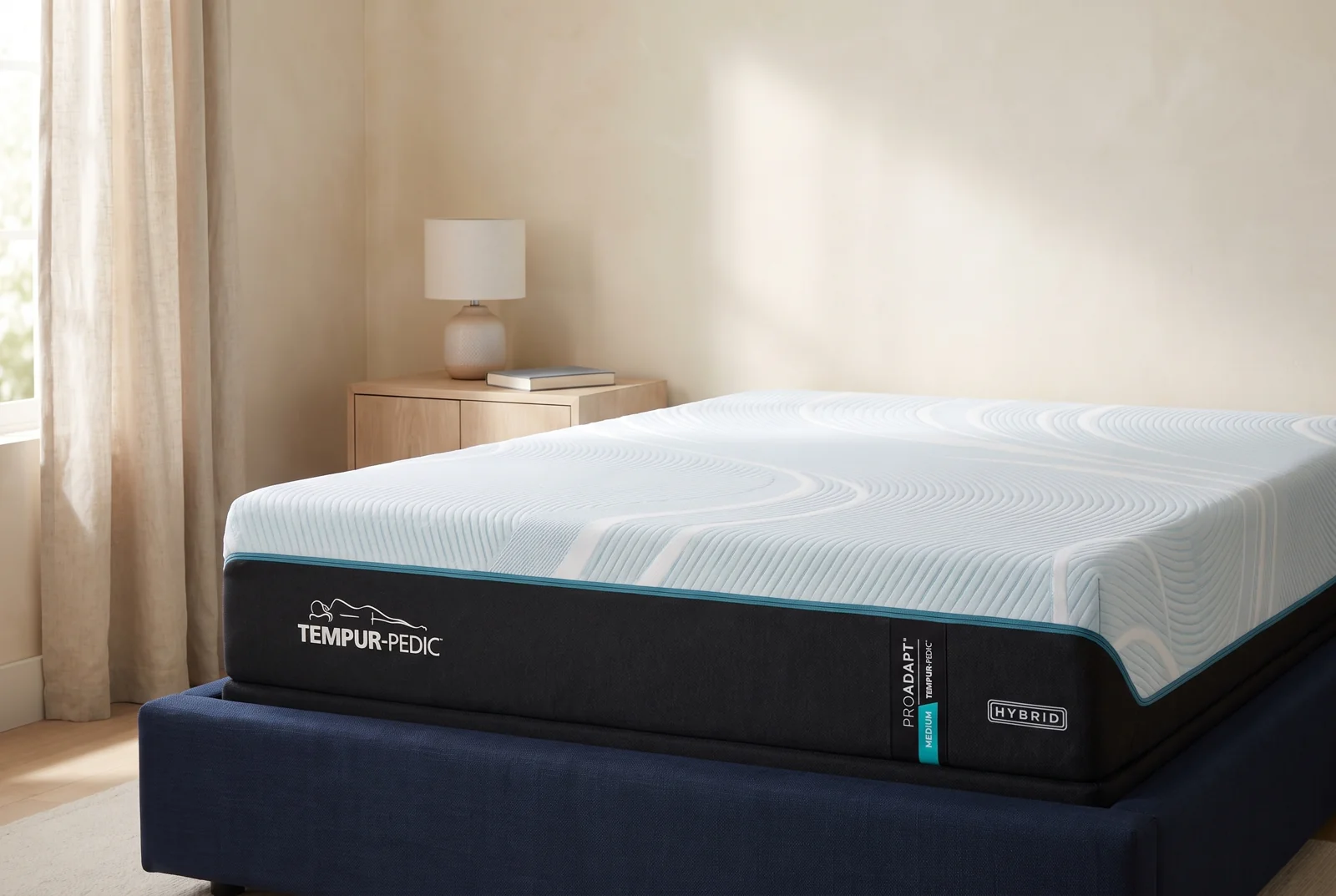
Tempur-Pedic TEMPUR-ProAdapt Medium HybridStyled product scene
Memory foam is the most recognizable material in the mattress industry and the least understood. Shoppers know the feel, the slow sink and the way the surface holds an impression of a hand for a second or two after it lifts. Far fewer know what is actually in it, which matters if you care about durability, heat, smell or what you are bringing into the bedroom.
The short answer: memory foam is polyurethane, chemically modified to make it slow to recover its shape. Everything else is a variation on that base.
Memory foam starts as polyurethane, the same broad family of polymer used in furniture cushions, car seats and carpet underlay. Polyurethane forms when two liquid chemical groups react: a polyol and a diisocyanate. That reaction creates a solid polymer, and a blowing agent introduced during mixing fills it with gas bubbles, turning the solid into a foam.
Conventional polyurethane foam springs back quickly. Memory foam does not, and that difference is deliberate.
Manufacturers add compounds that lower the foam's glass transition temperature, the point at which a polymer shifts from rigid to pliable. Tuned correctly, that point falls near human body temperature. The result is a foam that is firm when you first touch it and softens exactly where your body warms it.
The technical name is viscoelastic polyurethane foam. Viscous means it resists flow and takes time to move. Elastic means it eventually returns to its original shape. Both behaviors at once are what produce the signature slow-motion response.
The cell structure matters too. Memory foam is open-cell, meaning the gas pockets interconnect rather than sealing off. Air is pushed out slowly as you sink in and drawn back gradually as you move, which is why the foam feels like it is deflating under pressure.
NASA funded the original research in the 1960s, looking for better crash protection and seat cushioning for pilots. The material was released for public use and reached mattresses commercially in the 1990s.
Almost no mattress uses plain viscoelastic foam. Manufacturers blend in additives to correct its two main weaknesses, heat retention and density.
Gel beads or a gel swirl are mixed into the foam or applied as a layer. Gel has a higher heat capacity than foam, so it absorbs warmth away from the surface. The effect is real but finite: gel evens out the initial contact temperature rather than moving heat out of the mattress indefinitely.
Both conduct heat better than polyurethane, so infusing them gives warmth a path away from your body. Copper is also naturally antimicrobial, which some brands highlight.
Part of the petroleum-derived polyol can be replaced with oils from soy, castor or other plants. This genuinely reduces petroleum content, though the substitution is partial. A foam marketed as plant-based is still a polyurethane foam, not a natural material, and the percentage replaced is usually modest. Treat sweeping "natural" claims about memory foam with skepticism.
Rather than adding anything, some manufacturers change the physical structure: larger interconnected cells, or a surface molded into peaks and channels to create airflow paths. This is often more effective for cooling than any infusion.
Density is the single most useful number for judging a memory foam mattress, and the one least often printed on the label. It is measured in pounds per cubic foot and describes how much actual polymer is in a given volume of foam.
Low-density memory foam contains less material per unit of volume. It feels softer initially, costs less and breaks down faster, developing permanent body impressions as the cell walls collapse. Higher-density foam contains more polymer, supports more weight without deforming and lasts considerably longer. It also holds more heat and costs more.
Firmness and density are not the same thing, which is a common and expensive confusion. A high-density foam can be engineered to feel soft. When a mattress sags within two or three years, low-density comfort foam is usually the reason, and no topper will fix a collapsed support layer.
For the durability of a comparable but very different material, see our guide to high resilience foam, which is engineered for fast recovery instead of slow contouring.
Two practical concerns come up, and both have straightforward answers.
New-mattress smell. Fresh polyurethane foam releases volatile organic compounds, which is the flat chemical odor of a newly unboxed mattress. It is strongest in the first 48 hours and dissipates with ventilation. Look for CertiPUR-US certification, which tests foam for emissions and restricts certain flame retardants and heavy metals. Our article on whether memory foam is toxic covers the testing standards in detail.
Heat. This is the legitimate complaint. Memory foam works by conforming closely to your body, and the more surface area touching you, the less air circulates. Infusions and open-cell structures help. In Los Angeles, where bedrooms stay warm well into autumn, it is worth taking seriously: if you already sleep hot, a foam-over-coil hybrid or a latex build will serve you better than a thick all-foam mattress, whatever the marketing says about cooling gel.
Viscoelastic polyurethane foam: a polymer formed from polyols and diisocyanates, foamed with a blowing agent and chemically modified so it softens at body temperature. Most mattress-grade memory foam also contains additives such as gel, graphite or copper for heat management, and some replaces part of the petroleum-based polyol with plant-derived oils.
Memory foam sold by reputable manufacturers is not considered harmful in normal use. New foam off-gasses volatile organic compounds for a short period, which is the source of the initial smell. CertiPUR-US certified foam is tested for emissions and for restricted substances including certain flame retardants, formaldehyde and heavy metals. Ventilate a new mattress for a day or two before sleeping on it.
For pressure relief and motion isolation, they are excellent, which makes them a strong choice for side sleepers and for couples with different schedules. They are weaker on cooling, edge support and ease of movement. Whether that trade works depends on how you sleep, not on the material's overall quality.
Typically seven to ten years, with foam density the main variable. High-density foam on a properly supported foundation reaches the top of that range. Low-density budget foam can develop permanent impressions in as little as three years. See our full breakdown of how long memory foam mattresses last.
No, and a traditional coil box spring is the wrong support for it. Memory foam needs a flat, rigid surface: a solid platform, or slats no more than two to three inches apart. Wider gaps let the foam sag between them and will void most warranties.
Memory foam is a synthetic polymer that softens with body heat and responds slowly. Latex comes from rubber tree sap, is naturally springy and pushes back immediately. Memory foam contours more deeply, latex sleeps cooler and generally lasts longer. Neither is better in the abstract.
Foam density, gel infusions and cell structure all change how a mattress feels, and none of it is visible from the outside or reliably described on a spec sheet. The only dependable test is lying on it for ten minutes in your normal sleeping position.
Our five Los Angeles showrooms carry a full range of memory foam mattresses, including the Tempur-Pedic line, whose proprietary foam is the reference point most other memory foams are measured against. Not sure whether foam is right for you at all? Take the sleep quiz and we will narrow it down by sleep position, body type and how warm you sleep.
Start with a mattress type that suits how you sleep, then compare the feel in person.
Prices for Queen · Choose options for other sizes


Est. $124.84/month for 6 months
Item-price payoff target · excludes taxes and fees.
Synchrony · No interest if paid in full within 6 months. Subject to credit approval.
Interest is charged from the purchase date if not paid in full in time. Minimum monthly payments are required and may not repay the balance in time.
This item price meets the 6-month deferred-interest threshold. We use the longest confirmed period available at this price. Avoiding interest requires paying the promotional balance in full before the deadline. Lender fees can affect total cost; this selection does not establish the lowest total borrowing cost.
This illustration divides the displayed price of $749.00 for one selected item by 6 months, rounding up to the next cent. It is not the lender’s required payment or billing schedule. Check the promotional deadline on your statement and pay the full promotional balance before it ends.
Taxes, delivery, recycling charges and any lender promotional fees are excluded. Fees may add to the total borrowing cost. Additional discounts can change plan eligibility and the amount financed. Confirm the final purchase amount and applicable terms with the store before arranging financing.
Credit approval, applicable account terms and purchase eligibility apply.
How Synchrony deferred interest works
Est. $158.17/month for 6 months
Item-price payoff target · excludes taxes and fees.
Synchrony · No interest if paid in full within 6 months. Subject to credit approval.
Interest is charged from the purchase date if not paid in full in time. Minimum monthly payments are required and may not repay the balance in time.
This item price meets the 6-month deferred-interest threshold. We use the longest confirmed period available at this price. Avoiding interest requires paying the promotional balance in full before the deadline. Lender fees can affect total cost; this selection does not establish the lowest total borrowing cost.
This illustration divides the displayed price of $949.00 for one selected item by 6 months, rounding up to the next cent. It is not the lender’s required payment or billing schedule. Check the promotional deadline on your statement and pay the full promotional balance before it ends.
Taxes, delivery, recycling charges and any lender promotional fees are excluded. Fees may add to the total borrowing cost. Additional discounts can change plan eligibility and the amount financed. Confirm the final purchase amount and applicable terms with the store before arranging financing.
Credit approval, applicable account terms and purchase eligibility apply.
How Synchrony deferred interest works
Est. $146.50/month for 6 months
Item-price payoff target · excludes taxes and fees.
Synchrony · No interest if paid in full within 6 months. Subject to credit approval.
Interest is charged from the purchase date if not paid in full in time. Minimum monthly payments are required and may not repay the balance in time.
This item price meets the 6-month deferred-interest threshold. We use the longest confirmed period available at this price. Avoiding interest requires paying the promotional balance in full before the deadline. Lender fees can affect total cost; this selection does not establish the lowest total borrowing cost.
This illustration divides the displayed price of $879.00 for one selected item by 6 months, rounding up to the next cent. It is not the lender’s required payment or billing schedule. Check the promotional deadline on your statement and pay the full promotional balance before it ends.
Taxes, delivery, recycling charges and any lender promotional fees are excluded. Fees may add to the total borrowing cost. Additional discounts can change plan eligibility and the amount financed. Confirm the final purchase amount and applicable terms with the store before arranging financing.
Credit approval, applicable account terms and purchase eligibility apply.
How Synchrony deferred interest works
Est. $91.63/month for 24 months
Item-price payoff target · excludes taxes and fees.
Synchrony · No interest if paid in full within 24 months. Subject to credit approval.
Interest is charged from the purchase date if not paid in full in time. Minimum monthly payments are required and may not repay the balance in time.
This item price meets the 24-month deferred-interest threshold. We use the longest confirmed period available at this price. Avoiding interest requires paying the promotional balance in full before the deadline. Lender fees can affect total cost; this selection does not establish the lowest total borrowing cost.
This illustration divides the displayed price of $2,199.00 for one selected item by 24 months, rounding up to the next cent. It is not the lender’s required payment or billing schedule. Check the promotional deadline on your statement and pay the full promotional balance before it ends.
Taxes, delivery, recycling charges and any lender promotional fees are excluded. Fees may add to the total borrowing cost. Additional discounts can change plan eligibility and the amount financed. Confirm the final purchase amount and applicable terms with the store before arranging financing.
Credit approval, applicable account terms and purchase eligibility apply.
How Synchrony deferred interest works
Est. $92.42/month for 12 months
Item-price payoff target · excludes taxes and fees.
Synchrony · No interest if paid in full within 12 months. Subject to credit approval.
Interest is charged from the purchase date if not paid in full in time. Minimum monthly payments are required and may not repay the balance in time.
This item price meets the 12-month deferred-interest threshold. We use the longest confirmed period available at this price. Avoiding interest requires paying the promotional balance in full before the deadline. Lender fees can affect total cost; this selection does not establish the lowest total borrowing cost.
This illustration divides the displayed price of $1,109.00 for one selected item by 12 months, rounding up to the next cent. It is not the lender’s required payment or billing schedule. Check the promotional deadline on your statement and pay the full promotional balance before it ends.
Taxes, delivery, recycling charges and any lender promotional fees are excluded. Fees may add to the total borrowing cost. Additional discounts can change plan eligibility and the amount financed. Confirm the final purchase amount and applicable terms with the store before arranging financing.
Credit approval, applicable account terms and purchase eligibility apply.
How Synchrony deferred interest worksBuying guides and sleep advice, no email signup required.