
Puffy and DreamCloud get cross-shopped constantly, and it is easy to see why. Both are online-first brands, both run near-permanent discounts that make the list price almost meaningless, and both market themselves as affordable luxury. Underneath the marketing they are built on opposite principles. Puffy is a foam mattress that tries to make you sink in. DreamCloud is a coil mattress that tries to hold you up.
That single difference decides almost everything else: how they sleep for your body type, how they handle heat, how they feel at the edge, and how long they stay comfortable.
The quick verdict
Choose Puffy if you are a side sleeper under roughly 200 pounds who wants a soft, cradling, slow-sinking feel, and if motion transfer from a restless partner is the thing that wakes you up. Choose DreamCloud if you sleep on your back or stomach, if you share the bed and use the outer third of the mattress, if you are on the heavier side, or if you run hot at night. If you are a side sleeper who also runs hot, you are between the two, and the hybrid versions of either line are a better starting point than the base models.
How they compare at a glance
| Puffy | DreamCloud | |
|---|---|---|
| Construction | Primarily all-foam: gel-infused comfort foam over transition and support polyfoam. Hybrid versions with pocketed coils exist higher in the line. | Hybrid throughout: a quilted cashmere-blend euro top over foam comfort layers on a pocketed coil support unit. |
| Feel and firmness | Soft to medium. Slow, conforming, memory-foam sink. | Medium-firm. Buoyant, more on-top-of-the-bed than in-it. |
| Best-suited sleeper | Side sleepers, lighter-weight sleepers, anyone who wants pressure relief at the shoulder and hip. | Back and stomach sleepers, combination sleepers, heavier sleepers, couples. |
| Motion isolation | Excellent. All-foam construction absorbs movement better than almost anything else. | Good. Pocketed coils move independently, but a hybrid will always transfer a little more than solid foam. |
| Cooling | Fair to good. Gel infusions help, but deep foam contouring traps heat around the body. | Good. Air moves through the coil layer, which is the single most effective cooling feature a mattress can have. |
| Edge support | Weaker. Foam perimeters compress when you sit on the side to put on shoes. | Stronger. Reinforced coils around the perimeter hold their shape. |
| Typical price tier | Premium list price, mid-range after the standing discount. | Mid-range list price, value after the standing discount. |
| Trial and warranty | Long at-home trial and a lengthy warranty. Confirm current terms directly with the brand. | Long at-home trial and a lengthy warranty. Confirm current terms directly with the brand. |
| Where to buy | Mostly direct online, shipped compressed in a box. Limited showroom availability. | Mostly direct online, shipped compressed in a box. Limited showroom availability. |
Puffy on its own terms
Puffy's whole identity is the plush, enveloping feel of thick comfort foam. When it works, it works very well. A side sleeper whose shoulder and hip carry most of their body weight gets meaningful relief from a mattress that lets those joints drop in rather than pushing back against them. The all-foam build is also the quietest and most motion-absorbent construction available, so if your partner gets up at 5 a.m. and you never notice, that is the foam doing its job.
Where Puffy falls short is support under load and airflow. Soft foam compresses, and the more of you there is pressing into it, the further your hips sink relative to your shoulders. Back and stomach sleepers often end up with their midsection lower than their chest, which is exactly the posture that produces lower back complaints. The foam perimeter also gives way when you sit on the edge, which matters more day to day than most people expect. And while gel infusions genuinely slow heat buildup, a body cradled in foam on three sides has nowhere to dump that heat. In a warm Los Angeles bedroom without central air, that is a real consideration.
DreamCloud on its own terms
DreamCloud's advantage is structural. A pocketed coil unit pushes back where you need it and gives way where you do not, and it does so without the slow-sink lag of memory foam. That makes it easy to change positions on, which is why combination sleepers tend to prefer it. The coils also create an air gap through the middle of the mattress, so it runs cooler than a comparable all-foam bed almost by default. Reinforced edges mean the full surface is usable, which is worth real money on a queen shared by two adults.
The honest limitation is depth of contouring. A medium-firm hybrid is not going to cradle a sharp shoulder the way a plush foam bed does. Strict side sleepers, especially lighter ones, sometimes find DreamCloud leaves a pressure point at the shoulder that a softer mattress would have absorbed. The quilted euro top also does soften over the first year, which most owners read as break-in rather than a defect, but it does mean the bed you buy is slightly firmer than the bed you will be sleeping on in eighteen months.
How to choose between them
If you sleep on your side
Puffy has the edge, particularly if you are under about 200 pounds and your shoulder is where you feel pressure. If you are a heavier side sleeper, that advantage reverses: you need enough support underneath to keep your spine straight, and a hybrid usually delivers it better.
If you sleep on your back or stomach
DreamCloud, without much hesitation. Hip alignment is the whole game for these positions, and a coil unit maintains it far more reliably than soft foam.
If you run hot
DreamCloud. Airflow through coils beats gel infusions in foam. No cooling cover changes the physics of being surrounded by dense foam.
If you share the bed
This one splits. Puffy wins on motion isolation, DreamCloud wins on edge support and on accommodating two people with different body weights. If your main complaint is being woken up, go Puffy. If your main complaint is rolling toward the middle or running out of usable surface, go DreamCloud.
If you have back pain
Start with DreamCloud. Most mattress-related back pain comes from insufficient support rather than insufficient softness, and a medium-firm hybrid addresses that directly. Our guide to mattresses for back pain goes deeper on the mechanics.
If budget is the deciding factor
DreamCloud generally lands lower after discounts. Just be aware that both brands discount so consistently that the advertised savings percentage tells you very little. Compare the price you would actually pay today, not the crossed-out number.
Frequently asked questions
Is DreamCloud a good mattress?
For back sleepers, stomach sleepers, couples and heavier sleepers, it is a solid medium-firm hybrid that does the fundamentals well: support, edge stability and airflow. Strict side sleepers who want deep pressure relief are the group most likely to find it too firm.
Is Puffy a good mattress?
It is a well-executed plush foam mattress. If you specifically want a soft, slow-conforming feel and you are not a heavy sleeper or a hot sleeper, it delivers that. If you need support more than softness, it is the wrong tool.
Where can I try a DreamCloud or Puffy mattress in person?
Both brands sell mainly direct to consumer, so in-store availability is limited and inconsistent by region. If lying on a mattress before buying matters to you, it is worth looking at the online-native brands that are stocked in physical showrooms instead, which is the point of the section below.
Are Puffy and DreamCloud mattresses sold in stores?
Only sporadically. Neither brand has broad brick-and-mortar distribution, and what exists varies by market. Plan on buying online and relying on the at-home trial period rather than a showroom test.
Do DreamCloud or Puffy mattresses need a box spring?
Neither one does. Both are designed for a solid platform, a slatted base with adequately spaced slats, or an adjustable base. A traditional spring box spring is the one foundation to avoid, since it flexes and can void coverage.
What we would actually put you on
We do not sell Puffy or DreamCloud, so the comparison above is not a sales pitch for either. What we can offer is the thing neither brand can: the chance to lie on a comparable mattress for ten minutes before you spend the money.
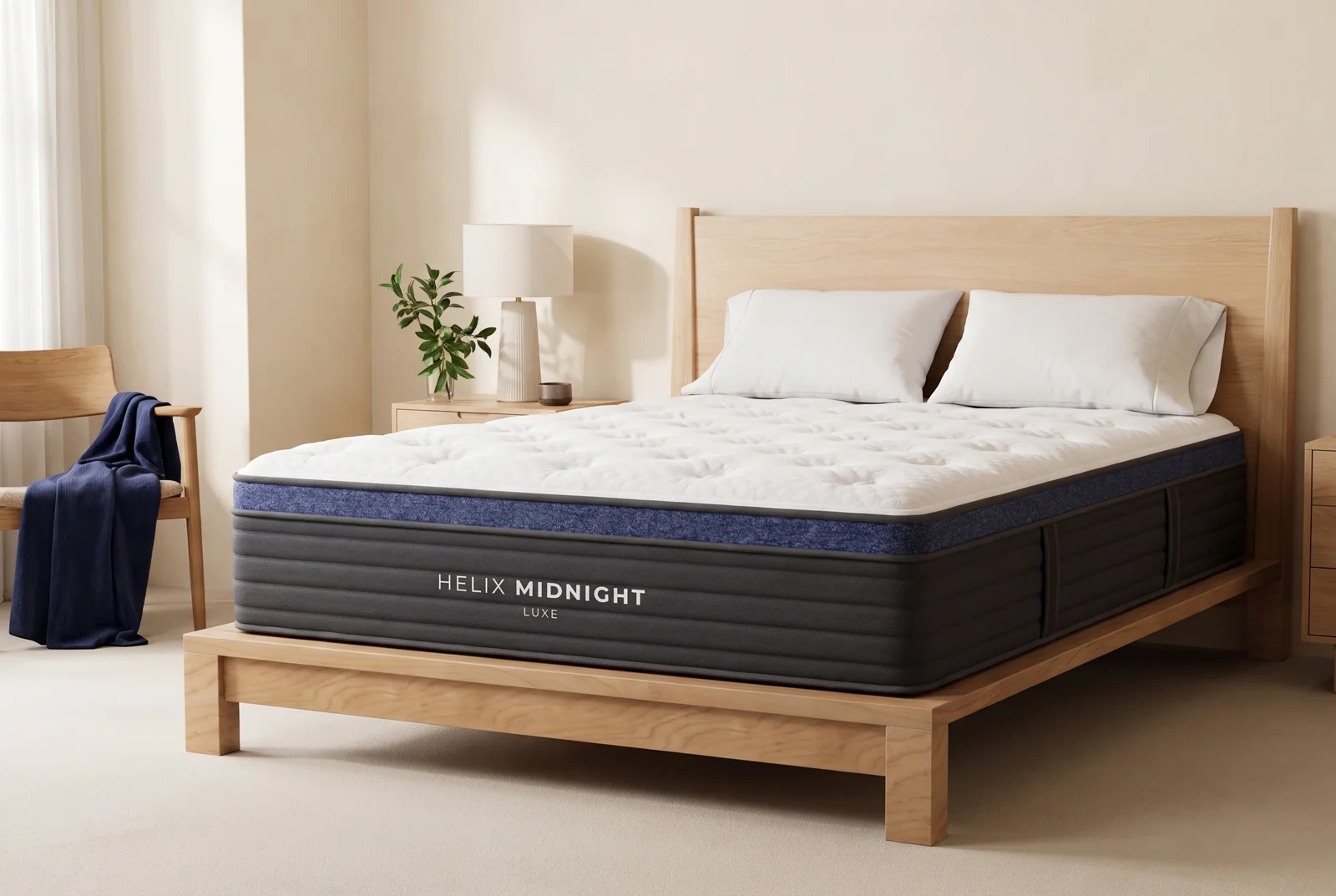
If the DreamCloud feel is what appeals to you, a supportive medium-firm hybrid with real edges, look at Helix and Brooklyn Bedding. Both are online-native brands built on pocketed coils, both are stocked in our showrooms, and both cover the same territory DreamCloud does. If you want the organic version of that construction, Birch pairs latex comfort layers with a coil base and sleeps cooler still. Browse the full hybrid mattress collection to see the range.
If the Puffy feel is what appeals to you, deep foam contouring and near-total motion isolation, that is Tempur-Pedic territory, and Tempur foam does it with more durability than most of the market. Stearns & Foster offers a similar cushioned feel on a coil support system if you want the plushness without giving up edge support. Our memory foam and luxury mattress collections are the places to start.
Not sure which side of the foam-versus-hybrid line you belong on? Our guides to memory foam vs hybrid and buying a bed in a box unpack the trade-offs, or take the sleep quiz for a firmness recommendation in about two minutes. We have five Los Angeles showrooms, same-day delivery across much of the city, and a free 120-night comfort guarantee, so the decision does not have to be final on day one.