
Both of these brands sell direct to the customer, ship compressed in a box, and sit in the same shopping cart at roughly the same moment for a lot of people. They are not the same kind of mattress, though. Brooklyn Bedding builds hybrids around pocketed coils in its own factory. Nectar builds all-foam beds around memory foam. That single structural difference drives almost every other difference you will feel.
The quick verdict
Pick Brooklyn Bedding if you want a springier bed with real edge support, if you sleep hot, if you share the bed and sit on the sides to get dressed, or if you want to choose your firmness instead of accepting one. Pick Nectar if you want the deep, slow sinking hug that memory foam is known for, if you are shopping on a tighter budget, or if your main complaint about your current bed is that you feel your partner move. If you cannot decide from a description, that is normal. This is a feel difference, not a quality difference, and it is the kind of thing that resolves in about ninety seconds of lying down.
Side by side
| Brooklyn Bedding | Nectar | |
|---|---|---|
| Construction | Hybrid: foam or latex comfort layers over individually pocketed coils | All-foam: memory foam comfort layers over a poly foam support core |
| Feel and firmness range | Multiple firmness options on the same model, from soft to firm, plus dedicated firm and plus-size lines | Built around a medium-firm memory foam feel across the lineup |
| Best suited sleeper | Combination sleepers, couples, heavier sleepers, anyone who wants to pick a firmness | Side and back sleepers who want pressure relief and a contouring hug |
| Motion isolation | Good. Pocketed coils move independently, though less absorbent than all-foam | Excellent. This is memory foam's home turf |
| Cooling | Better by design. Coils leave open space for air to move | Needs cooling treatments to compensate for a dense foam core |
| Edge support | Stronger. Perimeter coils hold shape when you sit on the side | Softer edges, typical of all-foam beds |
| Typical price tier | Mid-range, with premium options higher in the line | Entry-level to mid-range |
| Trial and warranty | Standard direct-to-consumer home trial and warranty. Confirm current terms at purchase | Markets an unusually long home trial and warranty. Confirm current terms at purchase |
| Where to buy | Online, and in person at LA Mattress Store showrooms | Online and through third-party retailers |
Brooklyn Bedding on its own terms
Brooklyn Bedding makes its mattresses in its own Arizona factory rather than contracting the work out. That vertical integration is the reason the brand can offer the same model in several firmness levels without a huge price penalty, and it is the reason the line sprawls the way it does, covering firm flippable beds, plus-size builds and latex hybrids under related names.
What it does well: coils give you responsiveness, so changing position does not feel like climbing out of a hole. Airflow through the coil layer is genuinely better than a solid foam core, which matters in Los Angeles far more than it does in Minnesota. Edge support holds up. And the firmness choice is not marketing. A soft and a firm version of the same model are different beds.
Where it falls short: the sheer number of models and sub-brands is confusing to shop online, and the firmness you choose from a website is a guess. Hybrids also weigh more than all-foam beds, which matters if you rotate your own mattress or move often. If what you actually want is the enveloping memory foam sensation, a coil bed will never quite give it to you.
Nectar on its own terms
Nectar did something smart: it picked one feel, a medium-firm memory foam, built the whole lineup around it, and competed hard on price and trial length. For a very large share of sleepers that one feel is the right feel, and the value is real.
What it does well: pressure relief at the hip and shoulder, which is why side sleepers gravitate to it. Motion isolation is close to the best you can get, so if you are woken up every night by a partner turning over, this construction solves that problem directly. The price of entry is low for the amount of mattress you get.
Where it falls short: all-foam beds trap heat more readily than coil beds, and cooling covers only do so much. Edge support is soft, so the usable sleeping surface feels narrower than the measured width. Response is slow by design, which some people love and some people experience as feeling stuck. And because the lineup is built on one feel, there is less room to adjust if medium-firm is not your firmness.
How to choose between them
If you are a side sleeper
Both work. Nectar's memory foam gives you contouring with no effort. A softer Brooklyn Bedding hybrid gives you similar pressure relief with more support underneath, which tends to age better if you also spend part of the night on your back. Our guide to memory foam vs hybrid construction goes deeper on that tradeoff, and the side sleeper collection is a reasonable place to start browsing.
If you sleep hot
Lean hybrid. This is the clearest decision on the list. Coils create air channels that a foam core does not have. In a city where bedrooms stay warm nine months of the year, that is not a small detail.
If you share the bed
Nectar wins on motion transfer. Brooklyn Bedding wins on edge support and on the fact that two people with different firmness preferences have more to work with. Decide which of those two annoyances is the one you actually live with.
If you have back pain
Support matters more than softness. A medium-firm surface that keeps your spine level is the general target either way. Browse medium-firm mattresses and plan on testing rather than guessing, because back pain is the category where buying blind goes wrong most often.
If budget is the constraint
Nectar is usually the cheaper entry point. Brooklyn Bedding's entry hybrids are close enough that it is worth comparing current pricing rather than assuming.
What we would actually put you on
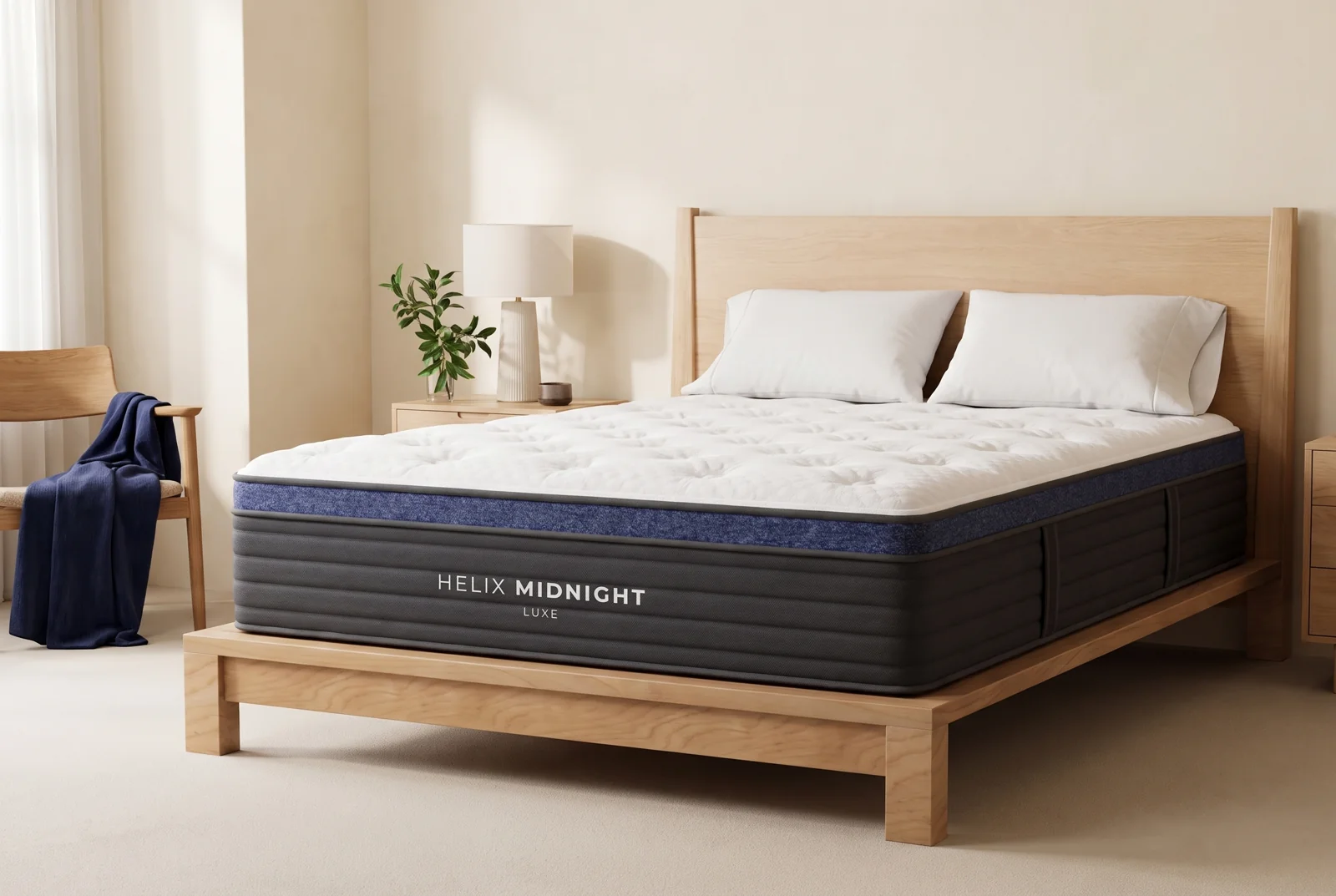
We stock Brooklyn Bedding, so if the hybrid side of this comparison appeals to you, you can come lie on one instead of ordering it on faith. We also carry Helix and Birch, two other online-native brands that ship in a box, and that is unusual: most people shopping these beds never get to try them first. If you want the pressure-relieving memory foam feel that draws people to Nectar, the closest thing we can put you on is a Tempur-Pedic, which is the original of that category, or a Stearns & Foster if you want contouring with a more traditional luxury build underneath. Those are premium beds rather than budget ones, and we will say so plainly.
Whatever you land on, the useful move is twenty minutes flat on your back in a showroom. We have five across Los Angeles, same-day delivery on most stock, and a free 120-night comfort guarantee if the bed turns out to be wrong once you live with it. If you would rather start from a shortlist, the bed-in-a-box versus traditional mattress guide covers the practical differences in delivery and setup.
Frequently asked questions
Is Brooklyn Bedding a good mattress?
It is a well-regarded mid-range hybrid brand with an unusual advantage: the company owns its factory, so quality control and firmness options are handled in house rather than outsourced. The hybrids are durable, responsive and better ventilated than all-foam beds. Whether it is good for you comes down to whether you want coils under you.
Are Nectar mattresses good?
For the money, yes, particularly for side and back sleepers who want memory foam pressure relief and strong motion isolation. The honest caveats are heat retention and soft edges, both of which are inherent to all-foam construction rather than flaws specific to Nectar.
Where can I try a Nectar mattress?
Nectar sells primarily online and through third-party retailers, so in-person availability varies by market. We do not carry it. If trying before buying matters to you, the online-native brands we do stock, Brooklyn Bedding, Helix and Birch, can be tested in our showrooms.
How long do Nectar mattresses last?
All-foam mattresses in this price tier generally give good service for several years before the comfort layers soften and body impressions set in. Hybrids with pocketed coils typically hold their support longer. Rotating the mattress regularly and using a proper foundation extends either one.
Where are Brooklyn Bedding mattresses made?
Brooklyn Bedding manufactures in its own facility in Arizona, which is why it can offer multiple firmness builds of the same model and why lead times are usually short.
Still not sure?
Take the sleep quiz and we will narrow the field by sleeping position, firmness preference and temperature, or browse hybrid mattresses and memory foam mattresses side by side and come test the two that interest you most.